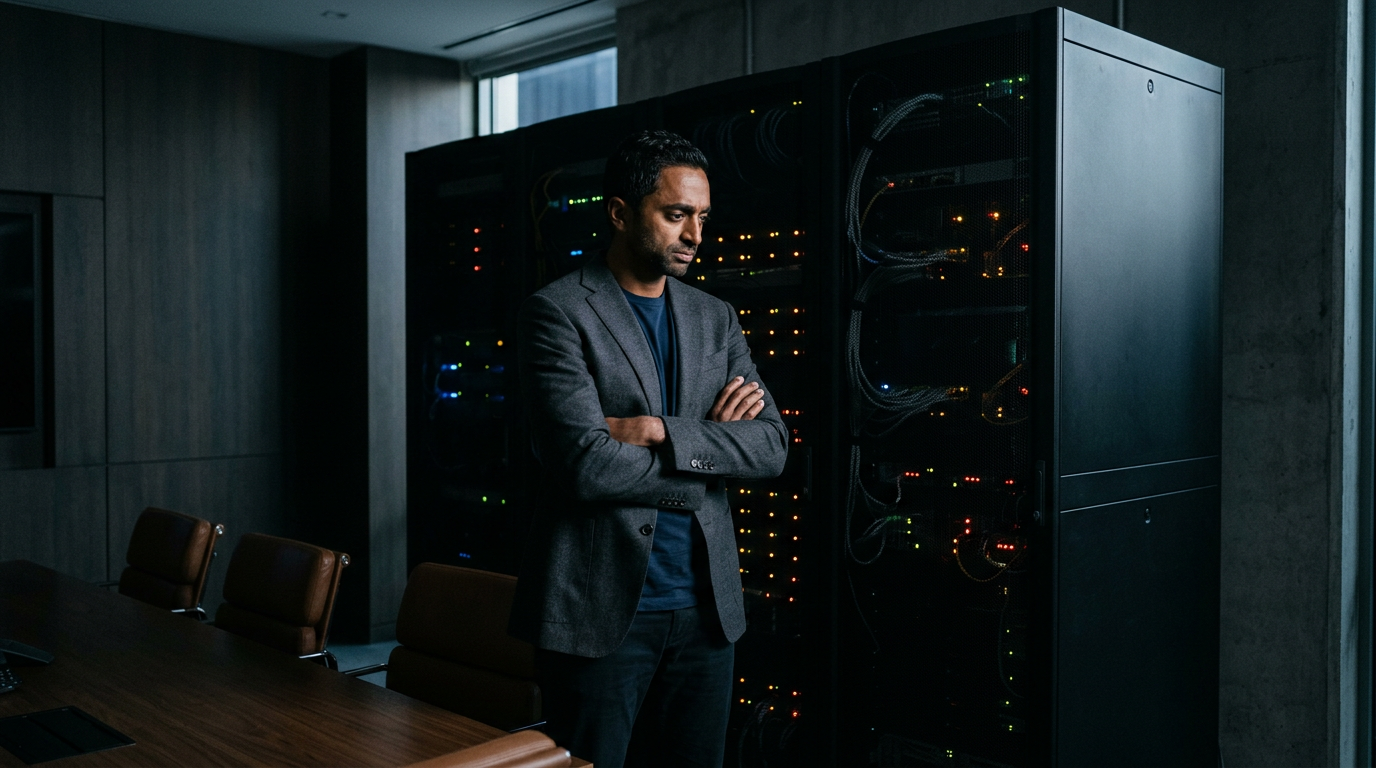
IBM stock took a hit on Tuesday, and investor Chamath Palihapitiya sees it as a symptom of a bigger problem brewing in the AI sector. The CEO of 8090, who spends a lot of his time these days in the AI space, shared his thoughts on CNBC about where all that spending is going — and whether it will ever pay off.
Palihapitiya's core question is simple: if only two or three companies are going to generate hundreds of billions in revenue from AI, where is everyone else's money going to come from? "I think you're starting to see a little bit of the wheels come off," he said.
He drew a comparison to the oil industry. Some companies lock in prices with the biggest players, only to be undercut by smaller providers offering oil at minimal cost. In AI, the big players like OpenAI and Anthropic are being disrupted by cheaper alternatives like xAI's Grok (part of SpaceX (SPCX)) and Meta Platforms (META). If you bet early on a high-cost provider, Palihapitiya warned, you could run into trouble when you try to pass those costs along to customers.
That dynamic, he suggested, might explain why IBM stock was down on Tuesday while other tech stocks rallied. "That has to play itself out," he said. He added that it could take years to figure out who spent what and whether they can recoup their costs.
Palihapitiya also flagged a hidden risk: "tokenmaxxing" — the practice of maximizing AI token consumption to boost productivity metrics. He suspects that top management at many companies has no idea how much of this is happening. "CEOs and CFOs, in my opinion, probably have no idea how much tokenmaxxing is going on inside of their organizations. I suspect what'll happen is one day you're going to have a miss, and EPS will be off by a few pennies, and the CEO will say to the CFO, 'What happened?'"
This isn't the first time Palihapitiya has sounded the alarm on AI spending. On a recent episode of "The All-In Podcast," he pointed out that since generative AI became mainstream, earnings per share growth for the S&P 493 (excluding the biggest tech companies) has been around 9%. But only about 2% of that growth comes from AI-driven productivity. The rest is from share buybacks, inflation, and price increases.
His advice to investors: separate the companies selling AI from those buying it. The returns, he said, could be dramatically different.