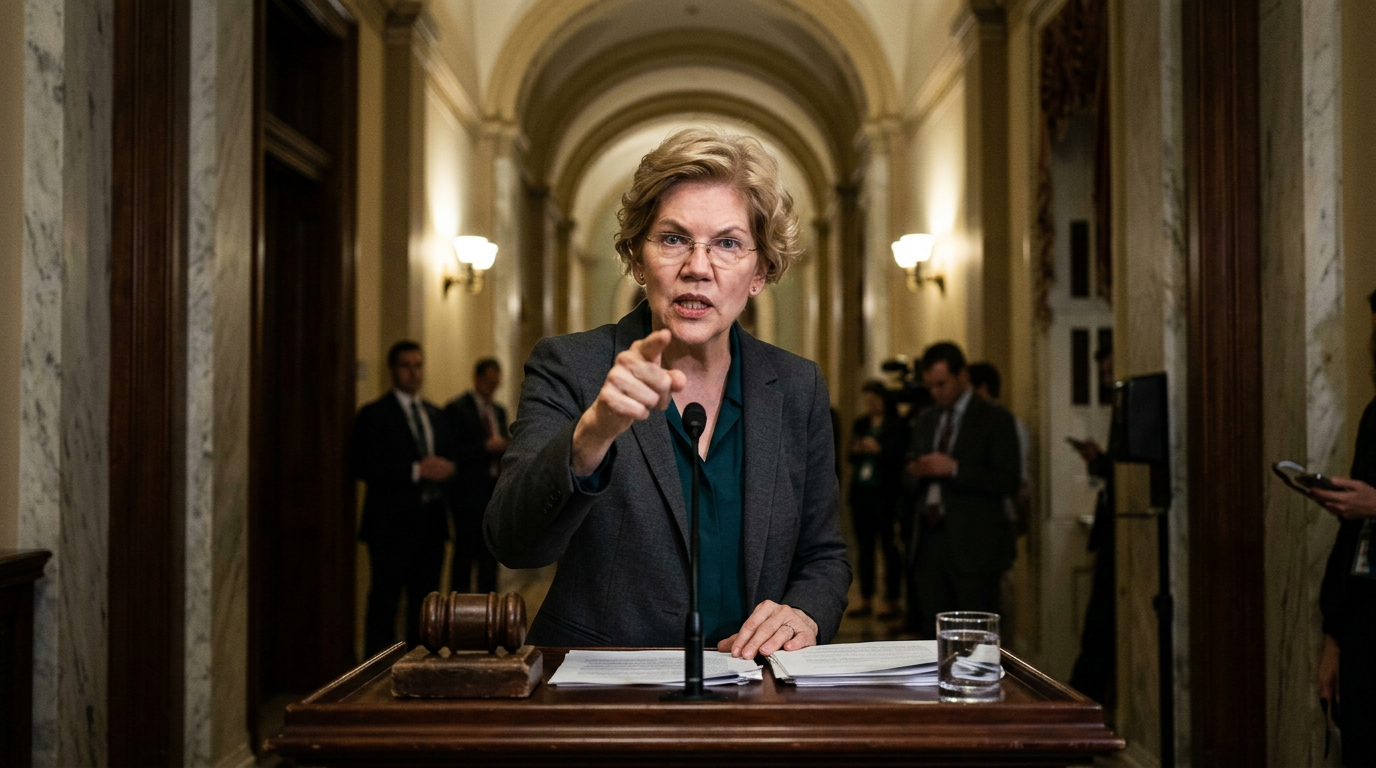
Sen. Elizabeth Warren (D-Mass.) is not letting the one-year anniversary of President Donald Trump's signature tax and spending bill pass without a fight. On Sunday, she took to X to warn that the worst parts of what she calls the "Big Ugly Bill" are still coming — and that's exactly how Republicans planned it.
"Here's your periodic reminder: The worst is yet to come from Trump's Big Ugly Bill," Warren posted. "And that's by design. Republicans wanted some of the worst impacts to take effect after the midterms. We won't be fooled."
In a video clip, Warren elaborated: "It's the one year anniversary of Trump's 'One Big Beautiful Bill,' and I hate to say it, but the worst is yet to come." She alleged the legislation was structured so that "the Medicaid cuts won't kick in until after the November midterm elections," adding that Republicans were "counting on people to forget" the law's impact by the time they vote.
Warren also said the bill delivered "massive tax handouts to the ultra-wealthy and to giant corporations" while reducing healthcare access. She warned the changes could ultimately lead to millions losing coverage, framing the legislation as a major redistribution of wealth. "We should be saying that every single day until the November election," she added.
Warren isn't alone in her criticism. Sen. Ruben Gallego (D-Ariz.) called Trump's bill "straight up stealing from the poor to feed the rich." Sen. Chris Van Hollen (D-Md.) said Trump and Republicans passed a bill that cut healthcare and food aid to fund tax breaks for the wealthy, and he vowed to keep fighting to repeal it.
But not everyone sees the bill as a disaster. Earlier this year, Treasury Secretary Scott Bessent said Trump's one big, beautiful bill was driving a coming multi-year economic expansion. He predicted a "non-inflationary boom" in 2026, supported by rising business investment and manufacturing growth. Bessent pointed to tax incentives boosting capital spending and said large-scale manufacturing commitments were beginning to lift output. He also cited stronger-than-expected GDP projections as evidence of accelerating economic momentum.
So, is the bill a ticking time bomb for the middle class or a catalyst for sustained growth? The answer may depend on which party you ask — and when the cuts actually hit.