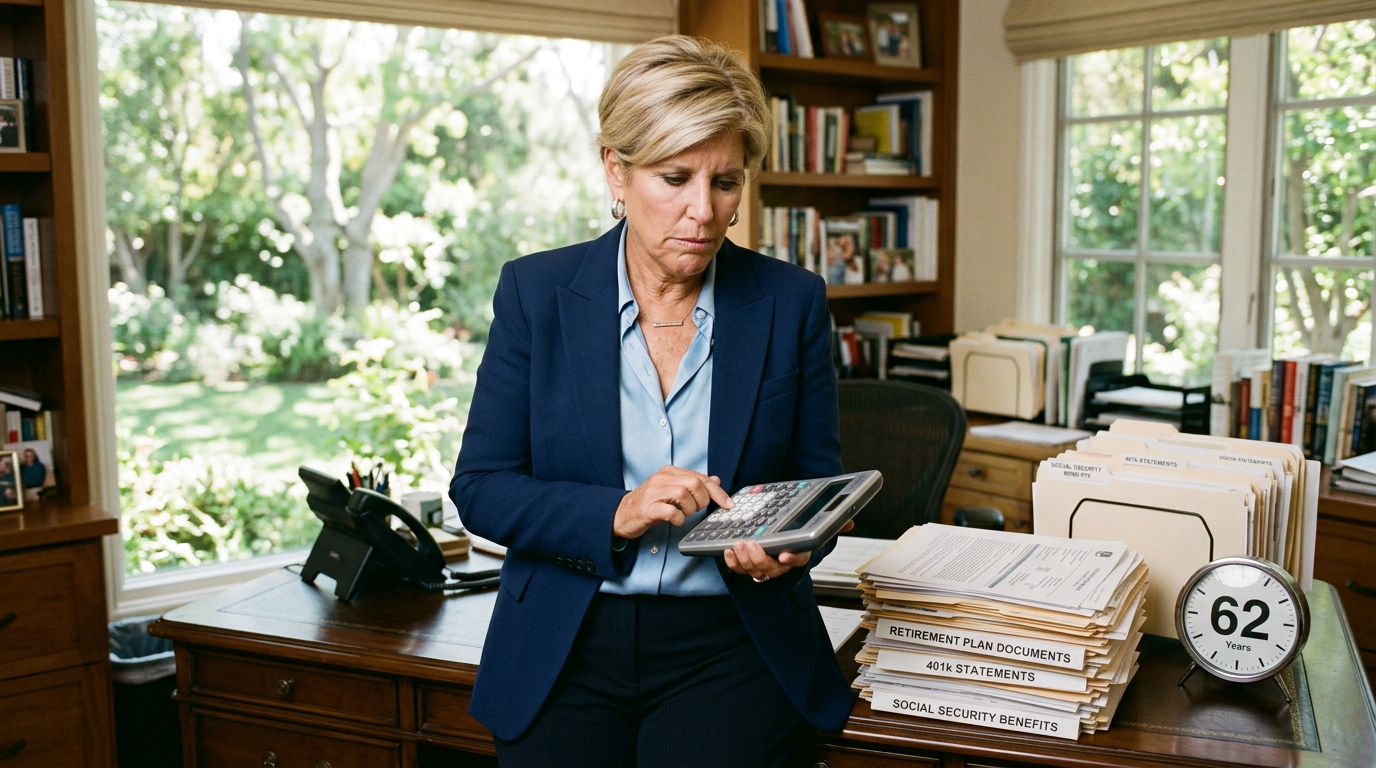
Personal finance expert Suze Orman is pushing back against growing advice urging Americans to claim Social Security benefits at age 62 before the program's reserves run low, calling the strategy "bad advice" in a recent post on her website.
"There's been some chatter on social media lately about Social Security that I think is bad advice," Orman wrote. "The message is that you are better off claiming as early as possible, at age 62, rather than waiting to collect a larger benefit by starting your checks later. That's just not good advice."
Social Security allows Americans to begin claiming retirement benefits at age 62, but doing so permanently reduces monthly payouts. For people born in 1960 or later, the full retirement age is 67.
Orman noted that claiming at 62 means accepting only 70% of full benefits, effectively locking in a 30% reduction for life.
Panic Over 2032 Deadline
Orman's warning comes as concerns around Social Security's long-term solvency intensify.
The Social Security Board of Trustees said earlier this month that the retirement trust fund is projected to exhaust reserves in 2032. After that, payroll tax revenue would cover only 78% of scheduled benefits, implying automatic benefit cuts of roughly 22% if Congress takes no action.
A separate analysis from the Committee for a Responsible Federal Budget estimated beneficiaries could see average monthly checks reduced by about $500.
Retirement anxiety appears to be rising more broadly. A recent BlackRock survey found 76% of workplace savers believe their generation will have less retirement security than their parents, up from 67% in 2021.
The Math Behind Waiting
Orman argued that even under a worst-case benefit reduction scenario, waiting to claim can still result in higher lifetime income.
She gave an example of a retiree eligible for $2,000 per month at age 67. Claiming at 62 would reduce that benefit to $1,400.
Even if Social Security benefits were later cut by 20%, the person who waited until 67 would still receive about $1,600 per month, compared with roughly $1,260 for the early claimer.
That math, Orman said, shows why fear-driven decisions can backfire.
She said early claiming may make sense for people with serious health issues or those unable to keep working or draw from savings. Otherwise, she said the strongest strategy may be waiting until age 70, especially for higher earners in married households, since survivor benefits are tied to the larger monthly payment.