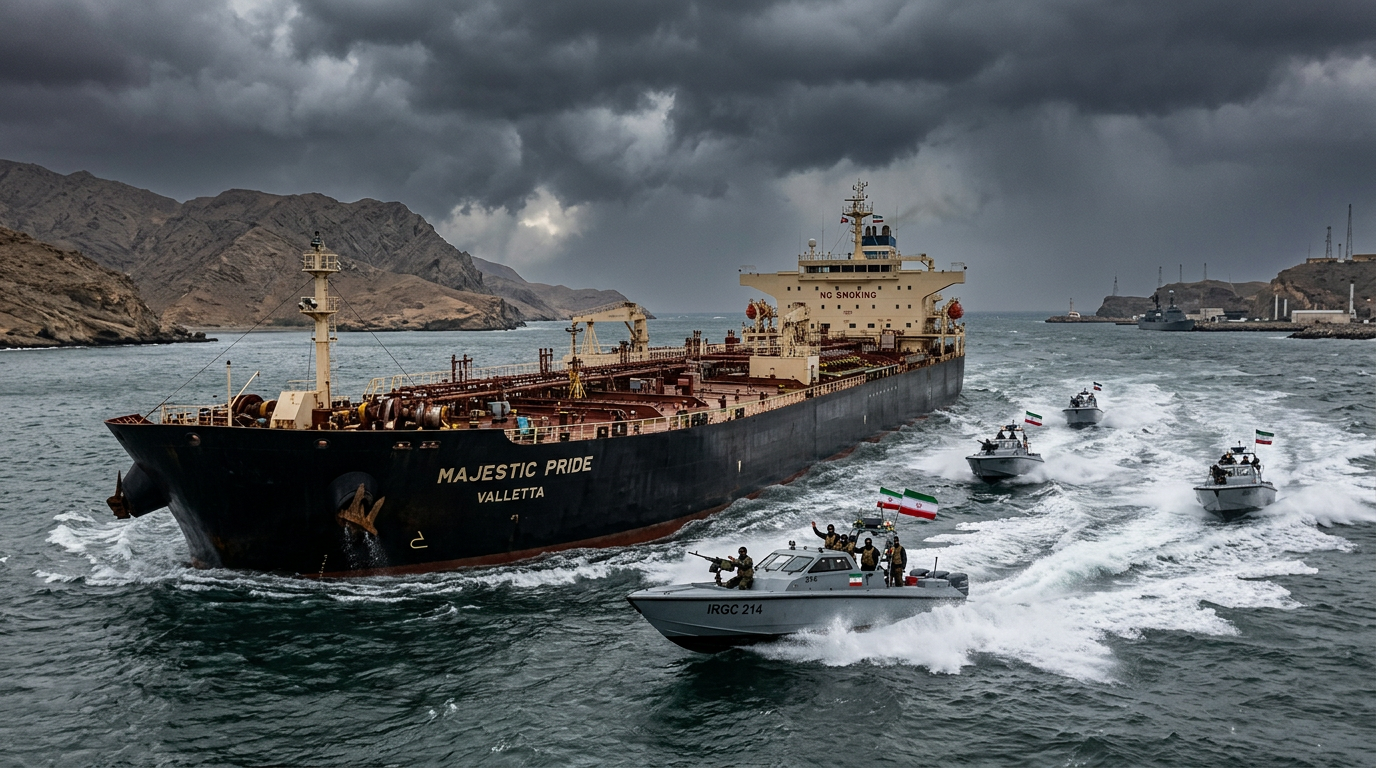
Iran's Parliament Speaker Mohammad Bagher Ghalibaf made it clear on Monday: the Strait of Hormuz is Tehran's business now, and it's not going back to the way things were before the war. According to Iranian news agency IRNA, Ghalibaf said the administration of the Strait will "never" revert to the pre-war status quo. "Iran will administer the Strait of Hormuz," he declared.
This comes as the U.S. Treasury, under Secretary Scott Bessent, issued a 60-day general license authorizing the production, delivery, and sale of Iranian oil. Bessent announced the move on X, saying it followed "productive talks in Switzerland" where Iran committed to "free and open transit in the Strait of Hormuz." He also echoed Vice President JD Vance's earlier comments that Iran would permit International Atomic Energy Agency (IAEA) inspectors back into the country.
But here's where things get messy. Iran's Foreign Ministry spokesperson Esmaeil Baqaei pushed back on the IAEA part. In a statement reported by IRNA, Baqaei said that "Iran's interactions with the Agency, in accordance with Iran's obligations under the Safeguards Agreements, will continue according to existing procedures." He added that those interactions would also follow regulations set by Iran's Parliament and the Supreme National Security Council. In other words: no new commitments, no new inspections beyond what's already on the books.
Unnamed sources familiar with the 18-hour negotiations told IRNA that the nuclear issue wasn't even discussed, and Iran hadn't agreed to any new commitments. So the U.S. and Iran seem to be reading from different scripts—one side says IAEA access is coming, the other says, "Not so fast."
For context, Iran suspended IAEA access to its sites after they were bombed by Israel and the U.S. during last year's 12-day war (June 13 to June 24, 2025). The agency pulled its inspectors out of the country in July 2025. Iran's parliament passed a law last year suspending cooperation until the safety of its nuclear facilities could be guaranteed.
Meanwhile, the Memorandum of Understanding (MoU) signed by Washington and Tehran reportedly puts the administration of the Strait of Hormuz in the hands of Iran and Oman, with ships allowed free passage for 60 days. That timeline matches the 60-day oil export license—coincidence? Probably not.
So what's the bottom line? Iran is asserting control over a critical global waterway, the U.S. is trying to keep oil flowing with a temporary license, and the IAEA question remains unresolved. It's a delicate dance, and both sides are stepping on each other's toes.