Jim Chanos, the legendary short-seller known for betting against Enron and Tesla, has seen a lot in his career. But even he was thrown for a loop this week by something truly unexpected: President Donald Trump and Senator Bernie Sanders agreeing on something.
Chanos took to X on Tuesday to ask the question on everyone's mind: "What do you call it when both Donald Trump AND Bernie Sanders advocate government ('public') ownership of corporate equity…?!"
It's a fair question. Sanders, the independent socialist from Vermont, has spent decades railing against corporate power. Trump, the Republican president, has spent his career in business and has generally favored less government intervention. Yet here they are, converging on the idea that the U.S. government should own pieces of companies.
The Sanders Plan: A Sovereign Wealth Fund, But With Stock
On Monday, Sanders introduced the American AI Sovereign Wealth Fund Act. The legislation would create a federal fund that, instead of holding cash, would hold stock. Specifically, it would require a one-time transfer of 50% equity from leading AI companies — think OpenAI, Anthropic, and xAI — to the government. The other 50% would remain with the public. The idea is that as AI creates enormous wealth, the public should share in the upside, not just the tech billionaires.
It's a bold proposal, and one that sounds more like something you'd hear in Norway or Singapore than in the United States. But Sanders is framing it as a way to ensure that the benefits of AI are broadly shared.
Trump's Quiet Equity Push
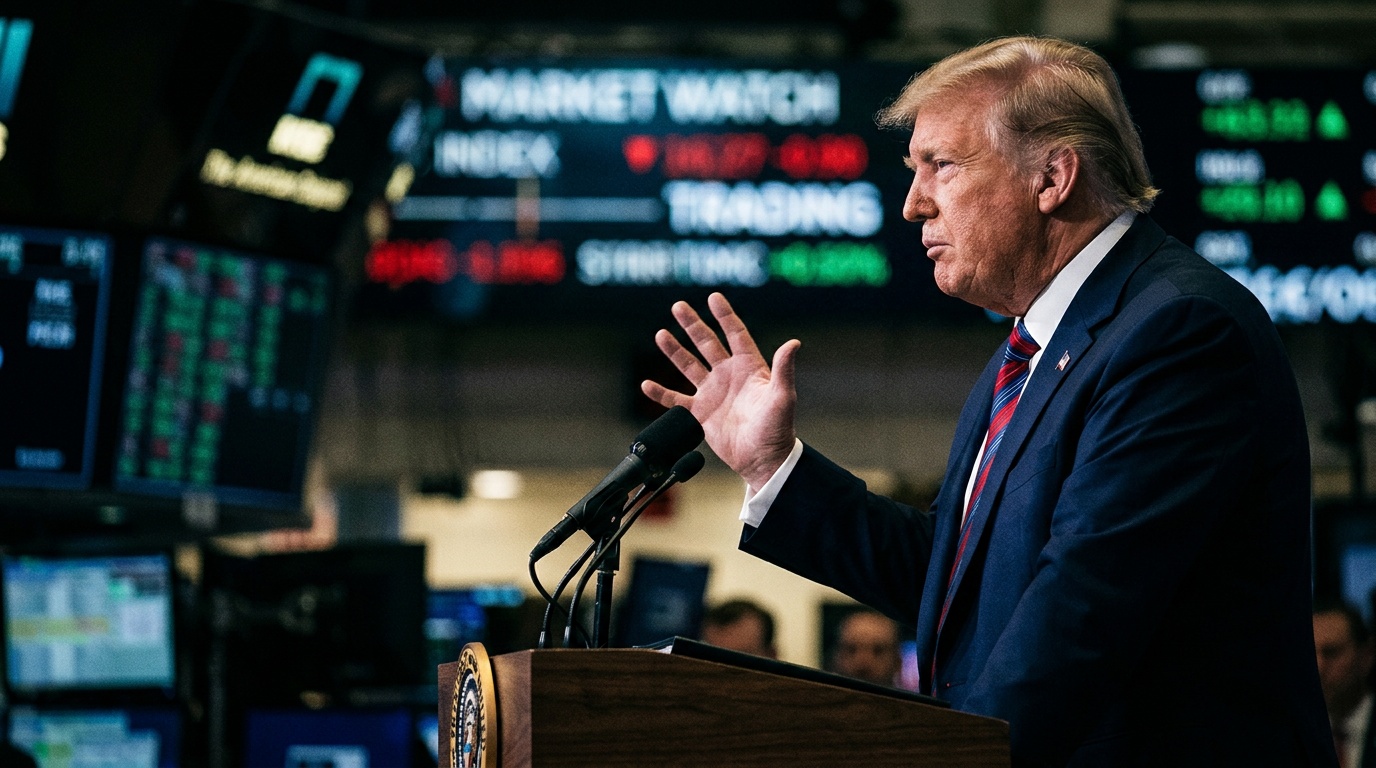
Meanwhile, the Trump administration has been quietly doing something similar, albeit without the legislative fanfare. The government has been taking equity stakes in companies deemed strategically important. For example, it has taken positions in Intel Corp. (INTC) and rare earth miner MP Materials (MP), essentially becoming a part-owner rather than just a customer. A recent report also indicated that the administration is in talks to support U.S. drone manufacturers through Pentagon-led financing that includes both debt and equity investments.
This is a notable shift for a president who campaigned on deregulation and free markets. But Trump's team seems to view equity stakes as a way to ensure that taxpayer money spent on supporting key industries doesn't just enrich shareholders — the government gets a piece of the action, too.
For Sanders, this is a welcome development. He's long argued that when the government bails out or supports industries, it should get something in return. The alignment is strange, but it's real.
Chanos Also Thinks Orbital Data Centers Are Nonsense
Chanos, never one to miss an opportunity to poke holes in tech hype, also weighed in on the latest AI infrastructure trend: orbital data centers. He previously called the push to build data centers in space "AI Snake Oil," citing the astronomical costs (pun intended).
He reacted to news that California startup Span has built compact, modular "XFRA" data center units that use spare local grid capacity, powered by Nvidia Corporation (NVDA) GPUs. Homebuilder PulteGroup (PHM) is testing the technology. Chanos's response: "Who needs data centers in space…?"
It's a good question. While the idea of beaming computing power from orbit sounds futuristic, the economics are brutal. Launching hardware into space is expensive, and maintaining it is even more so. Chanos, as always, is skeptical that the hype justifies the cost.
So there you have it: Trump and Sanders, united in their belief that the government should own corporate equity, and Jim Chanos, united in his confusion. Strange times.