Taiwan Semiconductor Manufacturing Company Ltd. (TSM) is having a good Monday. The stock was up about 1.4% in premarket trading, and it's not hard to see why. The company is at the center of two powerful stories: a deepening partnership with NVIDIA that brings AI onto the factory floor, and a surge of enthusiasm from local Taiwanese investors who are betting big on the AI cycle.
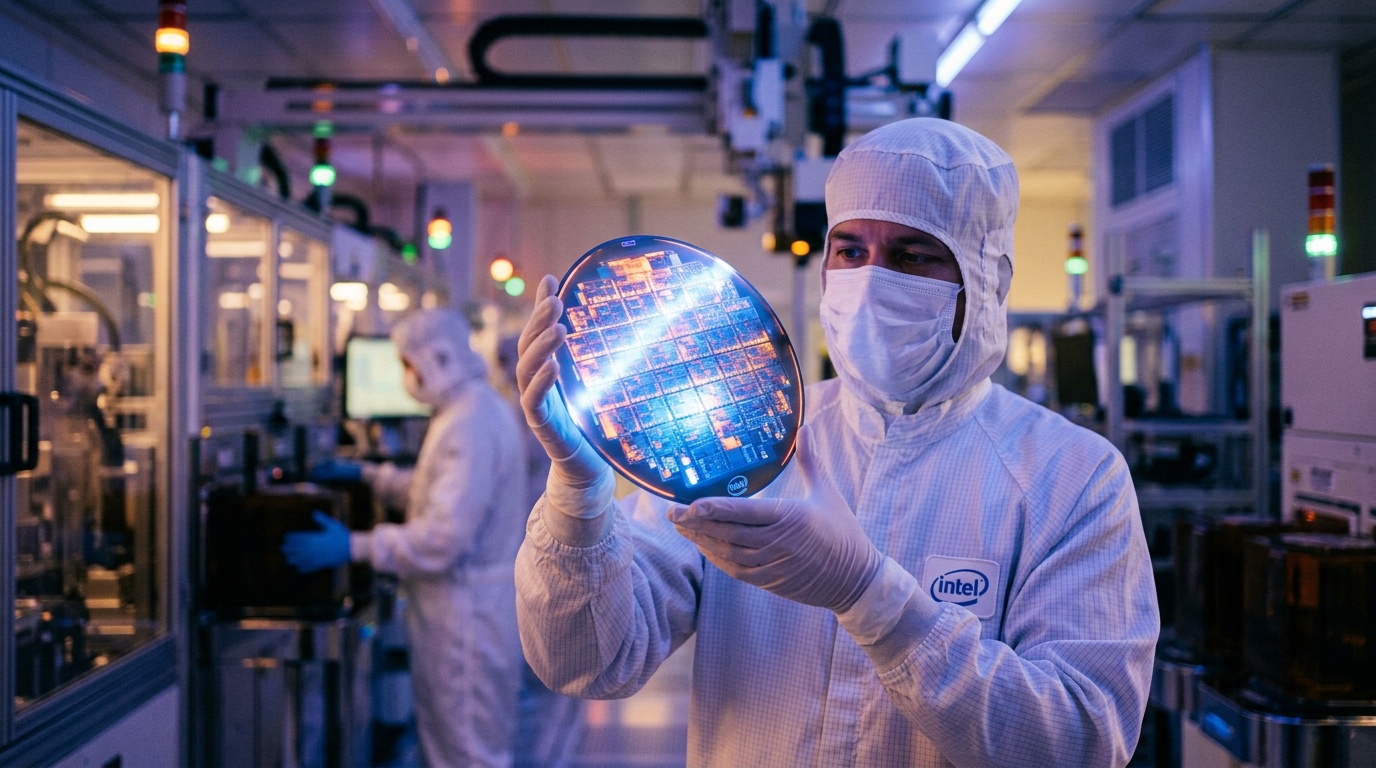
Let's start with the NVIDIA news. NVIDIA (NVDA) announced that Taiwan Semiconductor is deploying its accelerated computing and AI technologies across key manufacturing processes — things like lithography, transistor simulation, process control, and fab operations. The goal is to speed up production, improve energy efficiency, boost yields, and generally make chip manufacturing smarter. Taiwan Semiconductor is also using NVIDIA's Metropolis platform and TAO Toolkit for AI-powered defect inspection, which can spot nanometer-scale flaws without needing constant retraining. It's a classic AI-in-industry story, but with a twist: the chipmaker is using AI to make better chips, which in turn power more AI. It's a virtuous cycle, and investors like it.
But the more interesting story might be happening in Taipei. Bloomberg reported Monday that the premium of Taiwan Semiconductor's U.S.-listed ADRs over its Taipei-listed shares has fallen to a two-year low. In May, the ADR premium averaged just 13.7%, down from 26% in December. That's a big shift, and it's being driven by local investors. Taiwanese investors have been piling into the stock, pushing Taipei-listed shares up more than 50% this year, compared to a less-than-40% gain for the ADRs. Regulatory changes that allow local equity funds to allocate more capital to domestic stocks, combined with strong retail interest in AI-related companies, have fueled the rally.
Vincent Fernando, executive director at Zero One Investment Research, put it this way: Taiwanese investors have become "significantly more optimistic about the AI cycle than their U.S. counterparts" and are "less concerned about a potential AI bubble." He noted that domestic investors are increasingly shaping Taiwan Semiconductor's valuation, reducing the influence of foreign investors who historically drove demand. That optimism helped push the Taipei-listed shares to a record high ahead of Computex, Asia's biggest tech show. It's a reminder that sometimes the most interesting action isn't on Wall Street — it's on the ground in Taiwan.
Technical Picture: Still Bullish, But Watch the Levels
From a technical standpoint, TSM is in a strong longer-term uptrend. The stock is trading about 4.1% above its 20-day simple moving average (SMA) of $407.15 and a whopping 31.9% above its 200-day SMA of $321.38. That's a healthy cushion, and the fact that the 20-day SMA is above the 50-day SMA adds a near-term bullish tilt. The golden cross — where the 50-day SMA crossed above the 200-day SMA — that formed back in June 2025 is still supporting the bigger-picture trend.
Momentum is also looking better. The MACD (moving average convergence divergence) is above its signal line, and the histogram is positive. In plain English, that means the recent price action is strengthening relative to the prior downswing. Buyers are regaining control. The key support level to watch is $385.00, which sits close to the 50-day exponential moving average of $386.90. That's the "line in the sand" if the stock pulls back.
For context, Taiwan Semiconductor is the world's largest dedicated chip foundry, with about 70% market share in 2025. It sits at the center of the fabless chip model that powers much of today's semiconductor industry. When you think about AI chips, you're thinking about NVIDIA designing them and Taiwan Semiconductor manufacturing them.
What's Next: Earnings and Analyst Views
The next big catalyst for the stock is the earnings report, estimated for July 16, 2026. Analysts are expecting earnings per share of $3.69, up from $2.47 a year ago, on revenue of $39.76 billion, up from $30.07 billion. That's a 50% jump in EPS and a 32% jump in revenue — not bad for a company that's already the market leader. The stock trades at a price-to-earnings ratio of 35.8x, which is a premium valuation relative to peers, but that's the price you pay for growth and market dominance.
Analysts are broadly bullish. The consensus rating is Buy, with an average price target of $420. Recent moves include Barclays raising its forecast to $470 on April 22, DA Davidson maintaining a Buy with a $450 target on April 17, and Needham raising its target to $480 on April 16. That's a lot of optimism, but it's backed by real demand for AI chips.
As of Monday's premarket, TSM was trading at $424.14, not far from its 52-week high of $430.55. The stock has been on a tear, and with AI demand showing no signs of slowing, it might have more room to run. Just keep an eye on those technical levels — and on what Taiwanese investors are doing.