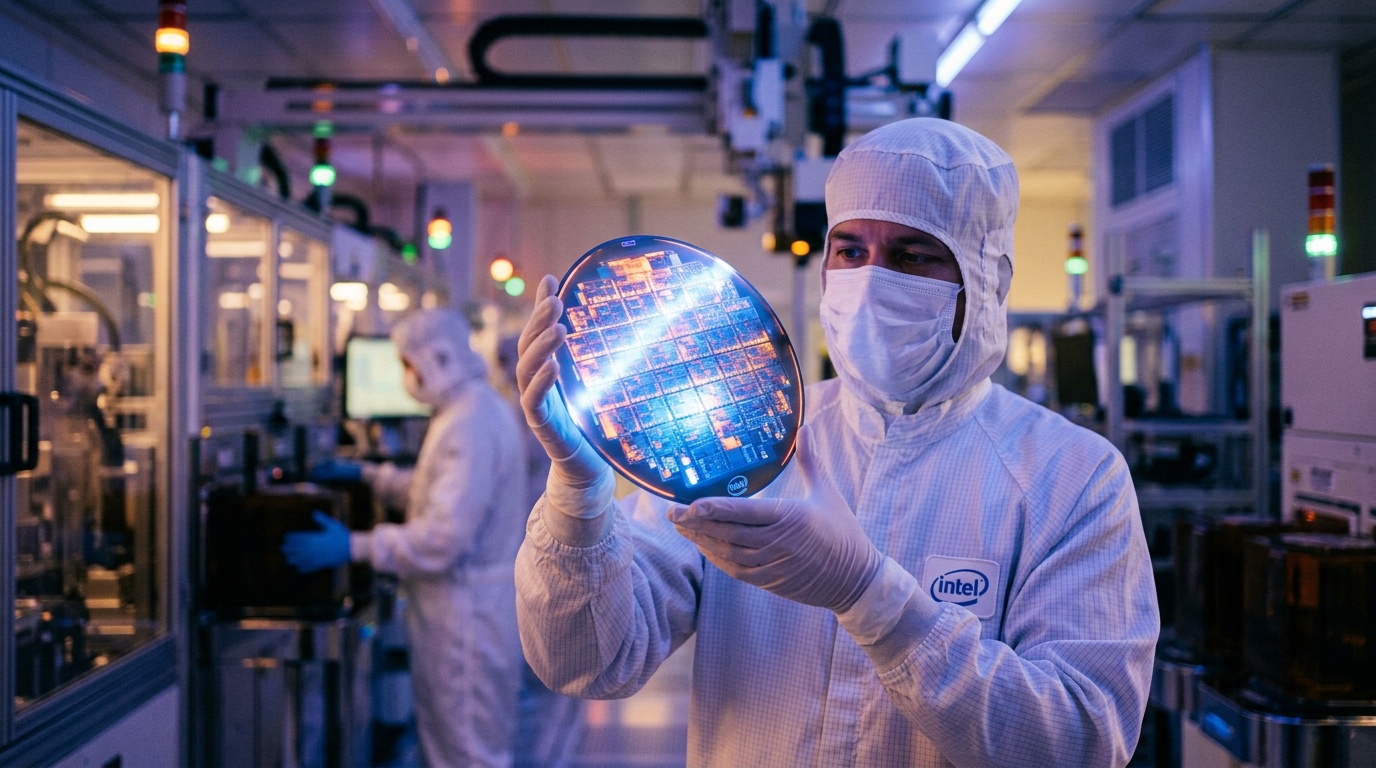
Taiwan Semiconductor Manufacturing Company Ltd (TSM) is making a bold bet that energy efficiency will be the next frontier in the AI chip wars. The company's senior vice president of business development, Kevin Zhang, told Reuters that rising electricity demand from AI is making power savings a central priority for future chip development. And TSMC isn't just talking—it's targeting a 30% reduction in power consumption between its current N2 process and the planned A14 generation around 2028, all while delivering more than 20% higher computing performance.
That's a big deal. AI data centers are energy hogs, and as models get bigger, the power bill gets scarier. Zhang noted that customers across smartphones, IoT devices, and AI data centers increasingly want stronger performance without sharply higher power consumption. He said TSMC still views transistor-density improvements as important, but advanced packaging, chip stacking, and photonics are becoming more critical to improving efficiency. In other words, the old playbook of just shrinking transistors isn't enough anymore—you need to think about how chips are stacked and connected.
Meanwhile, the AI supply chain is buzzing. NVIDIA Corp (NVIDIA) CEO Jensen Huang recently said that Taiwan's semiconductor supply chain faces a "very busy second half" as NVIDIA ramps production of its Vera Rubin AI platform. TSMC is a key supplier to NVIDIA, Advanced Micro Devices, Inc (AMD), and other Big Tech giants, so any ramp in AI infrastructure spending flows directly to TSMC's bottom line.
But it's not all smooth sailing. U.S.-China chip policy remains a sentiment driver. Huang said the U.S. approved licenses allowing NVIDIA to sell H200 chips to Chinese customers, though shipments haven't started yet. Mainland China accounted for 9% of TSMC's fiscal 2025 net revenue and 11% in fiscal 2024, so any policy shifts could move the stock.
The market backdrop is mildly supportive. U.S. equity futures were modestly firmer Friday, with the S&P 500 and Nasdaq slightly higher, while the Russell 2000 edged lower. That backdrop supports large-cap tech names like TSMC, but the stock's story remains centered on AI demand, energy-efficient chip design, and China-related policy risks.
Looking ahead, the next major catalyst is the July 16, 2026 (estimated) earnings report. Analysts expect EPS of $3.69 (up from $2.47 a year ago) and revenue of $39.76 billion (up from $30.07 billion). The stock trades at a P/E of 36.3x, a premium valuation relative to peers, but analysts are bullish. The consensus is a Buy with an average price target of $420. Recent analyst moves include Barclays raising its target to $470 (Overweight), DA Davidson maintaining $450 (Buy), and Needham raising to $480 (Buy).
TSMC shares were up 0.56% at $427.25 in premarket trading Friday, near their 52-week high of $430.55. The stock is priced for perfection, but if TSMC can deliver on its energy-efficiency promises, it might just earn that premium.