Former White House communications director Anthony Scaramucci has a message for anyone who thinks political corruption in Washington is a one-party problem: think again. But he also has a caveat — the scale is not even close.
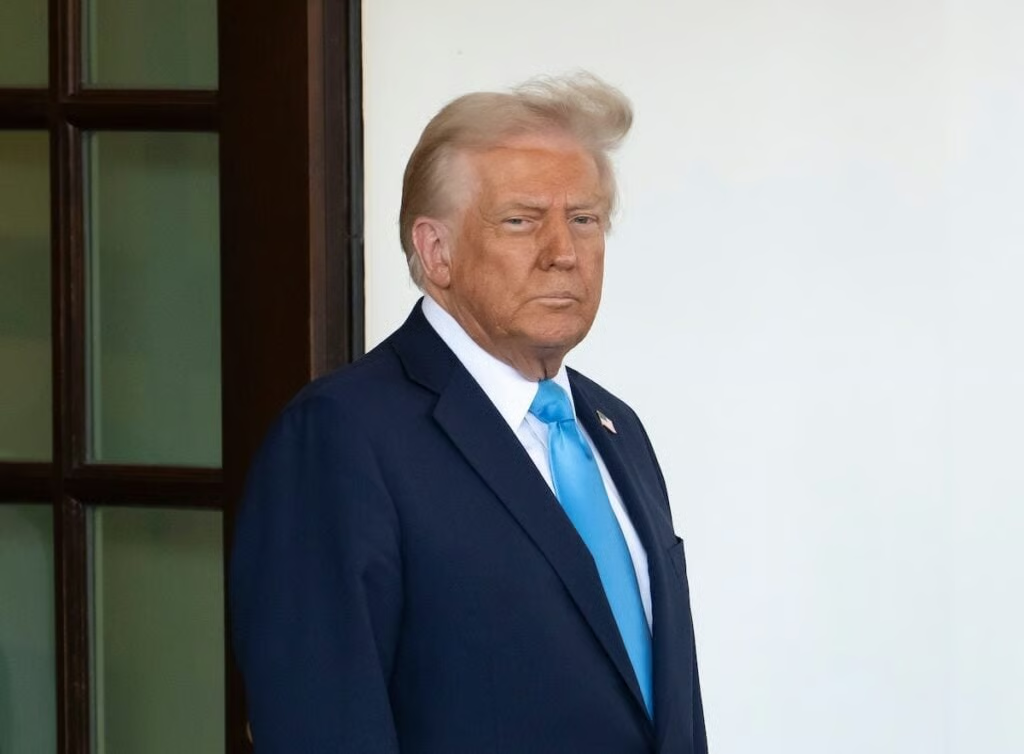
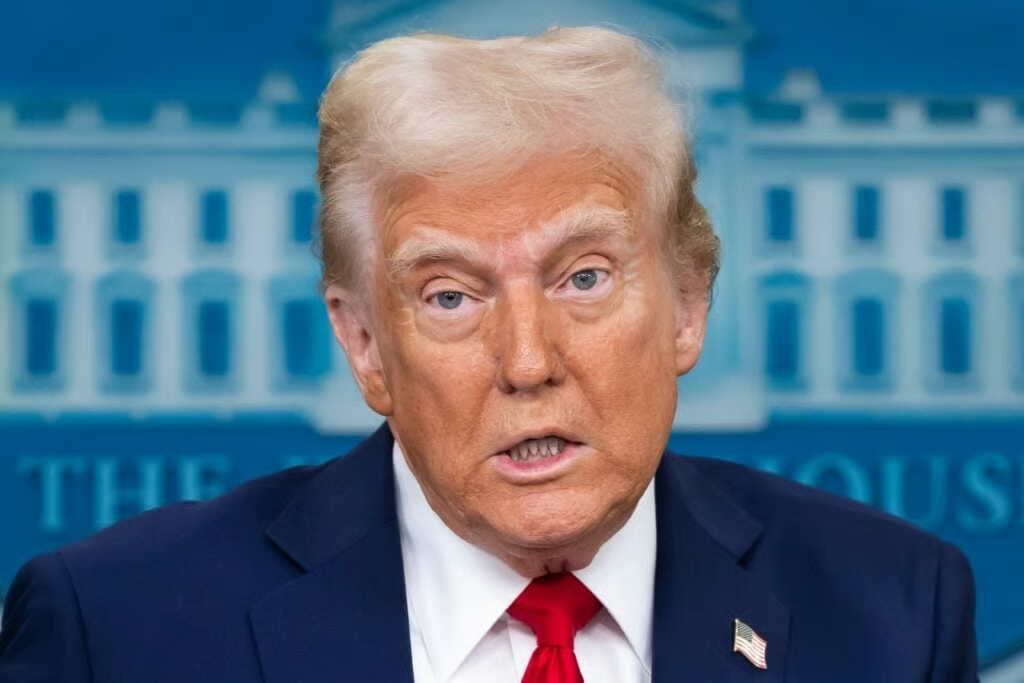
"Pelosi's taking $5 million. Trump's taking $500 million," Scaramucci wrote on X Wednesday, referring to retiring Rep. Nancy Pelosi (D-Calif.). "He took the unethical steroid needle and pumped it straight into his biceps. But corruption is rampant from both parties and it would be dishonest of me to pretend otherwise."
Scaramucci, the founder of SkyBridge Capital who briefly served in Trump's first White House, said the core difference is magnitude, not whether both sides have benefited from insider access. "The difference is scale. Trump has done it to the 29th power," he wrote. "What used to be a quiet, genteel Washington corruption has become an open, brazen, billion-dollar operation. And until we're honest about both sides of it, nothing changes."
MarketDash reached out to Pelosi's office and the White House for comment but did not receive a response at the time of publication.
Washington Influence Stays Legally Entrenched
Scaramucci's broader argument is that backroom political dealing has evolved into a more visible and lucrative system. He has previously pointed to examples such as Jared Kushner securing major Saudi investments and Trump profiting from branding, private assets and meme coins. His claim is that leaders who normalize personal enrichment while in office erode public trust in markets and democratic institutions.
As revealed in a December episode of the Policy and Governance Perspectives Podcast, hosted by David Ramadan for the Schar School of Policy and Government at George Mason University, political corruption in Washington has long extended beyond illegal bribery. Watchdog groups and political scientists often describe much of the modern system as legal influence buying, built around campaign finance loopholes, lobbying, post-government jobs and access to lawmakers.
Voters See Corruption Across Parties
Lobbying remains one of the clearest examples. Corporations, trade groups and wealthy donors can spend heavily to shape policy while staying within the law. Congressional stock trading has also drawn bipartisan scrutiny, with lawmakers from both parties facing pressure to ban individual stock trades by members of Congress.
Public opinion reflects deep suspicion too. A 2025 Navigator Research survey found Americans split over which party is more corrupt, with 44% saying Republicans and 37% saying Democrats. When Trump was included with Republicans, 49% called Trump and the GOP more corrupt, while 34% named Democrats.
So Scaramucci's point isn't that everyone is equally bad — it's that pretending only one side does it lets the whole system off the hook. And until voters demand change from both parties, the billion-dollar operation keeps humming along.