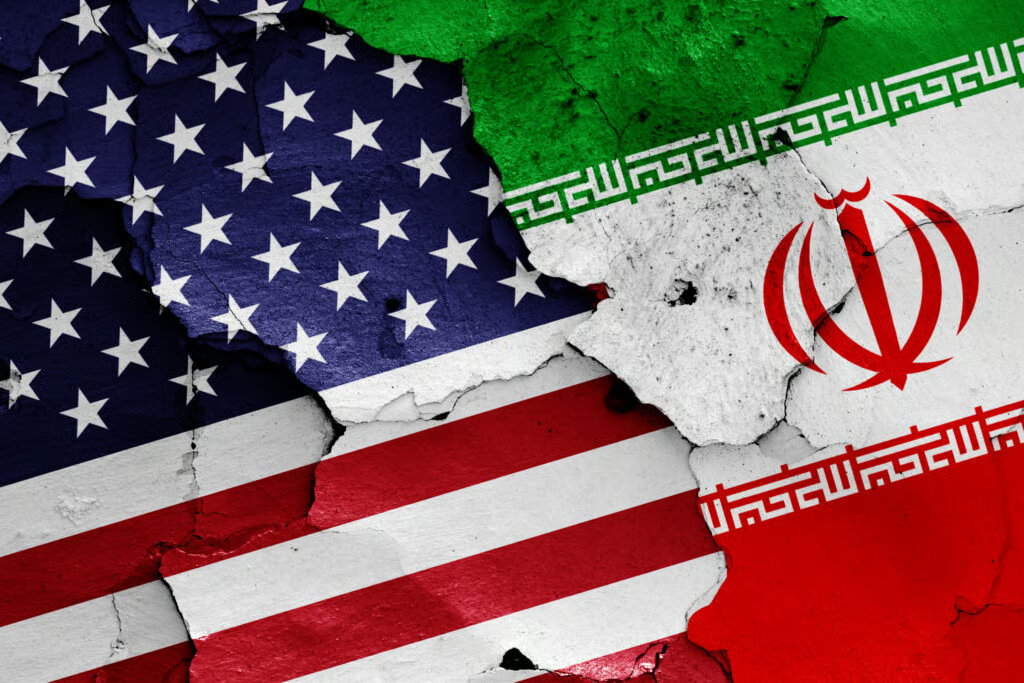
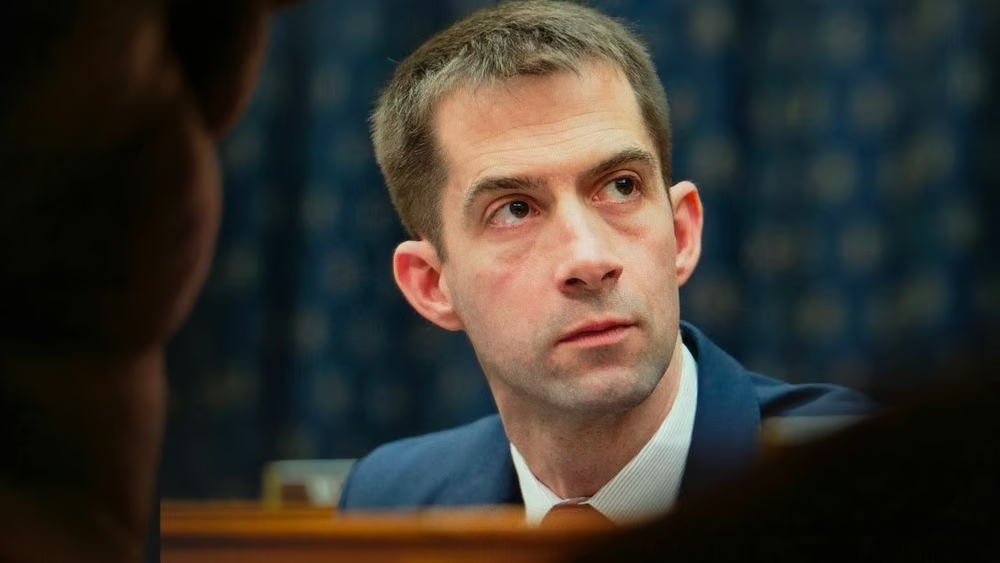
On Saturday, Sen. Ted Cruz (R-Texas) raised concerns that a reported Iran agreement being discussed within the Trump administration could weaken U.S. pressure on Tehran and reverse recent military gains.
In a post on X, Cruz said he is "deeply concerned" about reports of a possible deal involving Iran, arguing it could reverse earlier U.S. military gains and provide major concessions to a hostile regime.
"President Trump's decision to strike Iran was the most consequential decision of his second term," Cruz wrote.
He added that the operation destroyed "all of their missiles & drones" and sank their entire navy.
Cruz cautioned that if Iran were to receive financial relief while continuing nuclear enrichment, it would represent a dangerous outcome.
"If the result of all that is to be an Iranian regime… now receiving billions of dollars, being able to enrich uranium & develop nuclear weapons, and having effective control over the Strait of Hormuz, then that outcome would be a disastrous mistake," he said.
He also criticized reports that former U.S. Iran envoy Rob Malley had praised aspects of the emerging framework, calling it "not encouraging."
Sen. Lindsey Graham (R-S.C.) warned that any deal ending the conflict with Iran under conditions where Tehran was still seen as capable of threatening the Strait of Hormuz and Gulf oil infrastructure would have shifted the regional balance of power in Iran's favor.
He had said such an outcome would be "a major shift of the balance of power in the region" and could prove dangerous for Israel and long-term stability, while also questioning the belief that Iran could not be deterred.
Sen. Roger Wicker (R-Miss.) called a proposed 60-day ceasefire a "disaster," arguing it would erase gains he attributed to "Operation Epic Fury" and reflect misplaced trust in Iran's willingness to act in good faith.
Speaker Mike Johnson (R-La.) praised Trump's leadership, saying, "President Trump is the ONLY one who could have gotten Iran…to the negotiating table."
He added that a potential peace deal showed the U.S. was stronger, safer, and more respected globally.
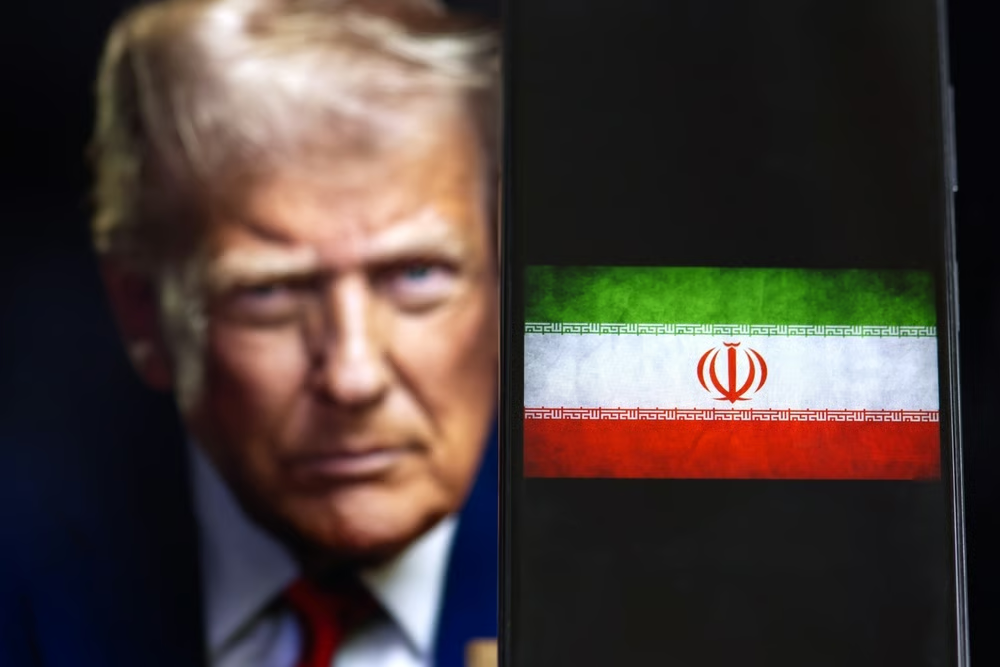
President Donald Trump said the U.S., Iran and several Middle Eastern countries were close to finalizing a broad peace deal that could have reopened the Strait of Hormuz.
He said discussions had been held with multiple regional leaders and that an agreement had been largely reached, pending final details.
Trump also said talks with Israeli Prime Minister Benjamin Netanyahu had gone well and added that the Strait of Hormuz would be reopened under the proposed deal.