President Donald Trump is facing a fresh wave of voter frustration over the economy, inflation, and foreign policy, according to several new national polls released this week. The numbers suggest that the administration's messaging on tariffs and jobs isn't cutting through as voters focus on the rising cost of living.
A recent Fox News survey, conducted May 15-18 by Beacon Research and Shaw & Company Research, found that views on affordability and Trump's economic leadership are worsening. Nearly six in 10 respondents ranked affordability above tariffs, jobs, and government spending as their top financial concern. That's a clear signal that pocketbook issues are dominating the political conversation.
Economic Pressure Intensifies
The Fox poll showed that 77% of voters believe the economy remains weak, up from 73% last month. About half of respondents said their household finances have deteriorated over the past two years. Trump's economic approval took a hit: only 29% approved of his handling of the economy, and his rating on inflation was even lower, at 24%.
Fox pollster Daron Shaw noted that affordability concerns continue to drive voter dissatisfaction, and that independents had already moved away from Trump earlier this year. That's a worrying trend for the White House as it tries to shore up support ahead of the midterms.
Approval Ratings Slip Across Polls
The Fox survey wasn't an outlier. A Quinnipiac University poll showed Trump's approval dropping to 34%, with a 58% disapproval rating—his lowest in the pollster's second-term tracking. A Reuters/Ipsos survey put his approval at 35%, with Republican dissatisfaction ticking up compared to early 2025 levels.
There was one bright spot: an Associated Press-NORC poll showed Trump's approval rising four points to 37% from April. But that's still underwater, and the overall trend is clear: voters are grumpy, and they're taking it out on the president.
Iran Conflict Shapes Voter Mood
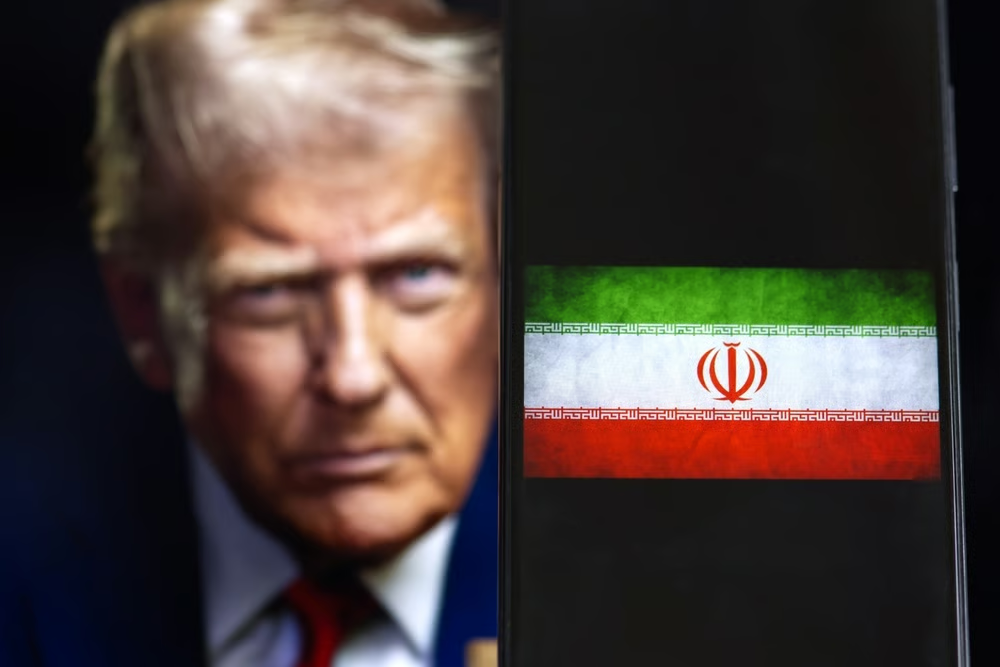
The Fox survey also probed attitudes toward the Iran conflict, and the results were mixed. Most respondents believe the U.S. currently holds the military advantage, but 60% oppose continued U.S. military involvement in Iran. Many also favor limiting the duration of American participation.
Gas prices are adding to the economic anxiety. Most voters blame the Iran war, along with domestic policy and oil companies, for rising fuel costs. That's a potent combination of geopolitical risk and pocketbook pain that could keep weighing on consumer sentiment.
Market And Political Impact
For investors, the takeaway is that geopolitical risks, inflation concerns, and weakening consumer sentiment are all in play. Companies like Exxon Mobil Corp. (XOM) and Chevron Corp. (CVX) remain sensitive to oil price volatility, which could be exacerbated by the Iran situation. Keep an eye on energy stocks and any policy moves that might try to address voter frustration—because if these polls are any guide, the pressure on the White House isn't letting up.