On Thursday, acting Navy Secretary Hung Cao told lawmakers that the Trump administration has paused a proposed $14 billion arms sale to Taiwan. The reason? The Pentagon wants to make sure it has enough weapons for the ongoing conflict with Iran before shipping more abroad.
Speaking during a Senate Appropriations Defense Subcommittee hearing, Cao explained that the pause is about checking stockpiles — not canceling the deal. "Right now we're doing a pause in order to make sure we have the munitions we need for Epic Fury — which we have plenty," Cao said. "We're just making sure we have everything, but then the foreign military sales will continue when the administration deems necessary."
The comments come as questions mount over the state of U.S. missile inventories after months of military operations tied to the Iran conflict. Reports suggest the U.S. has used significant numbers of Tomahawk cruise missiles, Patriot interceptors, and other advanced precision weapons since fighting began earlier this year. The White House is reportedly preparing a supplemental funding request of up to $100 billion to replenish stockpiles and support ongoing operations.
Defense Secretary Pete Hegseth has pushed back against concerns that inventories are running low. "First of all, the munitions issue has been foolishly and unhelpfully overstated," Hegseth told House appropriators last week. "We know exactly what we have. We have plenty of what we need."
Late in the day, oil prices rose 1.77% to $98.06, while Brent crude gained 2.26% to $104.90; natural gas fell 0.83% to $2.993.
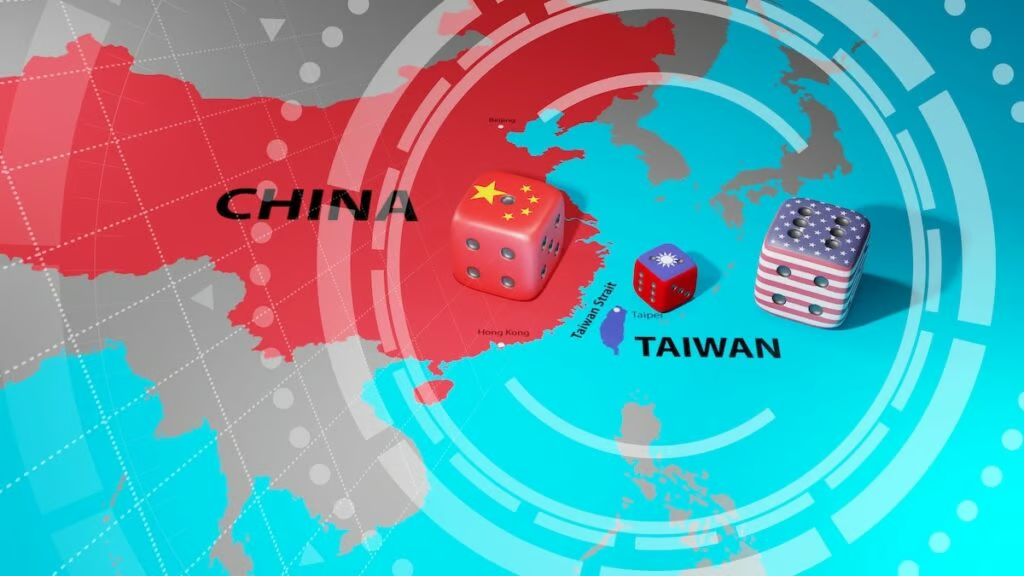
Cao's explanation appeared to differ from comments made by President Trump, who suggested the Taiwan arms package could be tied to broader discussions with China. That adds a layer of geopolitical chess to the story: Taiwan is not just a military ally — it's a linchpin of the global tech economy.
Taiwan produces roughly 90% of the world's advanced semiconductor chips through Taiwan Semiconductor Manufacturing Company (TSM). That makes it strategically vital to major U.S. tech companies like Apple Inc. (AAPL) and Nvidia Corp (NVDA), which rely heavily on Taiwan's chip manufacturing capabilities. Beyond semiconductors, the Taiwan Strait is one of the world's most critical shipping routes, handling an estimated $2.45 trillion worth of goods in 2022 — more than 20% of global maritime trade, according to the Center for Strategic and International Studies.
So the pause on the arms sale is about more than just counting missiles. It's a balancing act between keeping the U.S. military ready for Iran, maintaining a strategic edge in the Pacific, and potentially using the sale as leverage with Beijing. For now, the administration says the pause is temporary. But with a $100 billion replenishment request in the works and tensions simmering on multiple fronts, the question of who gets weapons — and when — is far from settled.