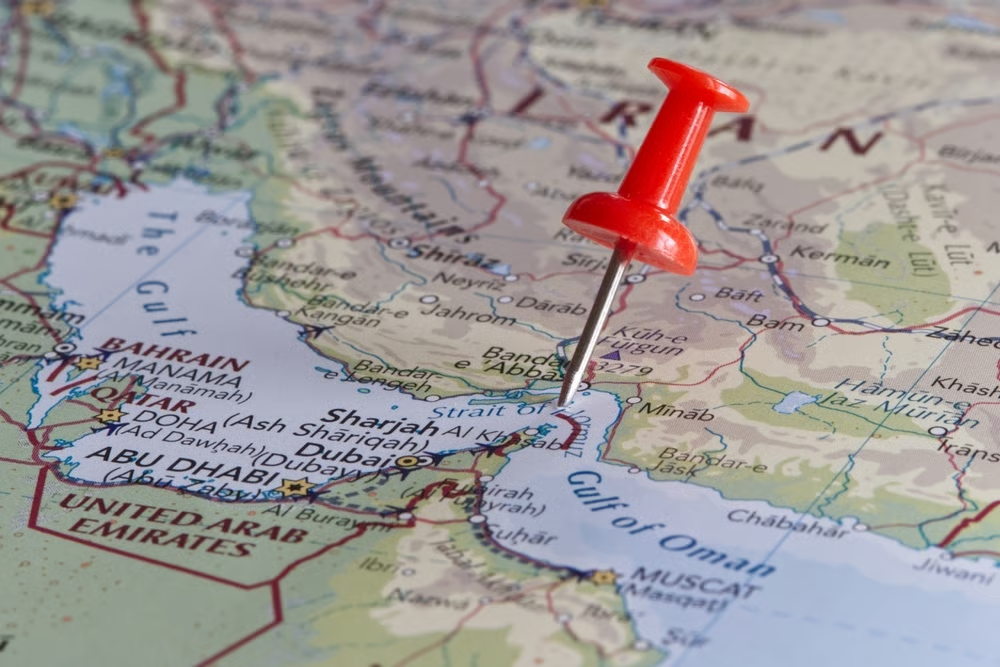
The United Arab Emirates is speeding up construction of a second pipeline to get its oil out without passing through the Strait of Hormuz, as the conflict with Iran drags on. The CEO of Abu Dhabi National Oil Co. (ADNOC), Sultan Ahmed Al Jaber, said in an interview at the Atlantic Council on Wednesday that the pipeline is now nearly 50% complete. Once finished, it will double ADNOC's export capacity from the port of Fujairah, which sits on the Gulf of Oman, just outside the strait.
The project's timeline has been accelerated because of the ongoing tensions. The pipeline is expected to be operational by 2027. Al Jaber noted that even if the conflict ended tomorrow, it would take at least four months to get oil flows back to 80% of normal levels, with full normalization expected by the first or second quarter of 2027.
Al Jaber didn't mince words about the broader implications. "Right now, too much of the world's energy still moves through too few chokepoints," he said. "This is not just an economic problem…this sets a dangerous precedent once you accept that a single country can hold the world's most important waterway hostage."
Wright Sees Reduced Hormuz Reliance
Energy Secretary Chris Wright told CNBC on Friday that the Strait of Hormuz's strategic importance to global energy markets could decline after the Iran conflict, as Gulf countries expand alternative pipeline routes that bypass the chokepoint. He said Iran's ability to block the passage is a "one-time" leverage point, and that new infrastructure would reduce reliance on the strait. However, he emphasized that while the route may become less critical, the region's role as a major global energy producer will remain unchanged.
Hormuz Closure Drains Oil Reserves
The Strait of Hormuz has been effectively closed since March 1, with the Trump administration repeatedly extending negotiation deadlines without a peace deal in sight. Iran has proposed managing the strait through an insurance-based model, which would allow it to retain control while remaining acceptable to other nations during peacetime.
On Wednesday, Iran allowed some oil shipping to resume, with Chinese and South Korean tankers reported crossing after a temporary easing of restrictions. Shipping traffic has begun to recover, rising to about 54 vessels last week—double the previous week—but still remains well below normal pre-war levels of around 140 daily crossings.
The closure is causing a rapid depletion of commercial oil inventories, warns Fatih Birol, the chief of the International Energy Agency (IEA). He revealed that strategic oil reserves have supplemented the market with 2.5 million barrels of oil per day. However, he warned that these reserves "are not endless," reported Reuters.
At 2:22 a.m. EST, Brent crude oil was trading 0.85% higher at $88.99 per barrel.