On Wednesday, House Minority Leader Hakeem Jeffries (D-N.Y.) accused the Donald Trump administration of diverting taxpayer money toward controversial priorities instead of addressing everyday American needs.
In a post on X, Jeffries said taxpayer dollars should be used to improve affordability for Americans and not for what he described as the misuse of federal funds.
"Taxpayer dollars should make life more affordable for everyday Americans," Jeffries wrote. He added, "Not to line the pockets of the powerful and reward the violent mob from January 6 with a $1.8 billion slush fund."
He also criticized spending on "a lavish ballroom," funding for "masked ICE agents brutalizing citizens," and what he called "a reckless war of choice in Iran."
Sen. Chris Murphy (D-Conn.) called the reported fund "outright theft" and criticized Republicans for defending it, arguing they were showing blind loyalty to the president. Sen. Bernie Sanders (I-Vt.) said Trump was seeking taxpayer money for allies and called it "beyond outrageous," adding that Americans should not finance Jan. 6-related individuals.
Sen. Patty Murray (D-Wash.) also criticized the proposal, claiming it prioritized Capitol riot-related payouts while ordinary Americans faced rising costs, including gas prices, under Trump's policies. Sen. Chris Van Hollen (D-Md.) said an official, Blanche, declined to rule out that the fund would not be used for payments to convicted Jan. 6 rioters and other criminals. He said he introduced an amendment to block such spending and accused Republicans of risking taxpayer money for criminal defendants.
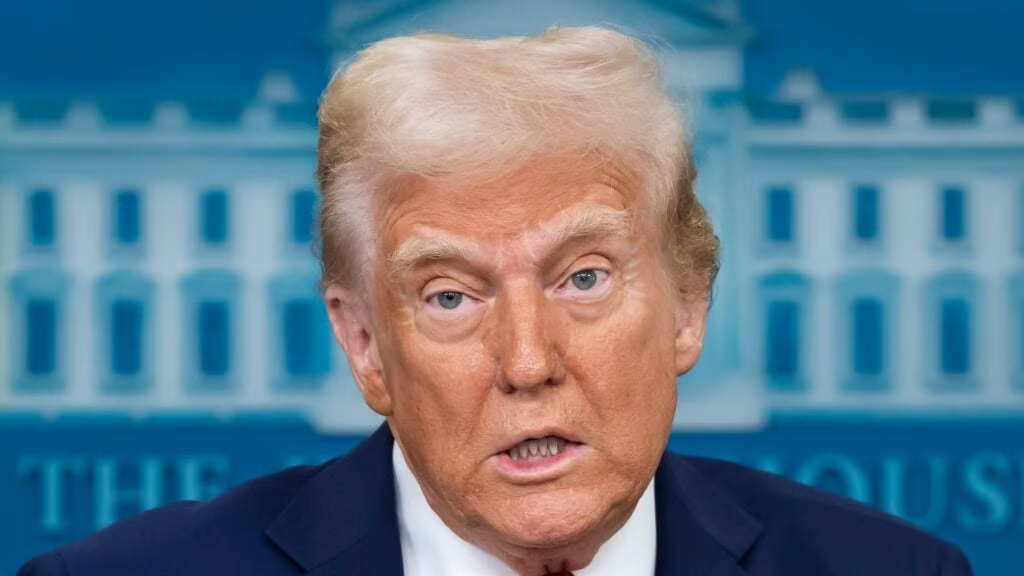
Earlier, President Trump was expected to drop his $10 billion lawsuit against the IRS, with reports saying a proposed settlement could include a $1.7 billion fund for allies claiming political targeting, including some linked to Jan. 6 cases.
Economist Justin Wolfers said wealthy Americans benefited from permanent Trump tax cuts while middle- and working-class households faced higher costs from inflation and tariffs. He also said temporary tax breaks for workers would expire after 2028, and that tariffs acted as a regressive tax. Former Rep. Charlie Dent (R-Pa.) added that tariff uncertainty was hurting business investment.