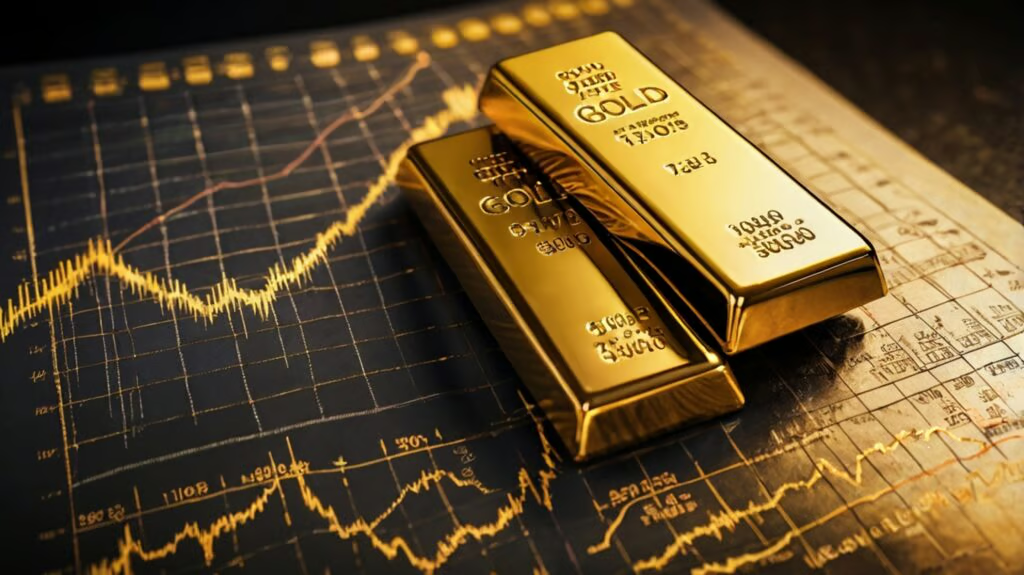
Gold has taken a bit of a hit lately, but don't expect Goldman Sachs to flinch. The bank is sticking to its forecast that gold will hit $5,400 per ounce by the end of 2026, arguing that the recent weakness is just a temporary bout of liquidation and profit-taking — not the end of the rally.
"Strong underlying interest in gold remains evident," Goldman said in a recent note, pointing to central bank surveys and rising geopolitical uncertainty. The bank admitted it had underestimated sovereign buying activity, especially after gaps emerged in official U.K. trade data from 2025 onward.
Goldman now sees central banks buying about 50 tons of gold per month on a rolling basis — nearly double its previous estimate of 29 tons. And that pace is expected to pick up further, averaging around 60 tons per month through 2026 as governments continue to move away from the U.S. dollar.
This trend didn't come out of nowhere. It arguably started with the sanctions and asset freezes after Russia invaded Ukraine in 2022. By late 2024, when the gold rally really took off, a broader shift toward resource nationalism and de-dollarization was already in full swing. Across emerging markets, governments are treating commodities like gold not just as exports or financial assets, but as strategic tools tied to sovereignty, fiscal security, and geopolitical leverage.
Policymakers on the Move
You can see this shift playing out in very different ways in Africa and Asia.
Take Ghana, Africa's largest gold producer. The government there is moving from a flat 5% royalty to a sliding-scale system that charges up to 12% when gold prices exceed $4,500 per ounce. It's an aggressive move to grab more state revenue from rising bullion prices.
According to Reuters, the move has sparked rare coordinated opposition from the United States, China, and major mining companies, all of whom warned about the risks to future investments. But Ghanaian officials seem determined to push ahead.
"They met us, they are not against the review in principle," said Isaac Tandoh, chief executive of Ghana's Minerals Commission, referring to diplomatic discussions with foreign governments. Ghana rejected proposals to delay the top royalty tier until gold reached $5,000 per ounce.
Mining executives are worried. Kenneth Ashigbey, head of the Ghana Chamber of Mines, warned the higher royalty burden would "dry up new projects and output."
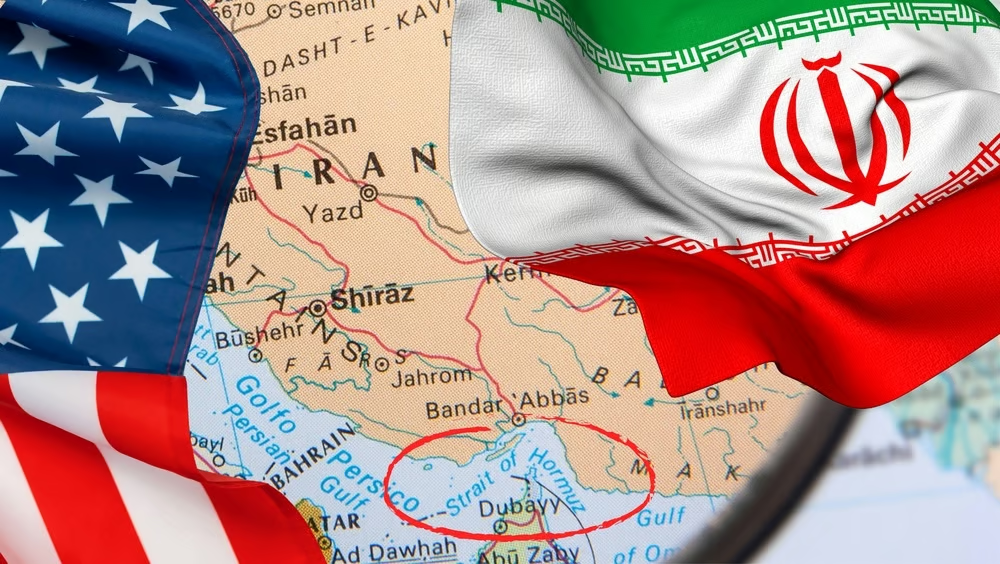
India, meanwhile, is dealing with the opposite problem. Instead of trying to maximize revenue from gold production, Prime Minister Narendra Modi is trying to suppress domestic gold demand. With a prolonged Middle East conflict pushing oil toward $100 per barrel and straining India's external finances, Modi has urged citizens to buy less gold, reduce foreign travel, and conserve fuel.
The government has already raised import duties on gold and silver to 15% as part of a broader effort to slow dollar outflows and defend the rupee.
"There is less appetite for further rupee depreciation, and the burden of adjustment may be incrementally shared with consumers," Nomura's analysts Aurodeep Nandi and Sonal Varma noted per BBC.
So you've got Ghana trying to capture more value from its gold, and India using patriotic austerity to curb consumer demand and stabilize its balance of payments. Two very different approaches, but they both show how gold's role is expanding from a simple store of value to a tool for policymakers.
Price Watch: SPDR Gold Shares (GLD) is up 3.32% year-to-date.