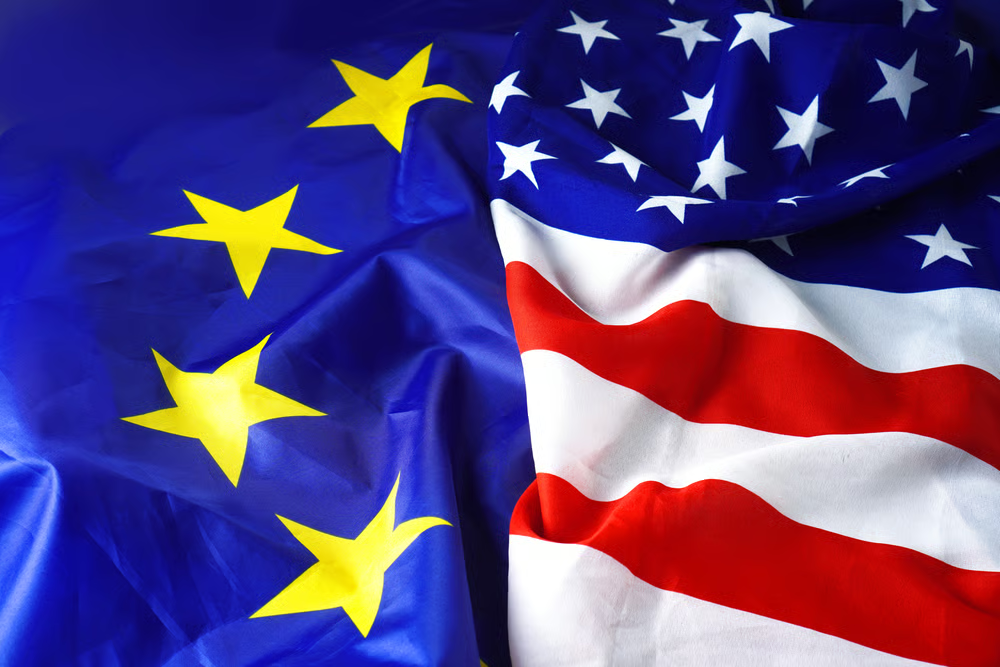
The European Union confirmed a trade agreement with the U.S. early Wednesday, potentially sidestepping the tariffs President Donald Trump had threatened to impose. Representatives from the European Parliament, the Council of the EU, and the European Commission reached a consensus after over five hours of deliberations. The agreement is rooted in a deal made last summer at Trump's golf resort in Turnberry, Scotland.
"The EU walks the talk, while defending our interests. Once approved, it'll boost transatlantic stability and cooperation," stated EU trade chief Maroš Šefčovič. "A deal is a deal, and the EU honours its commitments," she wrote.
Elements Of The Deal
The EU has agreed to eliminate tariffs on U.S. industrial goods and select agricultural products, while the U.S. has pledged to limit tariffs on most European exports to 15%. The agreement faced delays amid Trump's threats to annex Greenland and a U.S. Supreme Court ruling that struck down much of his tariff agenda.
The final version contains a provision permitting the EU to suspend the deal if the U.S. fails to reduce tariffs on European steel and aluminum imports by the end of 2026. The pact is scheduled to remain in effect until December 2029. Additionally, the deal allows the Commission to investigate import-related threats to EU industries, either independently or at the request of three member states, potentially leading to a partial or full suspension of the trade agreement.
The deal will take effect the day after formalization by both partners and its publication, while the lobster import regulation will apply retroactively from Aug. 1, 2025. However, negotiators rejected calls to include a provision canceling the trade deal if the U.S. again threatens EU territorial sovereignty, despite pressure from lawmakers after Trump's Greenland remarks.
Trump Threats Cloud Trade Pact
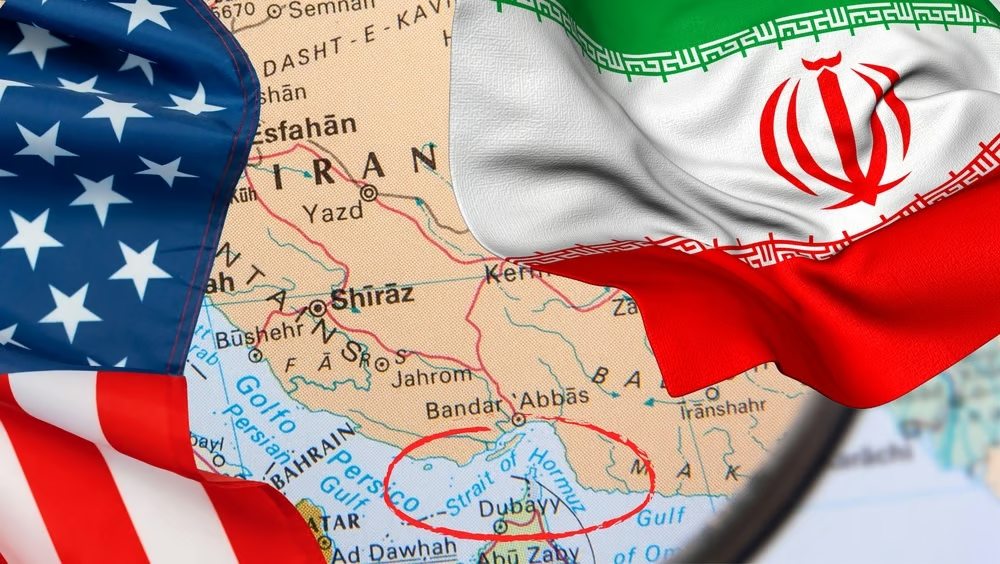
The EU and the U.S. share the world's largest and most integrated trade and investment relationship, accounting for nearly 30% of global trade and 43% of global GDP. However, the trade agreement was overshadowed by escalating tensions between the partners. Besides threatening the annexation of Greenland, the President also turned the heat on NATO members, many of which are also EU nations, calling out the lack of support to the U.S. amid the Iran war.
Earlier this month, Trump had threatened the EU with steeper tariffs if the bloc failed to ratify its trade agreement with Washington by July 4. Despite the public indication of progress on the deal, which was struck last July and set tariffs on most European goods at 15%, the threat of higher tariffs loomed.