Prediction markets may be shedding their niche reputation and evolving into a serious Wall Street product.
“Continued institutional adoption” and integrations with established financial platforms signal prediction markets are becoming “part of modern market infrastructure,” Kalshi Legal Counsel Valeria Vouterakou told MarketDash.
For example, Interactive Brokers Group, Inc. (IBKR) is now integrating Kalshi alongside traditional exchanges like CME Group Inc. (CME) and ForecastEx.
The trend isn’t without its critics. Last year, researchers conducted a field experiment that explicitly found prediction markets can be manipulated. But those in favor of prediction markets argue that the appeal lies in the discovery of real-time information.
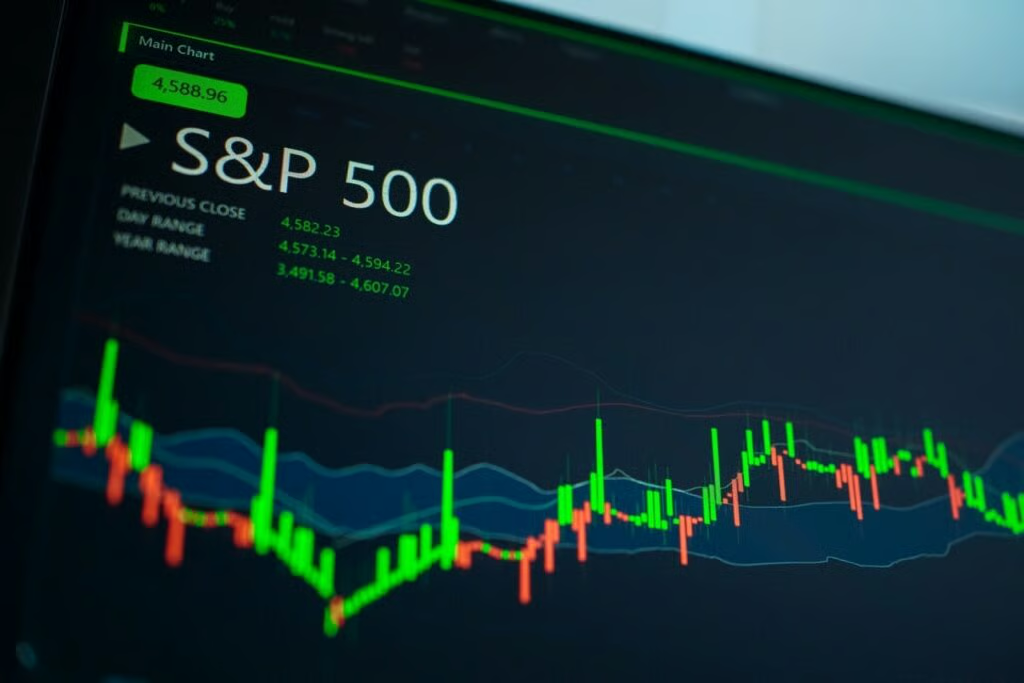
“Prediction markets are markets built around probabilities and information discovery,” Vouterakou said. Markets can now aggregate changing expectations faster than traditional polling or commentary.
Nvidia Earnings To Fed Decisions
The company sees prediction markets increasingly becoming tools for forecasting elections, economic data, Federal Reserve decisions, and even major corporate events.
“Participants continuously update positions based on new information, changing probabilities, and real economic incentives,” Vouterakou said.
Kalshi also believes the category is rapidly expanding beyond politics and macroeconomics.
“Today, markets already cover a broad range of topics connected to technology, AI, macroeconomics, business, and financial developments,” she said, including “AI regulation, major corporate earnings, economic indicators, and other events that people and institutions actively follow.”
That expansion could increasingly pull prediction markets into Wall Street conversations around companies like Nvidia Corp (NVDA) and major AI milestones.
AI And Prediction Markets
Kalshi also expects artificial intelligence to play a growing role in prediction markets as AI systems process massive amounts of news, economic data and public information in real time.
Still, Vouterakou said markets ultimately “depend on human judgment, risk assessment, and differing views about future outcomes.”