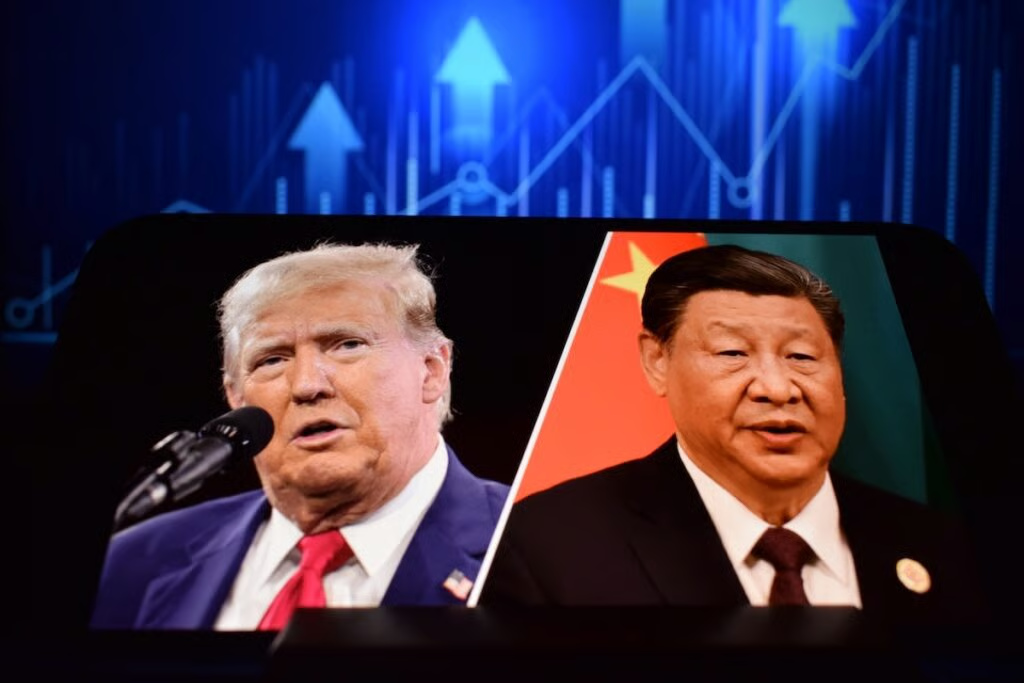
China changed the Chinese characters used to write Secretary of State Marco Rubio's name, creating a bureaucratic workaround that let him enter the country this week for President Donald Trump's meeting with Chinese President Xi Jinping.
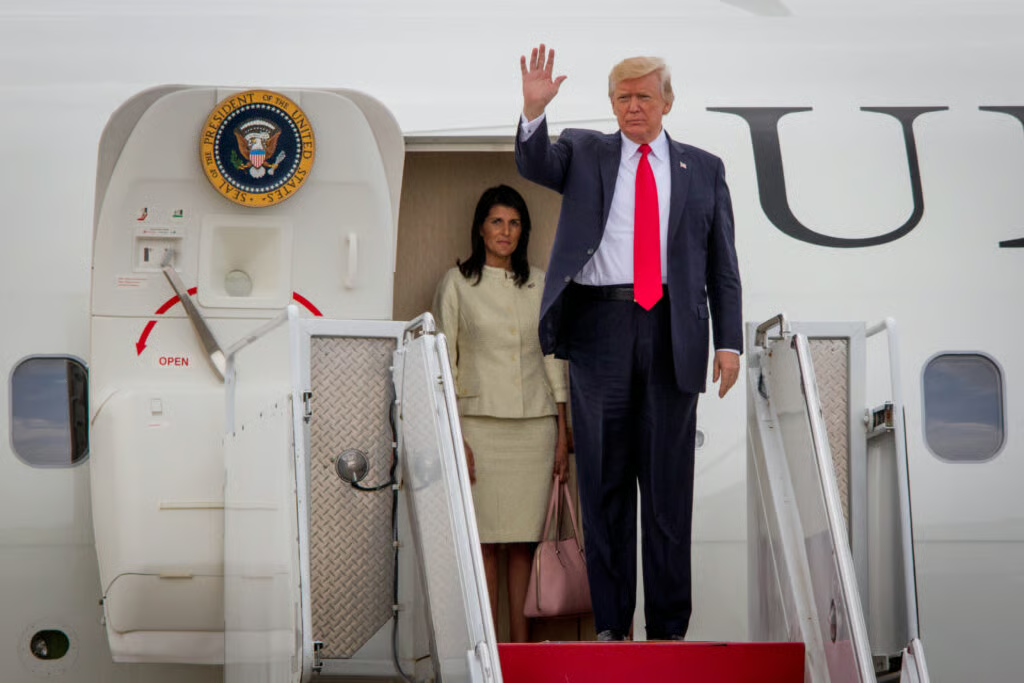
Rubio was sanctioned by Beijing in 2020 while serving as a U.S. senator after he criticized China's treatment of Uyghurs in Xinjiang and other alleged human rights abuses. The sanctions included a ban on Rubio entering China, which could have complicated his plans to accompany Trump aboard Air Force One.
But Chinese Embassy spokesperson Liu Pengyu told Agence France-Presse that Beijing would not block the secretary's travel, saying, "The sanctions target Mr. Rubio's words and deeds when he served as a US senator concerning China."
China Uses New Translation For Rubio
The Chinese government and official media began using a different character for "lu" in the first syllable of Rubio's surname after he took office last year, according to AFP. Two diplomats told the outlet they believed the change worked as a linguistic loophole, allowing Beijing to sidestep sanctions imposed under the older spelling of his name.
The Guardian reported that Foreign Ministry spokesperson Mao Ning said she "had not noticed it but would look into it" when asked last year about the new transliteration, citing Chinese state media sources.
Rubio has long criticized China, describing its communist government during his confirmation hearing as the "most potent and dangerous" near-peer adversary the United States has ever faced. He has also called for strong U.S. ties with Taiwan, the self-governing island expected to play a prominent role in this week's talks.
Taiwan And Trade Dominate Summit Agenda
Rubio told reporters last week that Taiwan is likely to come up, saying both countries understand that destabilization in the Taiwan Strait or the broader Indo-Pacific would serve neither side's interests.
Meanwhile, Trump began the busiest part of his two-day Beijing visit on Thursday, May 14, with talks aimed at steadying a turbulent relationship strained by trade, tariffs, technology controls, and Taiwan. Reuters reported on Tuesday that China warned ahead of the summit against U.S. arms sales to Taiwan, underlining one of the thorniest issues on the agenda.
Trump is scheduled to meet Xi at the Great Hall of the People on Thursday, followed by formal talks and a state banquet later in the day. The President's first visit to China in nearly nine years comes amid tensions over trade, technology, defense, Taiwan, and artificial intelligence, and overlaps with a fragile U.S.-Iran ceasefire and energy-market concerns.