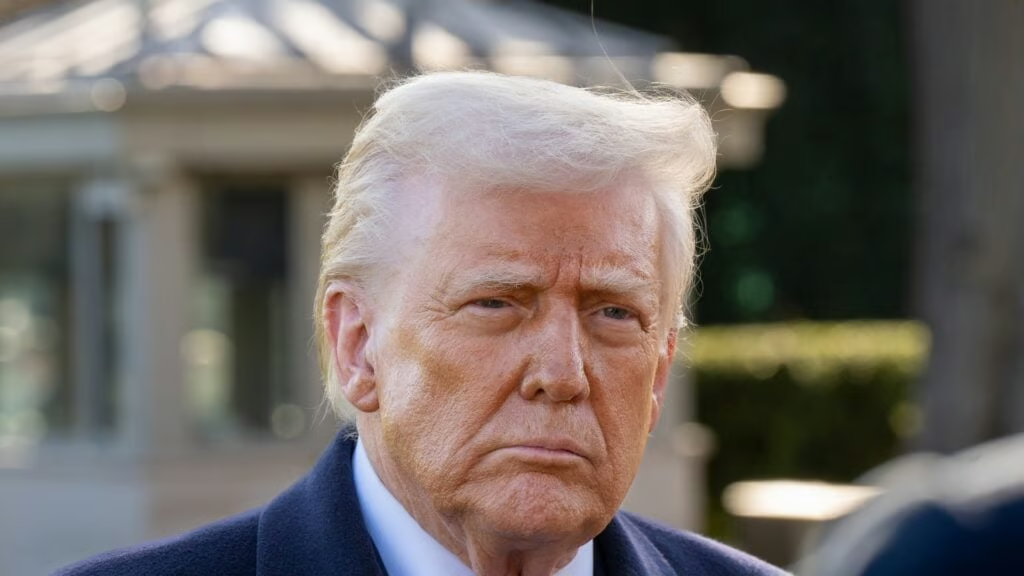
President Donald Trump is heading into a high-stakes meeting with Chinese President Xi Jinping, and the U.S. auto industry is making its voice heard: keep Chinese electric vehicles out of America.
According to a Reuters report on Monday, Trump sparked concern earlier this year when he told the Detroit Economic Club it would be "great" if Chinese automakers built plants in the U.S. That comment set off alarm bells among industry leaders and lawmakers, who see Chinese EVs as a threat to national security and domestic jobs.
Senator Elissa Slotkin (D-MI) didn't mince words. "Please don't make a bad deal," she said, urging Trump to reject Chinese investment in the auto sector. She's backing a bipartisan bill with Senator Bernie Moreno (R-OH) called the Connected Vehicle Security Act. The proposal would codify a Biden-era rule that restricts connected-car data from Chinese vehicles, making it much harder for any future administration to reverse course.
Trade groups representing automakers, dealers, and suppliers are lining up behind a tougher stance, arguing that Chinese automakers benefit from massive state support that gives them an unfair advantage. The message is clear: letting them into the U.S. market could devastate the domestic industry.
Meanwhile, U.S. Trade Representative Jamieson Greer has signaled that the Trump administration doesn't plan to change the existing rules limiting Chinese software and hardware in American cars. And Pete Hoekstra, Trump's ambassador to Canada, has stated that no Chinese EVs will be allowed to cross the border from Canada, following Ottawa's agreement with Beijing.
On the other side of the Pacific, Chinese automaker BYD (BYDDY) is making moves. The company's exports jumped 70% in April, with 135,098 vehicles shipped overseas, according to a Hong Kong stock exchange filing. European registrations for BYD surged 155% in the first quarter of 2026. But here's the interesting part: BYD's Executive Vice President Stella Li says the company doesn't need the U.S. market to succeed. "We survive and are successful without the US market today," she said in an interview.
That might be true for now, but the pressure on Trump is mounting. With Xi Jinping's visit approaching, the auto industry is hoping the president will draw a firm line. As Slotkin put it, the stakes are too high for a bad deal.