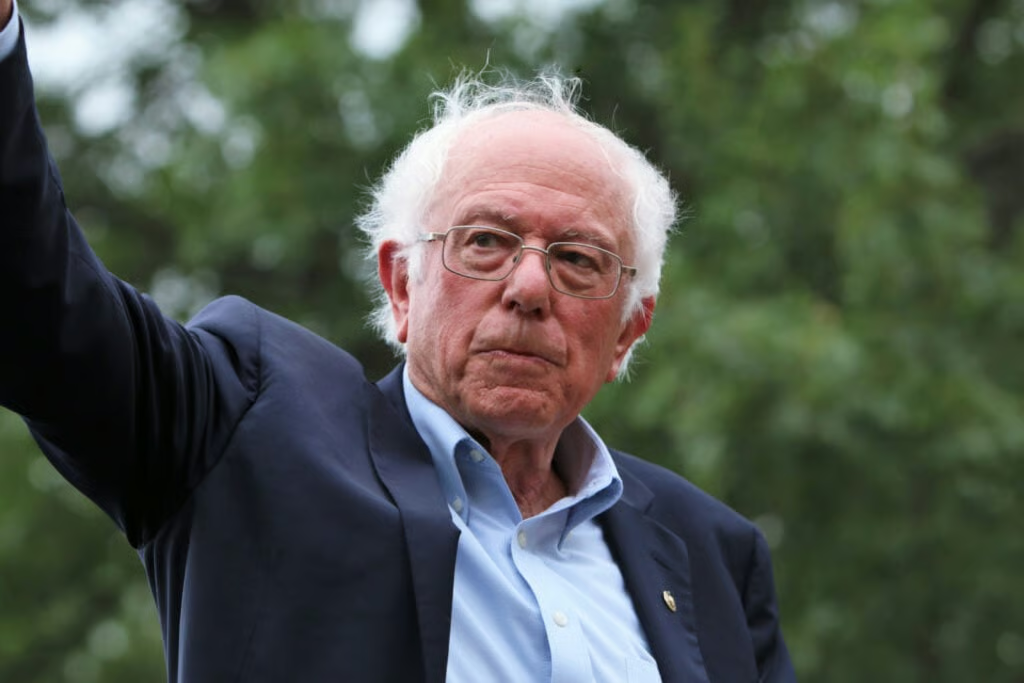
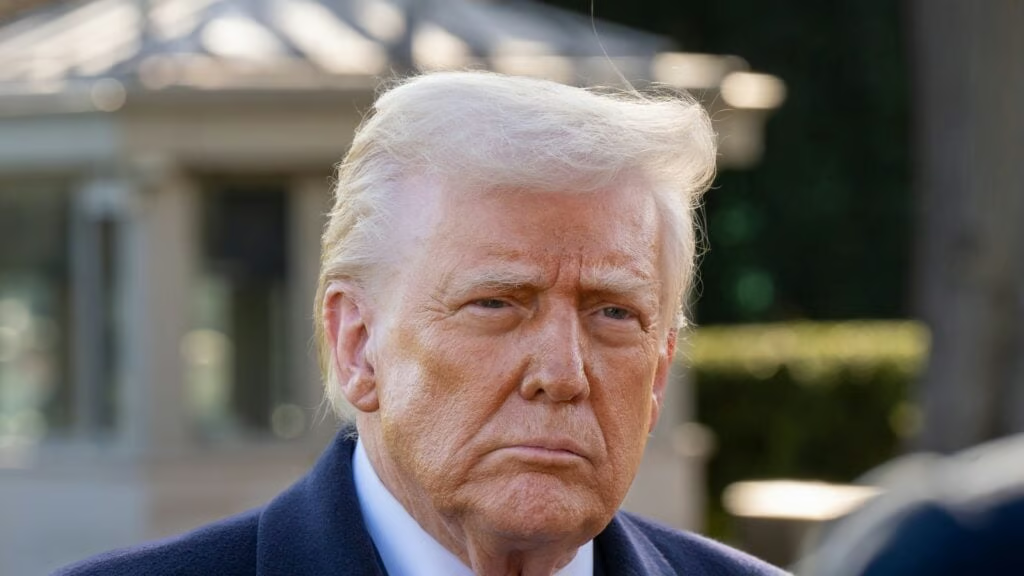
Sen. Bernie Sanders (I-VT) is sounding the alarm on physical AI, and he's not mincing words. In a Sunday post on X, the Vermont Independent called out companies like Uber Technologies Inc. (UBER) and Amazon founder Jeff Bezos for pushing automation that could leave millions of workers in the dust.
Sanders pointed to the rapid expansion of driverless vehicles, which he said puts "truckers, cab drivers, Uber drivers" at risk. Then he turned to Bezos, who is reportedly seeking $100 billion to fill factories with robots. "We are not ready for what's coming," Sanders wrote.
Bezos's vision of automated factories, Sanders argued, would mean "ending working-class people making a living in manufacturing." And driverless vehicles spreading across the country? That would wipe out "millions of decent-paying jobs" in transportation, he said.
This isn't Sanders's first rodeo with AI anxiety. He recently raised red flags over comments from Verizon CEO Dan Schulman, who predicted 20-30% job cuts as AI adoption grows.
Uber's Robotaxi Bet
Uber is going all-in on driverless tech. The company has committed a reported $10 billion to the sector, with $2.5 billion earmarked for equity stakes in robotaxi operators and the rest for expanding its own robotaxi fleet. CEO Dara Khosrowshahi told investors on the first-quarter 2026 earnings call that self-driving represents a "trillion-dollar" total addressable market for Uber, and he reiterated the company's partnership model.
Elon Musk's Pro-Human AI Vision
Not everyone in tech is on the same page. Tesla Inc. (TSLA) CEO Elon Musk has been praised by Florida Governor Ron DeSantis for keeping humans at the center of AI development. This comes amid SpaceX's partnership with AI company Anthropic and reports that Musk would cut off computing power to companies that use AI to harm humans.
Musk said in March that Tesla plans to expand its human workforce even as it integrates AI, predicting that "output per human at Tesla" would get "nutty high" thanks to AI adoption. It's a different vision — one where AI augments workers rather than replaces them.
For Sanders, though, the clock is ticking. "We are not ready for what's coming," he warned — and with billions pouring into automation, the future may arrive faster than we think.