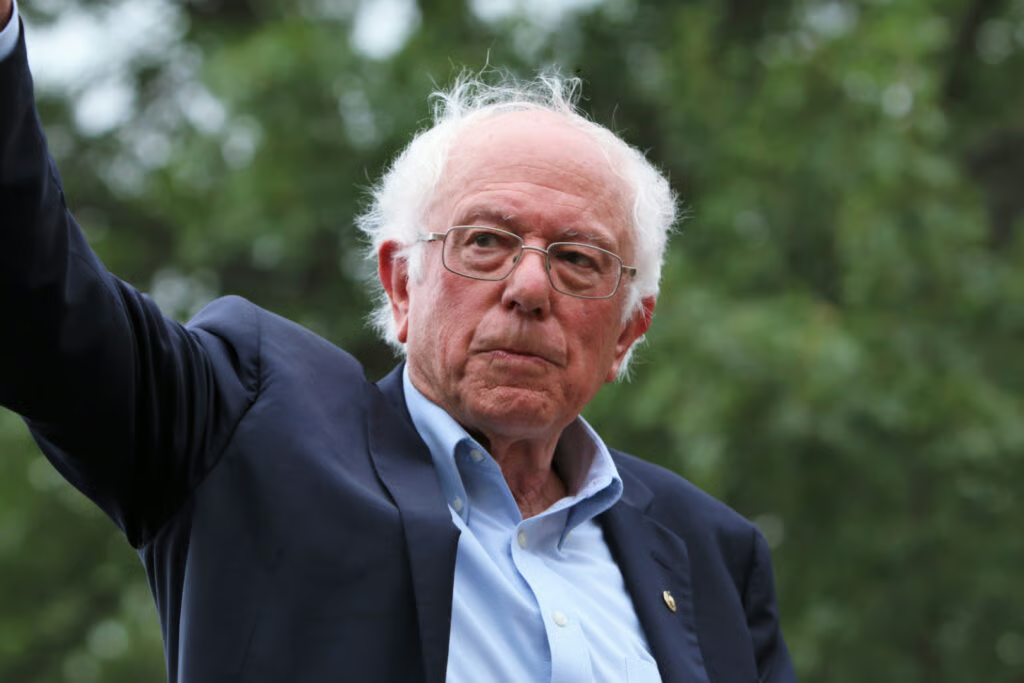
Sen. Bernie Sanders (I-Vt.) took to X on Saturday to sound the alarm on what he calls a "massive wealth inequality" crisis. The numbers he cited are staggering: the world's roughly 3,000 billionaires collectively added about $2.5 trillion to their fortunes over the past year, pushing their combined wealth to approximately $18.3 trillion.
Sanders also highlighted an even more extreme concentration at the very top, writing that "the 12 richest people own more wealth than the bottom half of humanity." His message was clear: "Our goal: create a global economy that works for ALL, not just the few."
This isn't just a global story—it's playing out in the U.S. too. Earlier, Joe Rogan warned that America's middle class is shrinking and workers face rising financial pressure. Chamath Palihapitiya chimed in, arguing the system is "out of balance." His point: capital owners have gained more wealth than wage earners, while taxes on labor remain higher than on investment income. He also pointed to automation and AI, which allow companies to make more money with fewer workers, intensifying the divide.
Long-term data backs this up. Since 1976, wealth gains have been heavily concentrated among the ultra-rich. The top 0.001% have seen massive wealth growth, while average households have seen only modest gains. Lower-income families, meanwhile, often carry more debt than assets. The takeaway: asset owners have benefited far more than wage-dependent households, widening the wealth gap to a chasm.