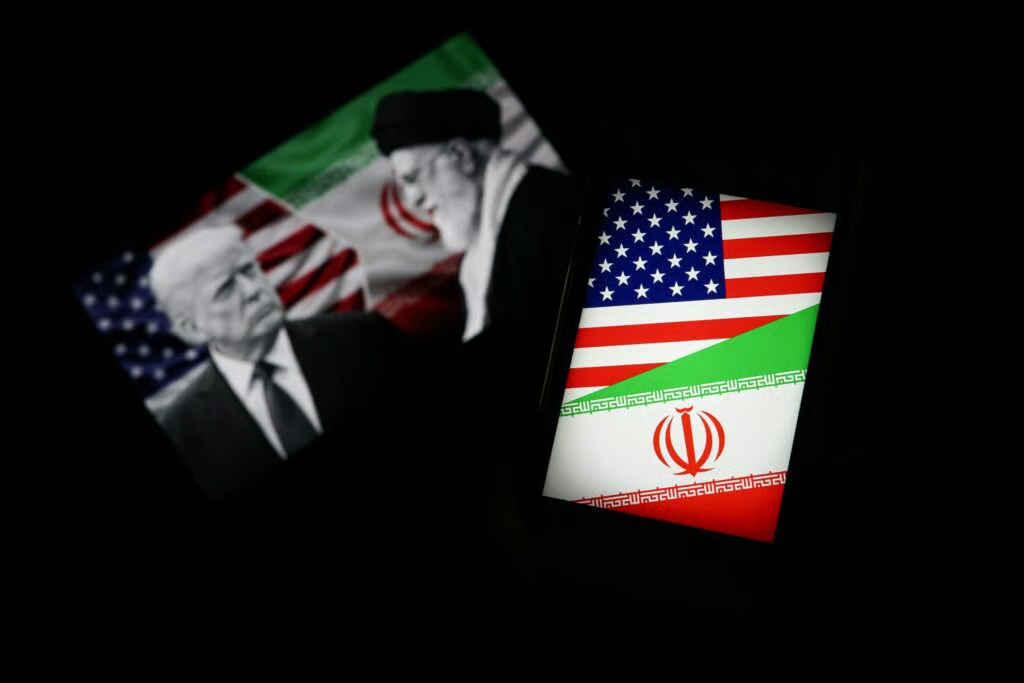
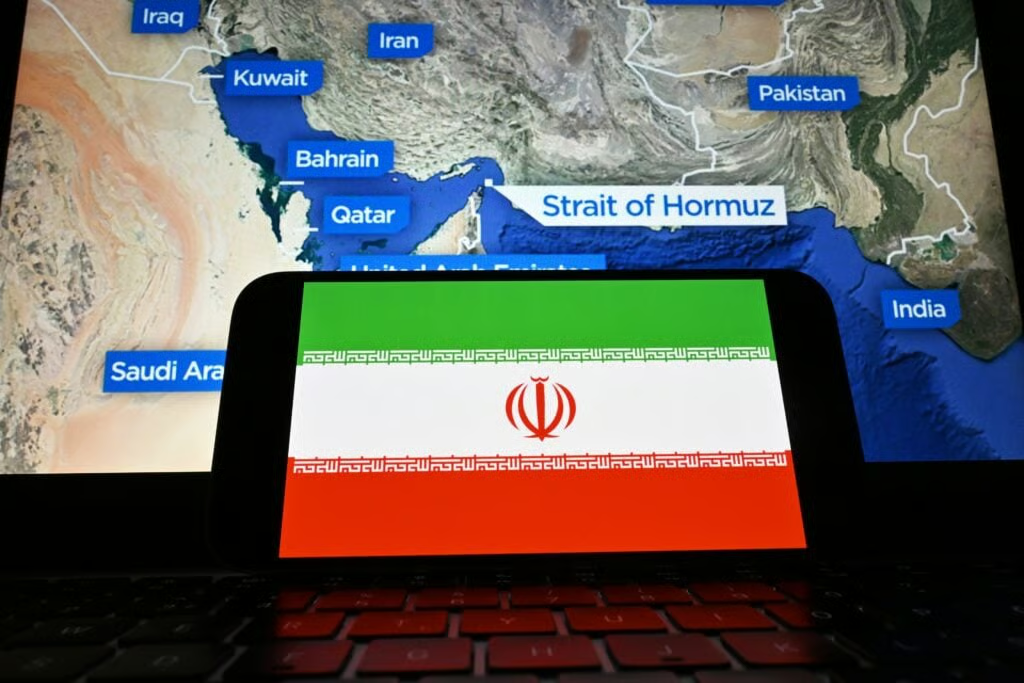
German Chancellor Friedrich Merz is walking a tightrope. On one hand, he's publicly questioning President Trump's strategy in Iran. On the other, he's insisting that the U.S. remains Germany's most important partner. It's a delicate dance, and the music just got louder.
Merz took to X on Sunday to state, “We share a common goal: Iran must not be allowed to acquire nuclear weapons.” The message came just days after he questioned Trump's exit strategy from the conflict with Iran, suggesting the U.S. was being “humiliated” by Tehran's leadership.
In an interview with public broadcaster ARD, Merz acknowledged that Trump “has a different view on these issues” but stressed that Germany still sees the U.S. as an “important” partner. That's diplomatic-speak for “we need each other, even if we don't always agree.”
The timing is awkward. Trump has announced plans to withdraw over 5,000 U.S. troops from Germany, a move that would significantly impact the country's largest European base. The withdrawal came after Merz's criticism of U.S. handling of the Iran war, but the Chancellor rejects any direct connection. “I don't think my comments caused this,” he said, though the coincidence is hard to ignore.
Meanwhile, the economic front is heating up. On Saturday, Trump declared a 25% tariff on EU cars and trucks, citing noncompliance with a trade agreement. Vehicles made in U.S. plants would be exempt, but German automakers like BMW (BMWKY) and Mercedes-Benz Group (MBGAF) (also traded as MBGYY) are likely to feel the squeeze. Tech firms SAP SE (SAP) and Infineon Technologies AG (IFNNY) are also under pressure as trade tensions escalate.
Merz's balancing act reflects a broader challenge for Europe: how to maintain a strong alliance with the U.S. while pushing back on policies that seem counterproductive. For now, the message is clear: we share common goals, even if the path to get there looks very different.