





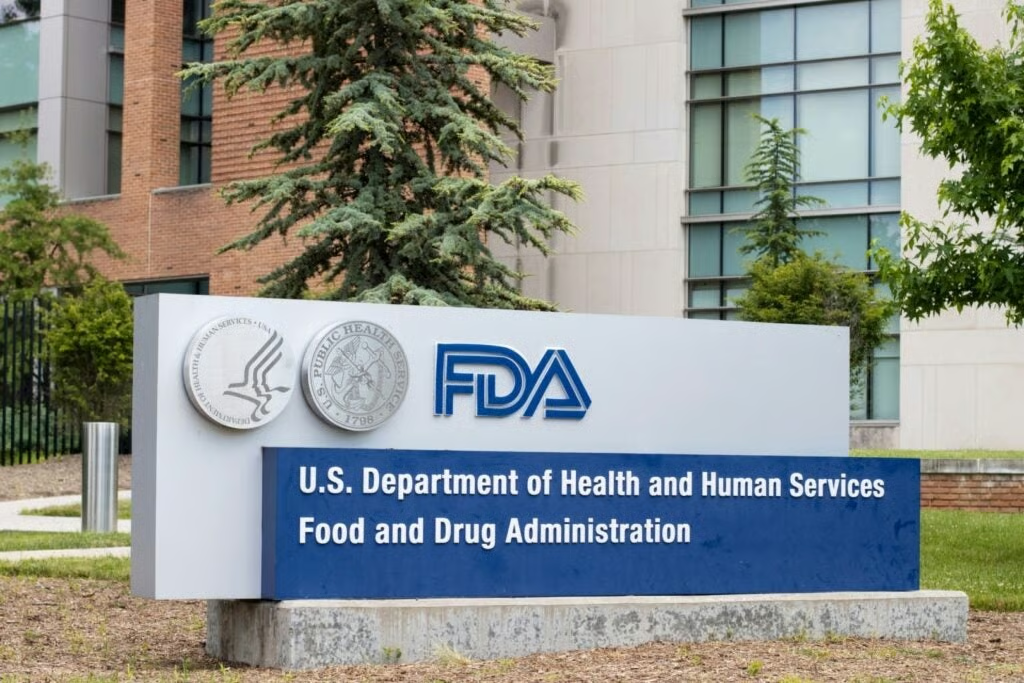
The U.S. Food and Drug Administration's Oncologic Drugs Advisory Committee (ODAC) gave AstraZeneca Plc (AstraZeneca (AZN)) a mixed bag this week: a thumbs-up for one cancer drug and a thumbs-down for another. It's a reminder that even when the science looks strong, the panel's view on benefit versus risk can split.
AstraZeneca Gets a Split Decision from FDA Panel: One Drug Wins, Another Loses
MarketDash
An FDA advisory committee backed AstraZeneca's prostate cancer combo but rejected its breast cancer therapy, offering a mixed verdict on the company's oncology pipeline.
Get Astrazeneca Alerts
Weekly insights + SMS alerts
Truqap Gets the Green Light for Prostate Cancer
The panel voted 7-1, with one abstention, that AstraZeneca's Truqap (capivasertib) — combined with abiraterone and androgen deprivation therapy (ADT) — has a favorable benefit-risk profile for patients with PTEN-deficient metastatic hormone-sensitive prostate cancer (mHSPC). The decision was based on the Phase 3 CAPItello-281 trial, which showed a statistically significant 19% reduction in the risk of disease progression or death. Median radiographic progression-free survival improved to 33.2 months, compared to 25.7 months in the control arm.
Secondary endpoints also favored the Truqap combo, including delayed progression to castration resistance and improvements in prostate-specific antigen progression. Overall survival data are still immature, but interim trends lean in favor of the combination. The safety profile was consistent with known effects, though Grade 3 or higher adverse events were more common in the Truqap arm.
Camizestrant Falls Short in Breast Cancer
On the other side of the coin, the panel voted 3-6 against AstraZeneca's camizestrant, combined with CDK4/6 inhibitors, for first-line treatment of HR-positive, HER2-negative advanced breast cancer with ESR1 mutations. This was despite strong efficacy data from the SERENA-6 trial, which showed a 56% reduction in disease progression or death. But the panel wasn't convinced on the benefit-risk balance, partly because key secondary endpoints — time to second disease progression (PFS2) and overall survival — were immature at the time of the interim analysis.
A subsequent pre-planned analysis did show a statistically significant and clinically meaningful PFS2 benefit of 25.7 months versus 19.1 months, and overall survival continued to mature in favor of the camizestrant combination. Still, the FDA had raised multiple concerns about interpreting the SERENA-6 results in briefing documents.
Market Reaction
AstraZeneca shares were down 1.13% at $185.25 in premarket trading on Friday. Over the past month, AZN has declined about 6.9%, while the S&P 500 rose 9.9%. Year-to-date, the stock is roughly flat, compared to the index's 4.8% gain.
More News

S&P 500's Rally Is Riding on Fewer Engines Than at Any Point Since the Dot-Com Bubble, Goldman Warns

The SpaceX filing just happened. You’ve got weeks.

Apple's Record March Quarter Has Analysts Feeling Bullish Despite AI Spending and iPhone Miss

Israel Warns It May 'Act Again' on Iran as Trump Weighs Strikes and IRGC Threatens Retaliation

Esperion Stock Surges on $1.1 Billion Buyout by ARCHIMED

Trump's Executive Order 14330: What Wall Street Doesn't Want You to Know

Reddit Turns Human Chatter Into Wall Street Gold With Blowout Q1
Axsome's Auvelity Gets FDA Nod for Alzheimer's Agitation, Opening a Big New Market
Get Astrazeneca Alerts
Real-time alerts on price moves, news, and trading opportunities.
Join 20,000+ investors. No spam, ever.
Featured Articles
View all newsS&P 500's Rally Is Riding on Fewer Engines Than at Any Point Since the Dot-Com Bubble, Goldman Warns
By MarketDash
May 1, 2026
Trump's Executive Order 14330: What Wall Street Doesn't Want You to Know (Ad)
By The Oxford Club
Apple's Record March Quarter Has Analysts Feeling Bullish Despite AI Spending and iPhone Miss
By MarketDash
May 1, 2026
Israel Warns It May 'Act Again' on Iran as Trump Weighs Strikes and IRGC Threatens Retaliation
By MarketDash
May 1, 2026
Esperion Stock Surges on $1.1 Billion Buyout by ARCHIMED
By MarketDash
May 1, 2026

Mar-a-Lago Bombshell (Ad)
By Stansberry Research
Reddit Turns Human Chatter Into Wall Street Gold With Blowout Q1
By MarketDash
May 1, 2026
Axsome's Auvelity Gets FDA Nod for Alzheimer's Agitation, Opening a Big New Market
By MarketDash
May 1, 2026