Here's a situation. The United States and Iran have been in a pretty nasty fight since late February, after Israeli and U.S. strikes on Iran kicked things off. It's been bad—thousands of deaths, and a whole lot of economic disruption, especially after Iran decided to block the Strait of Hormuz. So, after a Pakistan-mediated two-week ceasefire and some heightened threats from President Donald Trump, everyone is heading to the table. High-level officials from both sides are set to meet Saturday morning local time in Islamabad, the White House said Thursday. The goal? To negotiate something more lasting.
On Friday, Pakistan's Deputy Prime Minister & Foreign Minister, Ishaq Dar, made things a bit easier for the attendees, announcing visa-on-arrival and airline boarding clearance for all the delegates and journalists coming for what's being called the Islamabad Talks. Because nothing says "productive diplomacy" like streamlining the airport experience.
Who's Showing Up?
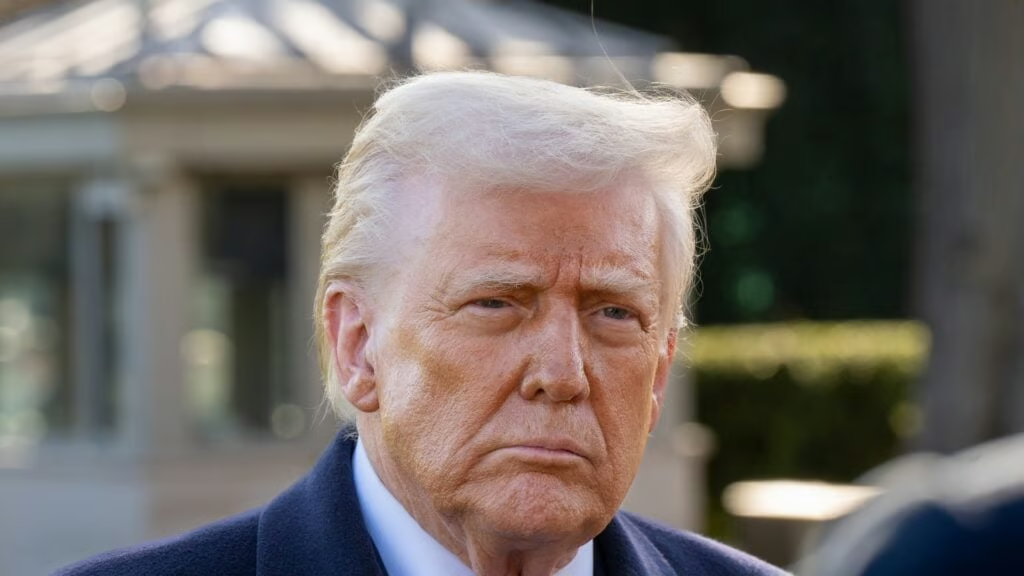
So, who's actually going to be in the room? According to the White House, President Trump is sending a delegation that includes his son-in-law Jared Kushner, Vice President JD Vance, and special envoy Steve Witkoff. The meeting will be hosted by the Prime Minister of Pakistan, Shehbaz Sharif. On the other side, the Iranian representation is expected to include the Parliament Speaker, Mohammad-Bagher Ghalibaf, and the Foreign Minister, Abbas Araghchi. It's a serious lineup, which suggests both sides are at least pretending to take this seriously.
Where's the Meeting?
Top delegates are expected to stay at the Serena Hotel in Islamabad, which might also host the talks themselves. The hotel has been cleared of guests, with nearby roads sealed and secured by the army. Because when you're trying to broker peace between historic adversaries, you definitely want to do it in a bubble. Alternative venues under consideration include the prime minister's secretariat, the city's convention center, or a secure military site, according to reports on Friday. They're basically picking the most secure conference room in town.
Iran's Big Ask: The 10-Point Plan
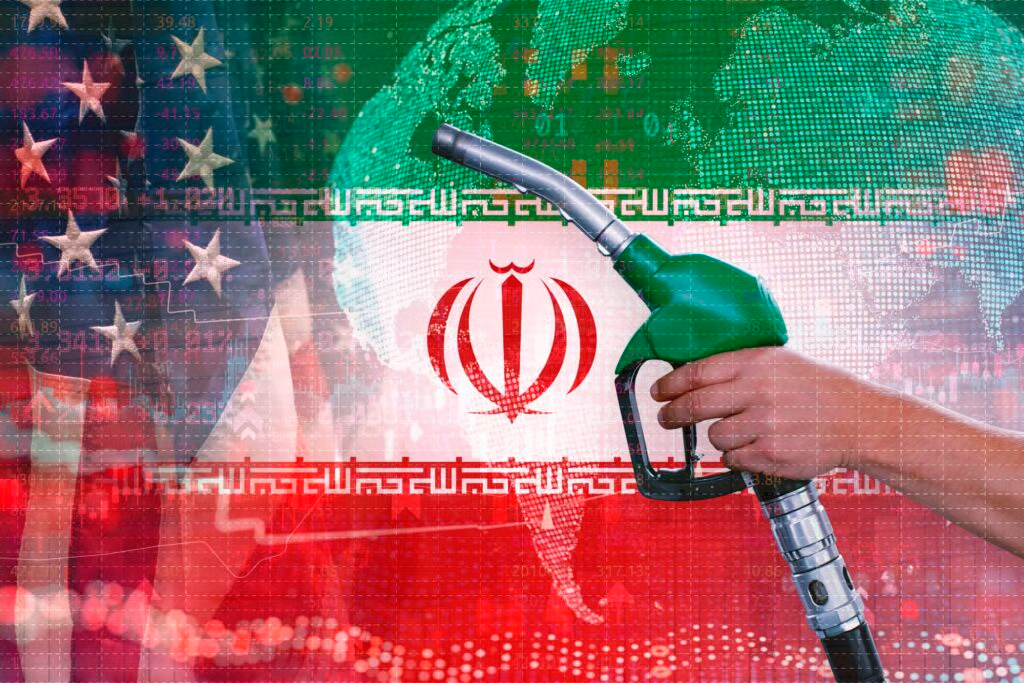
One of the central pieces of paper on the table will be Iran's widely-circulated 10-point peace proposal. It's a doozy. The demands include lifting sanctions, giving Iran control of the Strait of Hormuz, a U.S. military withdrawal from the Middle East, and recognition of Iran's uranium enrichment rights. The U.S. has not agreed to this plan. President Trump has rejected key provisions, especially the uranium enrichment part, and has pushed back on the versions floating around publicly. However, the White House did say on Wednesday that a revised Iranian proposal was a "workable" basis for further talks behind "closed doors." So, they're talking about talking about it. Sanctions relief and tariff adjustments, however, might still be on the discussion menu.
The Strait of Hormuz Problem
Speaking of the Strait of Hormuz, it's expected to be a key topic. This tiny waterway is a big deal—about 20% of the world's oil flows through it. The conflict kicked off an energy crisis when Iran blockaded it. Now, there are reports that Iran may want to impose tolls on passing ships. President Trump has said the strait must remain open to sustain the ceasefire and has even floated the idea of a U.S.–Iran "joint venture" to manage toll collection and secure the waterway. That's one way to monetize a geopolitical chokepoint. Tensions escalated, though, as Iran signaled a potential closure of the strait following Israeli strikes in Lebanon. Later, Trump criticized the reported tolls, warning Iran to stop immediately and suggesting the U.S. should itself benefit financially from any fees collected. Because if there's going to be a toll booth in the Persian Gulf, America wants a cut.
The Lebanon Confusion
The ceasefire itself is looking a bit wobbly because of a disagreement over whether it includes Israel's operations in Lebanon. Pakistan initially said Lebanon was included, but the United States and Israel disputed this. President Trump urged Israeli Prime Minister Benjamin Netanyahu to scale back strikes, calling it a "separate skirmish," while Vice President Vance called the dispute a misunderstanding. Netanyahu later said he had ordered his cabinet to begin direct negotiations with Lebanon. So, there's a side negotiation about a side conflict. It's negotiations all the way down.
Reading the Room
The public sentiments from both sides are, predictably, not quite aligned. Vice President Vance said Iran would be making a poor choice if it withdrew from talks, though he acknowledged it was up to them. Meanwhile, President Trump told NBC News on Thursday that he was "very optimistic" about a peace deal, saying Iran appears more cooperative in private and has agreed to key terms. However, Iran's public stance contrasts sharply, with state media portraying the situation as a major victory for Tehran and claiming it forced the U.S. into negotiations. So, in private: hopeful cooperation. In public: triumphant defiance. It's the classic diplomatic two-step.