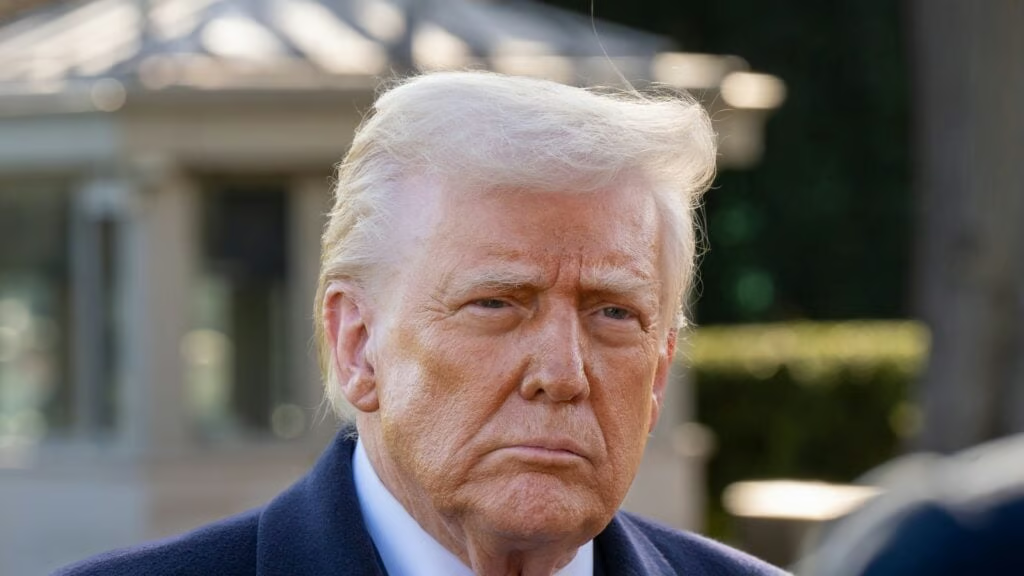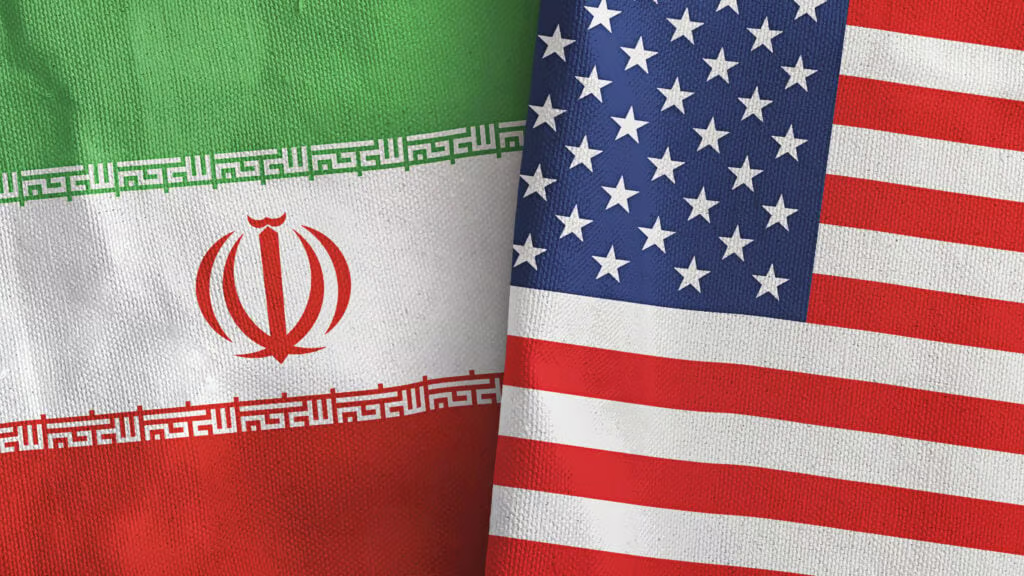
So, the U.S. and Iran agreed to a ceasefire earlier this week. That's the good news. The less-good news is that by Thursday, President Donald Trump was already calling out Iran on Truth Social for doing a "very poor job, dishonorable some would say, of allowing Oil to go through the Strait of Hormuz." He added, "That is not the agreement we have." In a separate post, he warned Iran not to start charging fees to ships passing through the critical waterway—a move that earlier reports suggested Iranian officials were considering.
Not to be outdone, Iran fired back on Thursday, accusing the U.S. of violating the ceasefire. Iranian parliamentary speaker Mohammad Bagher Ghalibaf claimed the U.S. had broken three clauses of the agreement. So much for the détente.
With the war of words heating up again, everyone's wondering: will this ceasefire actually lead to a permanent peace deal? And if so, when? Instead of just guessing, some people are putting real money on the answer.
On Polymarket, a prediction platform built on Polygon (POL) where users bet with the USDC (USDC) stablecoin, there's an active contract asking "US x Iran permanent peace deal by...?" So far, over $405,000 has been wagered on the outcome. The market isn't exactly brimming with optimism for a quick resolution.
The probability for a deal by April 22 is sitting at just 13%, down 13% from earlier levels. It ticks up to 20% for April 30. The most confident bettors are pointing to May 31, which carries a 36% probability—the highest of any date listed. In other words, the smart money says don't hold your breath.
All this uncertainty is playing out in the oil markets, too. When Trump announced the two-week ceasefire, West Texas Intermediate crude promptly fell 15.11% to $95.88 a barrel. But with the agreement already on shaky ground, prices have clawed back some of those losses, rising to $98.23. It's a neat reminder that in geopolitics, like in markets, it's often the gap between expectation and reality that moves prices.