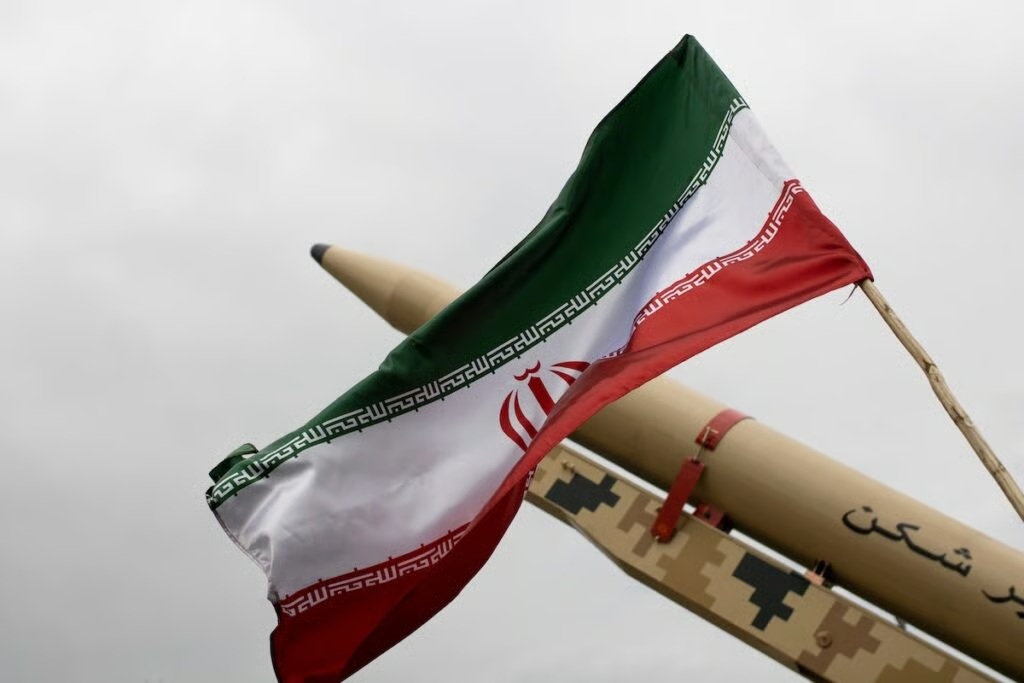
Here's a diplomatic situation that's getting tense enough to make your morning coffee taste bitter. The speaker of Iran's parliament, Mohammad Bagher Ghalibaf, dropped a not-so-subtle warning on Thursday: Lebanon is part of the proposed two-week ceasefire understanding between Tehran and Washington, and further attacks there could get a "strong" response. This comes after Israel carried out large-scale strikes in Lebanon on Wednesday.
Ghalibaf took to X, posting a graphic with the message "Time is running out." The graphic stated that Iran views Lebanon and the wider "Resistance Axis" as inseparable from the 10-point ceasefire proposal and that violations would carry "explicit costs." In simpler terms: mess with Lebanon, and you're messing with the whole deal.
Those Israeli strikes on Wednesday reportedly killed hundreds in Lebanon, according to Reuters. That really highlights the core dispute here: does this fragile U.S.-Iran truce extend beyond Iran's own borders? Iran and Pakistan say yes, Lebanon is covered. The United States and Israel say no, it's not. French officials have also publicly argued that Lebanon should be included. It's a classic diplomatic "he said, she said," but with much higher stakes.
Ghalibaf's post insisted that Lebanon's status in the proposal had been clearly acknowledged and couldn't be rolled back, even during talks in Islamabad where Pakistan has been mediating. Meanwhile, the rhetoric got another boost from Iranian Foreign Minister Abbas Araghchi. In his own post on X, he linked regional peace to Israeli domestic politics, writing: "Netanyahu's criminal trial resumes on [Sunday]. A region-wide ceasefire, incl in Lebanon, would hasten his jailing." He also warned the United States not to "crater" its economy by letting Israeli Prime Minister Benjamin Netanyahu derail diplomacy.
On the other side, Netanyahu, according to another Reuters report, said Israel is preparing for possible direct talks with Lebanon 'as soon as possible.' Those discussions would be expected to center on security arrangements and the possible disarmament of Hezbollah, the Iran-backed group in southern Lebanon. So, while the public warnings fly, the groundwork for talks is apparently being laid. It's a high-stakes game of chicken with a very complex ceasefire hanging in the balance.