Late Thursday, the mood in the markets took a familiar turn: stocks dipped, oil jumped. It's the classic geopolitical tension shuffle, and this time the music is playing around the Strait of Hormuz.
U.S. stock futures edged lower as oil prices surged above $98 per barrel. This comes amid rising geopolitical tensions tied to that critical waterway and renewed diplomatic activity involving Israel and Lebanon.
Markets Take a Knee as Oil Stands Up
Let's talk numbers. As of 8:42 p.m. EDT, Dow futures fell 40.00 points, or 0.08%, to 48,376.00. The S&P 500 futures declined 3.50 points, or 0.05%, to 6,859.75, and Nasdaq 100 futures slipped a more modest 5.25 points, or 0.02%.
Over in the commodities pit, the action was hotter. WTI crude rose 0.65% to $98.51 per barrel, while Brent crude gained 0.83% to $96.72. The products followed suit: RBOB gasoline futures climbed 0.88% to $3.0272 per gallon, and ULSD heating oil futures advanced 0.95% to $3.9745 per gallon. Even natural gas futures edged up 0.22% to $2.676 per MMBtu.
The U.S. dollar index was at 98.918, up 0.12%. Meanwhile, Asian markets were having a better night, with Japan's Nikkei 225 rising 1.61% and South Korea's KOSPI advancing 1.69%.
Trump to Iran: You're Doing a Bad Job
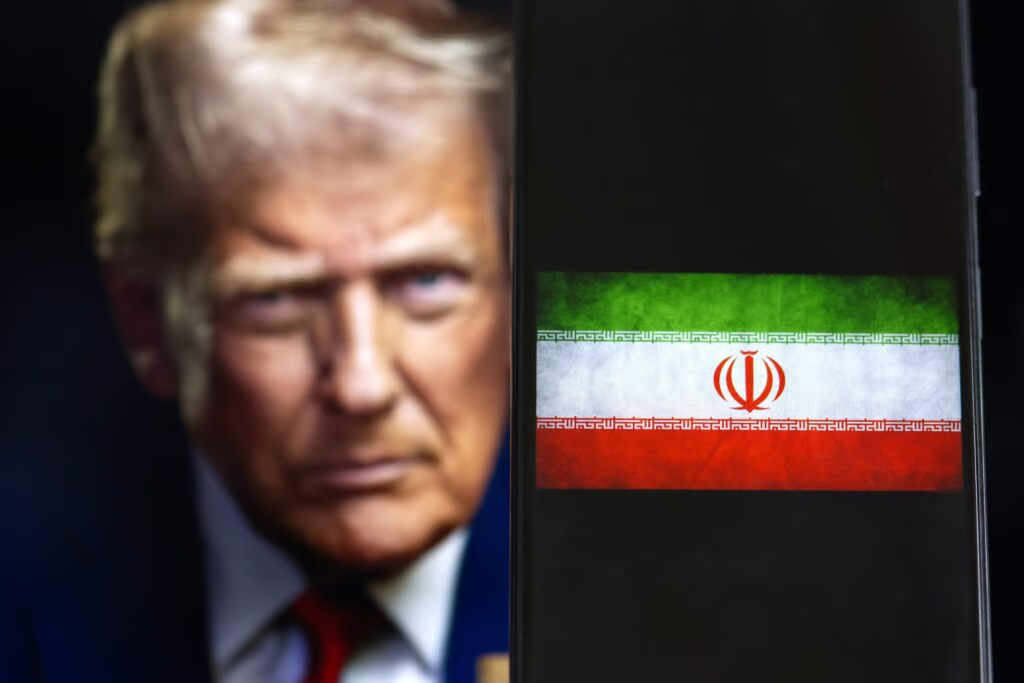
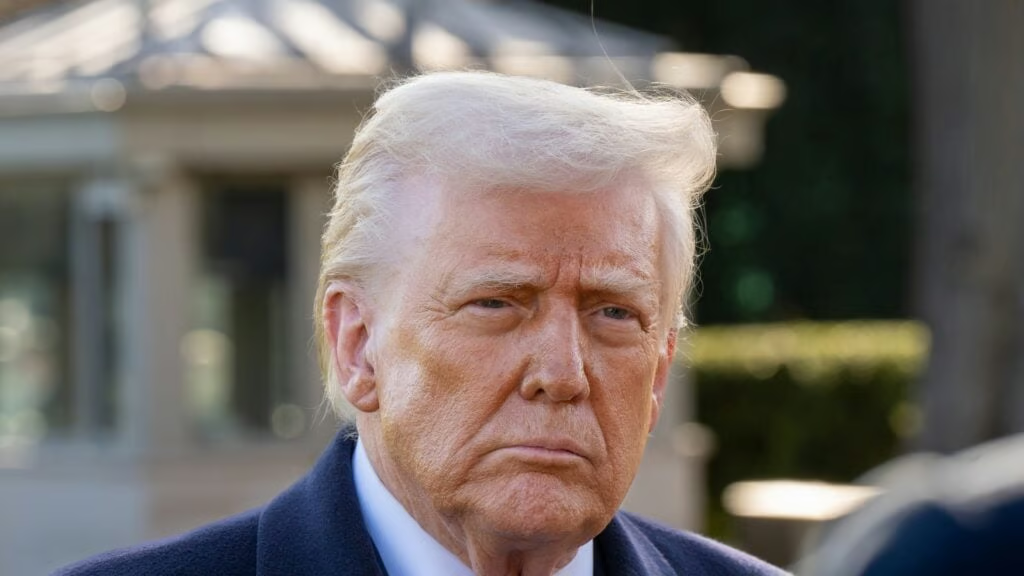
So, what's spooking the oil market? Enter President Donald Trump, who took to Truth Social to voice his displeasure with Iran's role in the Strait of Hormuz.
"Iran is doing a very poor job, dishonorable some would say, of allowing Oil to go through the Strait of Hormuz," Trump said. "That is not the agreement we have."
In a separate post, he issued a more direct warning about rumors that Iran might try to impose fees on shipping traffic through the strait. "They better not be and, if they are, they better stop now!" he stated.
The Strait of Hormuz is one of those places on a map that gives energy traders heartburn. It's a critical chokepoint for global oil shipments. When someone starts talking about restricting traffic or adding fees, prices tend to get jumpy. Reports had previously suggested Iranian officials might allow limited vessel traffic under stricter conditions, including potential per-barrel fees.
Meanwhile, in Another Tense Corner of the Region...
Adding another layer to the night's geopolitical stew, Israeli Prime Minister Benjamin Netanyahu said Israel is preparing for possible direct talks with Lebanon.
The discussions are expected to focus on security arrangements and the potential disarmament of Hezbollah, the Iran-backed group operating in southern Lebanon. It's a separate issue, but it's all part of the same tangled web of Middle Eastern politics that markets watch nervously.
There's a disagreement in the background here, too. The U.S. and Israel maintain that the latest ceasefire agreement does not extend to Lebanon. However, Iran and Pakistan — which served as a mediator — contend that Lebanon was explicitly included. It's the kind of diplomatic ambiguity that keeps things interesting, and volatile.
So, there you have it. A presidential post, a spike in oil, a dip in futures, and talk of new negotiations. Just another Thursday night where finance meets global affairs.