Here's a sobering thought as we head toward winter: damage to Qatar's liquefied natural gas infrastructure could double global gas prices. That's the warning from Goldman Sachs, which says the situation at the world's largest LNG production site is so bad it might spark a full-blown energy crisis.
The concern centers on QatarEnergy's Ras Laffan Industrial City, which was knocked offline by attacks. This isn't some minor supplier—Qatar provides about one-fifth of the global LNG market. When that much supply vanishes, prices tend to do wild things.
"There is a risk that this just drags so much that it makes the process very painful," said Samantha Dart, co-head of global commodities research at Goldman Sachs, on the bank's podcast. She wasn't mincing words about the severity. "It doesn't take three years to fix anything. What they are really saying is these two liquefaction trains were so damaged that we need to start over. We need to rebuild them from scratch."
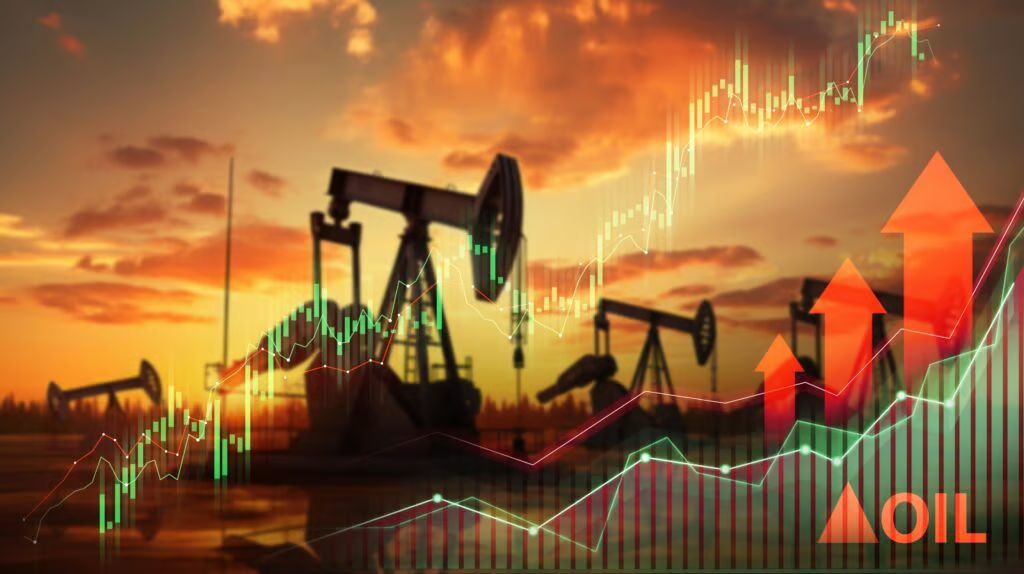
Think about that for a second. This isn't a repair job; it's a reconstruction project. And while that's happening, the world needs gas. Prices have already jumped 50% to 70%, and Dart expects more upward pressure if supply doesn't come back online.
There's a bit of temporary relief coming from China, which is redirecting surplus gas to global markets. But that's a short-term fix. Meanwhile, the U.S.—the world's largest LNG exporter—doesn't have much spare capacity to fill the gap quickly. So we're looking at a supply hole that's both deep and wide.
So how did we get here? It's part of the broader Middle East escalation. Last month, President Donald Trump said he wouldn't send U.S. troops to the region and had ordered Israeli Prime Minister Benjamin Netanyahu to stop striking Iranian energy infrastructure. That followed Israel's strike on Iran's South Pars gas field and Iran's retaliatory missile attacks on Qatar's LNG facilities, plus Saudi and Kuwaiti refineries and UAE gas infrastructure.
Trump warned Iran against further attacks on Qatar's LNG sites, clarifying that Israel's strike was limited and that Qatar had no involvement. Defense Secretary Pete Hegseth confirmed the U.S. had struck over 7,000 Iranian targets and sunk more than 120 ships.
Amid all this, Shell plc (SHEL) said all staff at its Ras Laffan Industrial City facilities were safe following the March 18 attack. A fire at the Pearl gas-to-liquids facility was put out quickly, but LNG production remains shut down. The company is working with QatarEnergy and local authorities to figure out the full extent of the damage.
The bottom line? When a fifth of the global LNG market gets hit this hard, everyone feels it. And if Goldman is right about the rebuild-from-scratch timeline, this isn't going away anytime soon. Buckle up for what could be a very expensive winter.