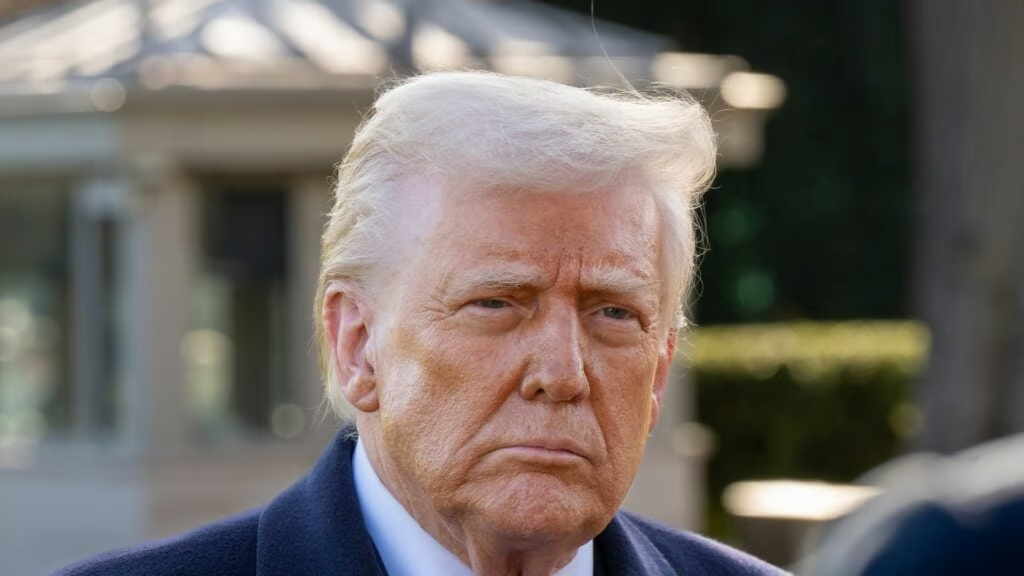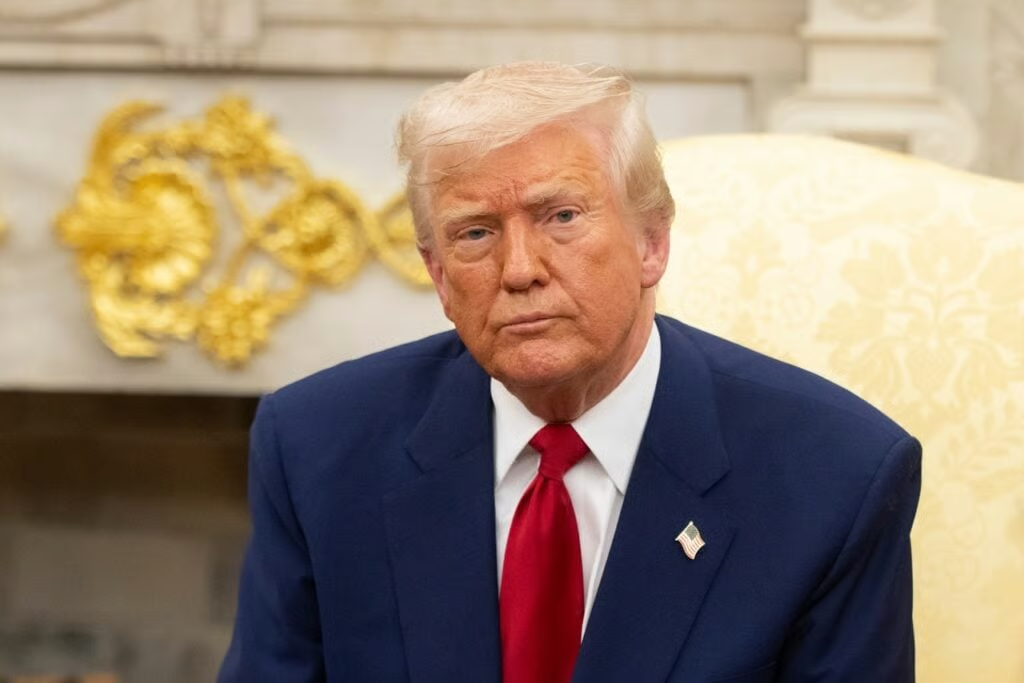
So, President Donald Trump says the United States just scored a "total and complete victory" with Iran. That's the headline he's pushing after striking a two-week ceasefire deal. He's projecting a lot of confidence that this pause in fighting could lead to something bigger, even though, well, a bunch of pretty major things are still up in the air.
In a brief phone call, Trump told AFP when asked if he was claiming victory, "Total and complete victory. 100 percent. No question about it." He also said Iran had delivered a 10-point proposal that he called a "workable basis on which to negotiate."
But when asked about his earlier, rather vivid threats to destroy Iran's civilian infrastructure if diplomacy fell apart, he got a bit vague. "You're going to have to see," he said, according to the same report. So, the victory lap comes with a side of uncertainty about what happens if things go south again.
This ceasefire came after more than a month of attacks involving the U.S. and Israel, with reports indicating Pakistan played a key role in mediating the pause. The real test, though, might be the Strait of Hormuz. That's the narrow waterway that handles a huge chunk of the world's seaborne oil traffic, and its full reopening is kinda tied to this whole deal.
Trump insisted there's a meaningful framework for a longer-term settlement, saying, "We have a 15-point transaction, of which most of those things have been agreed on. We'll see what happens. We'll see if it gets there." So, the Strait's status is central—it's not just a geopolitical detail, it's an economic one for global oil markets.
Then there's the nuclear stuff. Trump said the war was partly about ensuring Iran could never build a nuclear weapon, and any final peace deal would have to address its stockpile of enriched uranium. "That will be perfectly taken care of, or I wouldn't have settled," he told AFP, though he didn't get into specifics. So, that's another big piece still on the table.
And here's an interesting twist: Trump hinted that China might have been involved in pushing Iran toward these talks. When asked if Beijing had a hand in it, he said, "I hear yes." That adds a fresh layer of scrutiny, especially since Trump is scheduled to travel to Beijing in mid-May for a summit with Chinese President Xi Jinping. That meeting was originally planned for early April, but Trump postponed it, saying he needed to stay in Washington to oversee the Iran war. Now, with China possibly in the mix as a behind-the-scenes player, that upcoming summit might have a whole new context.