So here's what's happening in the markets on Tuesday: oil prices are surging, stocks are sliding, and everyone's watching the clock tick toward 8 p.m. Eastern Time. That's when President Donald Trump's deadline for Iran expires, and the mood on Wall Street is, let's say, defensive.
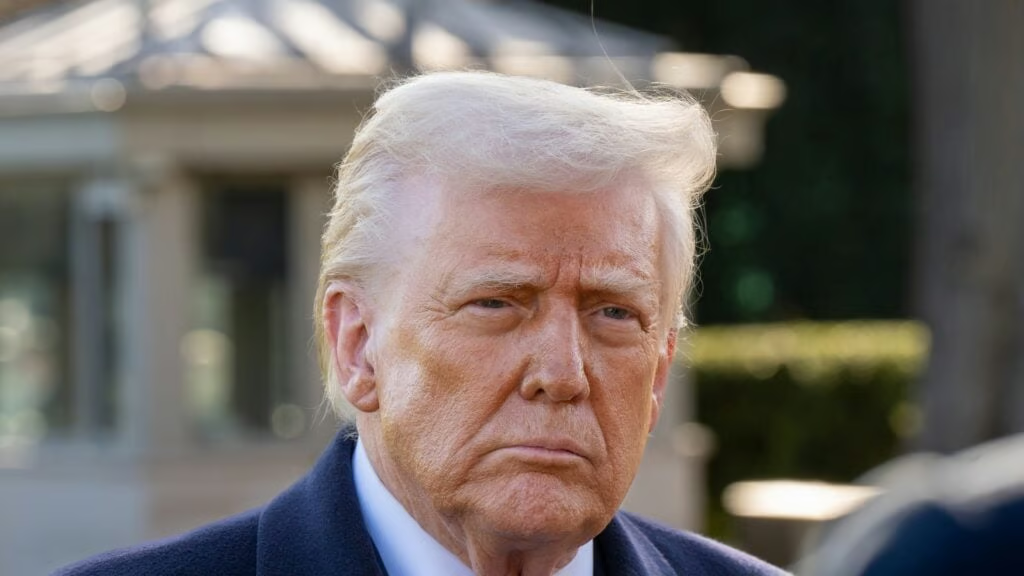
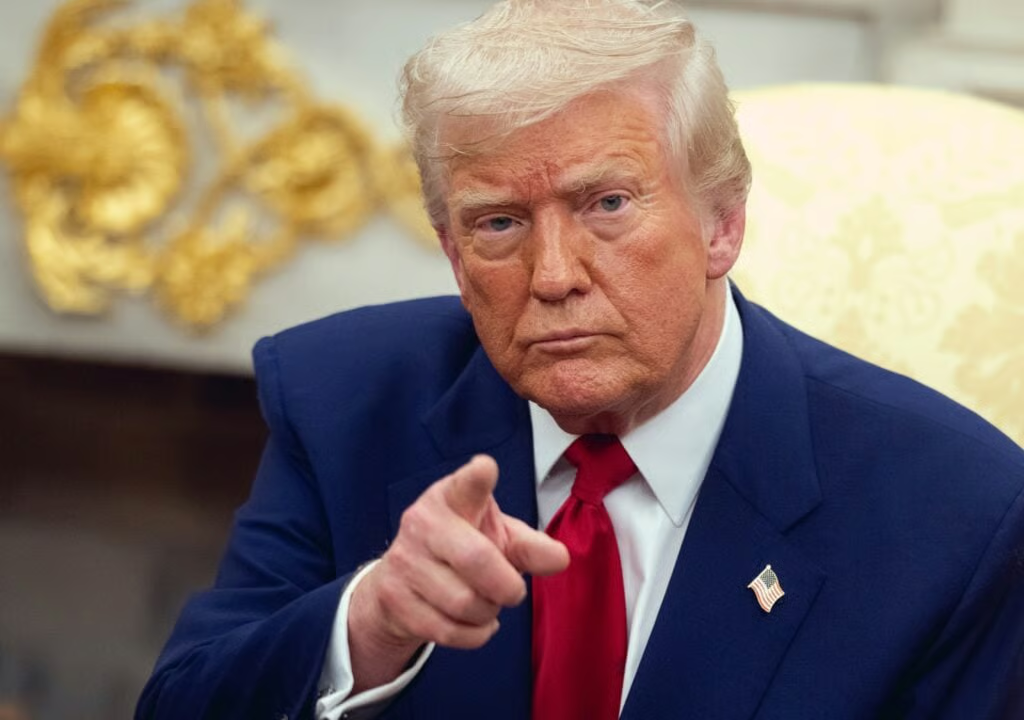
President Trump put it pretty starkly: "a whole civilization will die tonight, never to be brought back again." He warned that unless Iran's leadership agrees to a deal that includes reopening the Strait of Hormuz by that deadline, the U.S. could target key Iranian infrastructure like power plants and bridges. When the President talks about civilizations dying, markets tend to notice.
And notice they did. WTI crude oil climbed 2.2% to $115 a barrel, hitting levels last seen on March 9 and eyeing the highest closing price since June 2022. That's the kind of move that makes everyone nervous about inflation, consumer spending, and basically everything else.
Across U.S. equity markets by midday Tuesday, the losses were broad-based. Nine of the 11 S&P 500 sectors were trading in negative territory, which is what happens when investors decide maybe today isn't the day to be taking big risks.
The S&P 500 fell 0.5% to 6,581, down roughly 30 points on the session. The Dow Jones Industrial Average shed 235 points, or 0.5%, to 46,435. The Nasdaq 100 dropped 0.7% to 24,028.
Within the Magnificent Seven stocks, Tesla Inc. (TSLA) fell 3.6%, Apple Inc. (AAPL) slid 3.8%, and Meta Platforms Inc. (META) declined 1.0%. Nvidia Corp. (NVDA) edged down 1.4%, while Microsoft Corp. (MSFT) fell 0.8%.
The Russell 2000 fell 0.5% to 2,529. Gold held steady at $4,657 an ounce, up 0.1% on the day – not exactly a safe-haven surge, but holding its ground.
In the bond market, the yield on the U.S. 10-year Treasury note edged up 1 basis point to 4.354%. The 30-year yield rose to 4.92%, while the 2-year held steady at 3.86%. Markets have fully priced in the Federal Reserve's decision to keep the federal funds rate unchanged at its meeting later this month, with borrowing costs expected to remain steady through the rest of the year. So at least there's one thing that's not adding to the uncertainty.