Here’s what happens when you take a lit match away from a powder keg: everyone breathes a sigh of relief, and the markets throw a party. Late Tuesday, that’s exactly what unfolded. Oil prices tumbled and stock futures around the world shot higher after President Donald Trump agreed to hit the pause button on military action against Iran. The price for the pause? Tehran needs to keep the Strait of Hormuz open for business.
Think of it as a two-week timeout to see if they can work things out. And the market, which had been holding its breath over the prospect of a conflict choking off a huge chunk of the world’s oil supply, decided to celebrate the temporary reprieve.
The Numbers Tell the Story
You want to see relief trading? Look at the futures. Dow Jones Industrial Average futures surged 848 points, or 1.81%. S&P 500 futures climbed 2.08%, and the tech-heavy Nasdaq 100 futures jumped an even more impressive 2.77%.
On the other side of the trade, the oil complex got crushed. The fear premium that had been baked into prices evaporated. WTI crude fell a staggering 13.66% to $97.52 a barrel. Brent crude dropped 12.57%. It wasn’t just crude, either. RBOB gasoline futures slid nearly 10%, and heating oil futures plummeted over 16%. Even natural gas caught a bit of the downdraft.
The reaction wasn’t confined to U.S. markets. In Asia, Japan’s Nikkei 225 was up over 4% and South Korea’s KOSPI rallied more than 5%. When the threat of a war that could disrupt global trade recedes, it’s a good day for risk assets everywhere.
The Deal: A Two-Week Pause
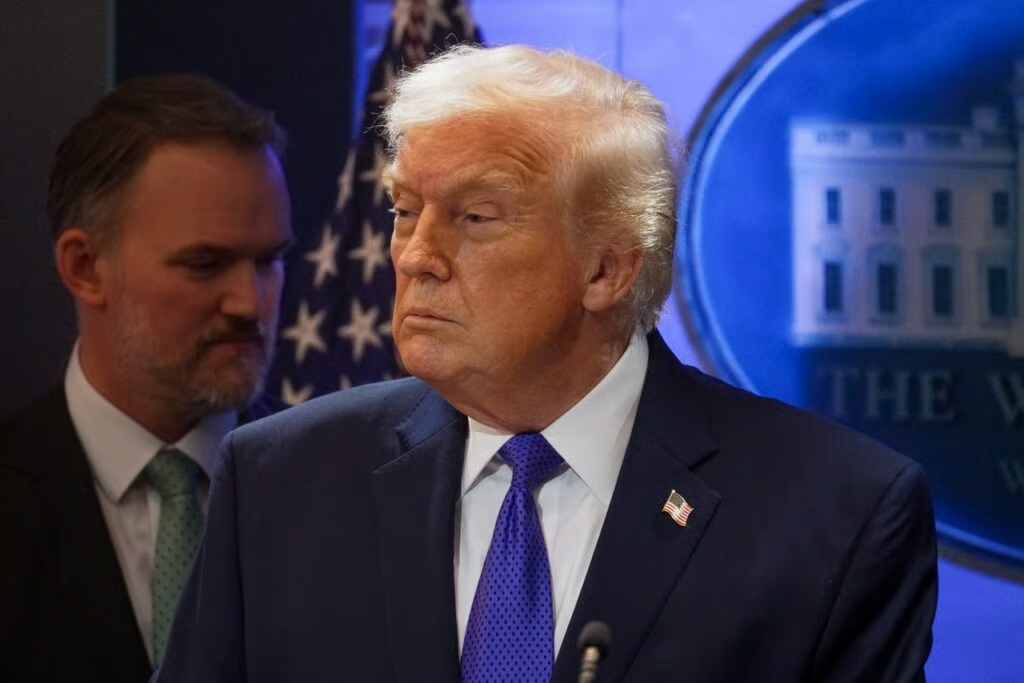
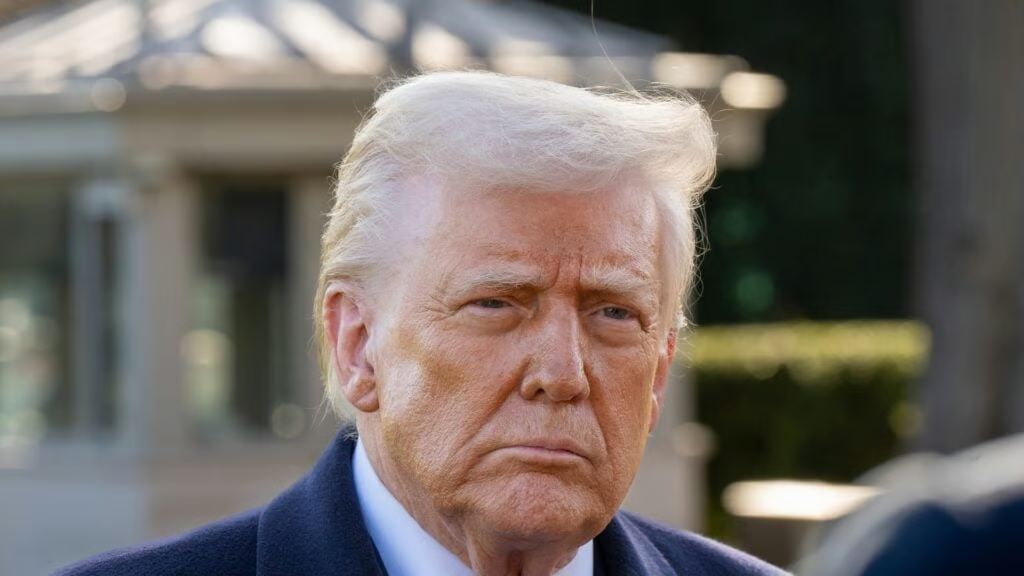
The catalyst was a post on Truth Social from President Trump. He said he would “suspend” planned strikes on Iran for two weeks to allow time for negotiations. The condition? Iran has to ensure safe navigation through the Strait of Hormuz.
“Almost all of the various points of past contention have been agreed to,” Trump wrote, adding that the “two week period will allow the Agreement to be finalized and consummated.”
This came just before a U.S. deadline for Iran to reopen the passage, a deadline that had been explicitly tied to the threat of large-scale military action. The Strait isn’t just any waterway—roughly one-fifth of the world’s oil supply flows through it. It’s the world’s most important oil chokepoint, so the stakes for the global economy are about as high as they get.
Signals from the Other Side
For a deal like this to mean anything, you need signals from the other side. And they came. Iranian Foreign Minister Seyed Abbas Araghchi posted on X, saying Tehran would permit transit through the Strait during the ceasefire.
“If attacks against Iran are halted, our powerful armed forces will cease their defensive operations,” he said, noting that coordination would ensure safe passage.
Adding another layer of confirmation, Pakistan Prime Minister Shehbaz Sharif also posted on X, stating that Iran, the U.S., and their allies had agreed to an “immediate ceasefire across all regions, including Lebanon.” He punctuated it with “Effective Immediately.”
So, for now, the gears of diplomacy are turning, and the gears of war are paused. The market’s violent reaction—stocks up huge, oil down huge—is a perfect snapshot of just how much tension had been built into prices. It’s a two-week ceasefire, not a peace treaty. But in the world of high-stakes geopolitics and even higher-stakes markets, two weeks of calm is enough reason for a very loud sigh of relief.