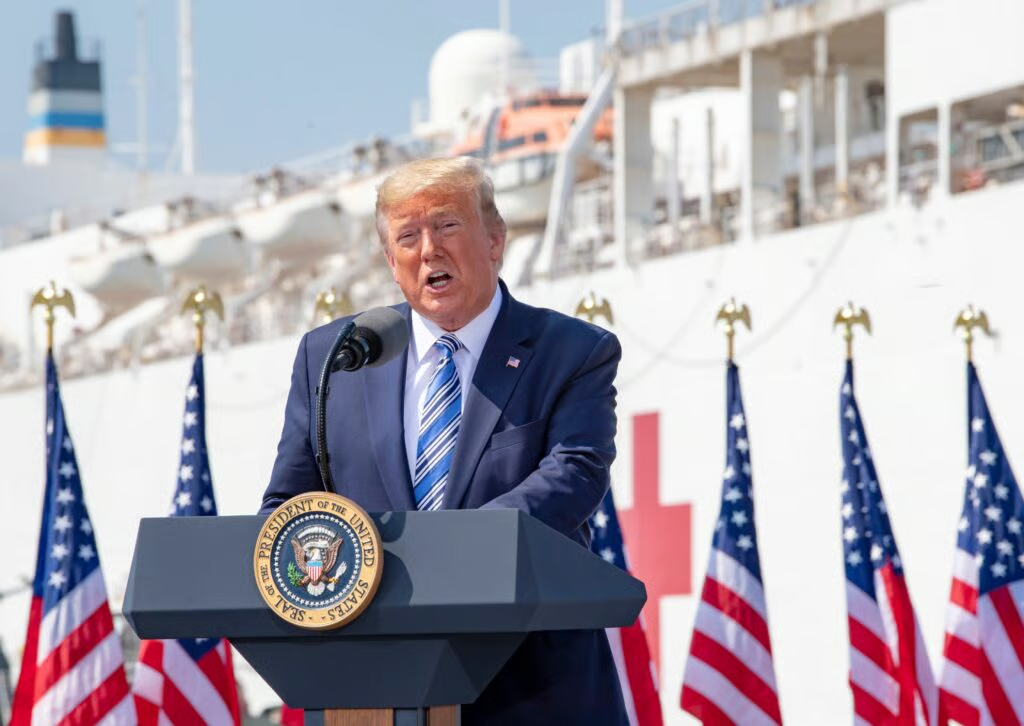
So, President Donald Trump wants to spend a lot of money on the military. Like, a lot of money. We're talking about a proposed $1.5 trillion for the fiscal 2027 defense budget. That's not just a number on a page; it's a potential tidal wave of government spending that's about to crash into the aerospace and defense industry. And when that much money is on the move, some companies are going to catch the wave, and others might get knocked over.
UBS has taken a look at the blueprint and, in a move that will surprise exactly no one on Wall Street, has started picking winners and losers. They've flagged three stocks to watch and one that investors might want to think about selling. Let's break down why this budget matters and who stands to gain or lose.
Why This Budget Is a Big Deal
The White House's request aims to push defense spending to roughly $1.5 trillion in 2027. The goals are pretty straightforward: rebuild munitions stockpiles that got used up during the Iran conflict and something called Operation Epic Fury, fund a larger Navy, and modernize the country's deterrent capabilities.
UBS analyst Allyson Gordon argues that the sheer size of this request "should help sentiment" for defense stocks. This comes after what she describes as a "bruising stretch" where U.S. defense stocks lagged behind the broader market, even as geopolitical risks seemed to be rising everywhere you looked. It's the classic Wall Street puzzle: the world feels more dangerous, but the stocks that should benefit from that aren't moving. A $1.5 trillion proposal is one way to try to solve that puzzle.
The Clear Winner: Missiles
If you're looking for a direct line from the budget to a company's bottom line, missiles are a great place to start. UBS highlights them as a primary budget winner, which reinforces a bullish story for RTX Corp. (RTX).
Why RTX? Its Raytheon unit is a top supplier of precision weapons and interceptors. Think of it this way: the budget has two forces pushing in RTX's favor. First, there's the need to restock after Epic Fury. Second, there are new funding lines specifically focused on missiles. This combination could translate into a multi-year backlog for RTX and better margins, as the company shifts from older, less profitable contracts to more lucrative production awards. It's a classic case of government spending creating a nice, predictable revenue stream.
The Shipbuilders Set to Sail
Another big winner in the UBS framework is shipbuilding. This puts General Dynamics Corp. (GD) and Huntington Ingalls Industries (HII) squarely in the spotlight.
President Trump has been pushing for a larger Navy and a fleet of over 300 ships for a long time. This budget proposal is where that push meets funding. More ships mean more demand for General Dynamics' submarines (built by its Electric Boat division) and surface combatants, as well as Huntington Ingalls' aircraft carriers and amphibious ships. For these companies, it's not just about getting new orders; it's about higher utilization of their shipyards and more pricing power throughout the rest of the decade. When the government is your only customer and they really, really want what you're selling, it's a good position to be in.
The Surprising Loser
Now for the twist. In a budget full of increases, UBS flags Northrop Grumman Corp. (NOC) as a relative loser. The reason is somewhat surprising: the proposal trims the planned procurement of the B-21 Raider stealth bomber.
The B-21 is one of Northrop's crown-jewel programs, so any perceived downshift in its volume or timing is a clear negative for investor sentiment. It's important to note that Northrop isn't in trouble—the company still has a massive backlog and significant exposure to space and strategic systems. But in the context of this specific budget, the message from UBS is that money might flow away from bombers and toward missiles and ships. That could drive investors to rotate out of Northrop and into those other plays that have "cleaner upside" to Trump's budget blueprint.
So there you have it. A $1.5 trillion proposal is more than just a headline; it's a map of where the government plans to park a massive amount of cash. According to UBS, the coordinates point toward missiles and ships, potentially leaving one of the defense sector's giants watching from the dock.