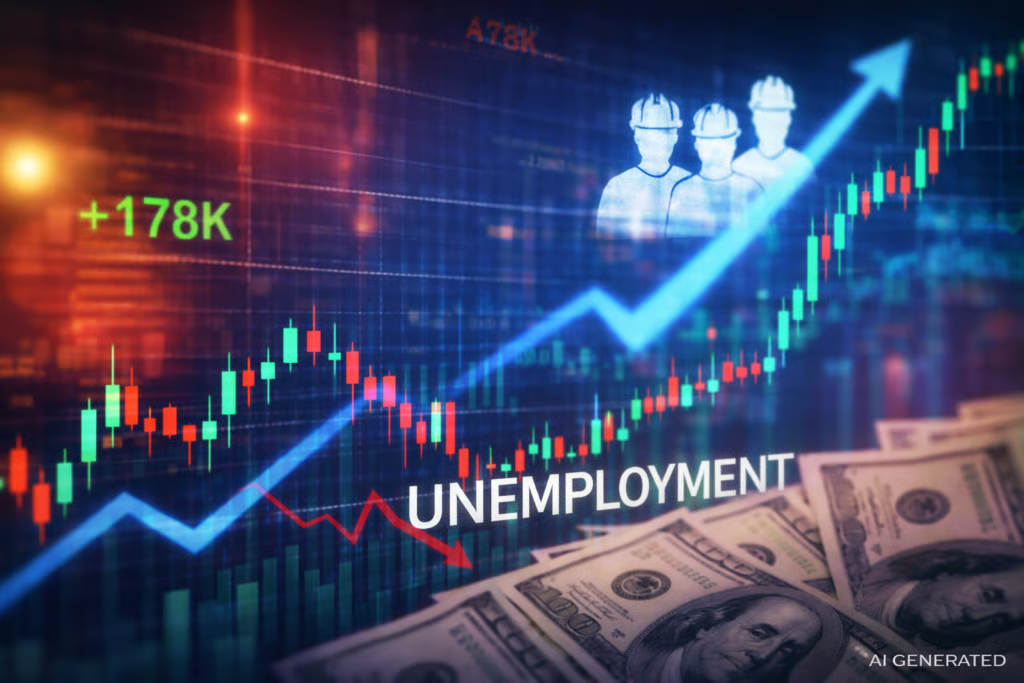
So the latest U.S. jobs report came out, and the headline number looked pretty good. March payrolls rose by 178,000, which was more than double what economists were expecting. The unemployment rate ticked down. The White House was happy. But if you dig a little deeper, the story gets a lot more complicated—and a lot less cheerful.
Bob Schwartz, a senior economist at Oxford Economics, put it bluntly: "March's headline payroll increase of 178 thousand -more than double expectations -looks stronger than it actually is." He says temporary distortions drove much of the gain. "The return of striking nurses inflated health sector gains and improved weather padded leisure and hospitality jobs," he explained.
Think about that: healthcare added 90,000 jobs in March, which is more than half of the total payroll growth. And roughly 30,000 of those came from workers just coming back after a strike. That's not new job creation; that's people returning to jobs they already had. On the wage front, things aren't great either. Average hourly earnings rose just 0.2% in March. The year-over-year rate slipped from 3.7% to 3.5% — the slowest annual gain since May 2021. For lower-paid workers, it was even thinner: 3.4%.
"Under the hood, the labor market is more fragile than the blockbuster headlines suggest," Schwartz said.
The Unemployment Rate Drop Isn't Good News
At first glance, a drop from 4.4% to 4.3% looks like progress. It isn't. "What's more, the drop in unemployment from 4.4 to 4.3 percent was driven by a shrinking labor force rather than genuine job creation," Schwartz said. That means fewer Americans are working or looking for work. It's not that everyone found jobs; it's that some people just stopped trying.
"Except for the pandemic blip, the labor force in March fell from the year-earlier level for the first time since 2013, reflecting the immigration crackdown and an aging population," Schwartz added. The employed headcount has actually fallen for three straight months. So the labor market isn't getting stronger; it's getting smaller.
Inflation Is Rising — And Workers Feel It
Meanwhile, inflation is moving in the opposite direction. Gas prices have climbed above $4 per gallon. Let's do some quick math. A family filling a 15-gallon tank twice a week is now spending roughly $120 more per month on gasoline alone than they were 30 days ago. That is more than $1,400 a year — before factoring in the pass-through to groceries, shipping costs, and utilities that move with energy prices.
"The broader consumer picture is similarly strained. Wage growth is slowing, inflation is accelerating, and worker bargaining power has eroded markedly since the spring of 2025," Schwartz said. Wage growth at 3.5% is already running below the pace needed to offset that hit for most households. For lower-income workers — who spend a disproportionate share of earnings on fuel and essential goods — it is not close.
You can see this shift in the quit data. The voluntary quit rate has matched the lowest level of this economic expansion. The ratio of quits to unemployed workers — except for the pandemic plunge — is the lowest in more than a decade. Workers who do not believe they can find something better do not quit. That shift in bargaining power from labor to employers, which Oxford Economics traces to the spring of 2025, has now become entrenched. People are staying put because they don't think they have better options.
The Fed's Impossible Position
So inflation is accelerating. The Fed's tools cannot stop it. That is not a criticism of the Federal Reserve — it is a description of what supply-side shocks do. The Fed cannot reopen the Strait of Hormuz. It cannot bring crude back below $80. What it can do is raise rates to slow demand, but slowing demand in an economy already showing labor force contraction, falling consumer confidence, and a war-driven spending shock carries its own risks.
Oxford Economics expects the Fed to take a different path: look past the inflation spike and return to rate cuts in the second half of the year, once demand destruction becomes the more pressing concern. February retail sales — the last clean pre-war read — showed a solid 0.6% gain. That number predates $4 gas and the psychological toll of an active conflict on consumer behavior. March and April data will be the first honest look at what households are actually doing at the register.
"The Fed, limited in its ability to address supply-side inflation shocks, will likely look past rising prices and pivot back toward rate cuts in the second half of the year as demand destruction becomes the more pressing concern," Schwartz said.
The U.S. economy now faces a dangerous mix. Slowing wage growth, rising inflation and weakening labor supply. The stagflation scenario — rising prices and slowing growth simultaneously — is no longer a tail risk. It is the base case if the conflict extends beyond current assumptions. A longer war means more inflation and more demand destruction at the same time, compressing the Fed's options and raising recession odds even as inflation prints run hot.
So next time you see a strong jobs number, remember to look under the hood. The engine might not be running as smoothly as it seems.