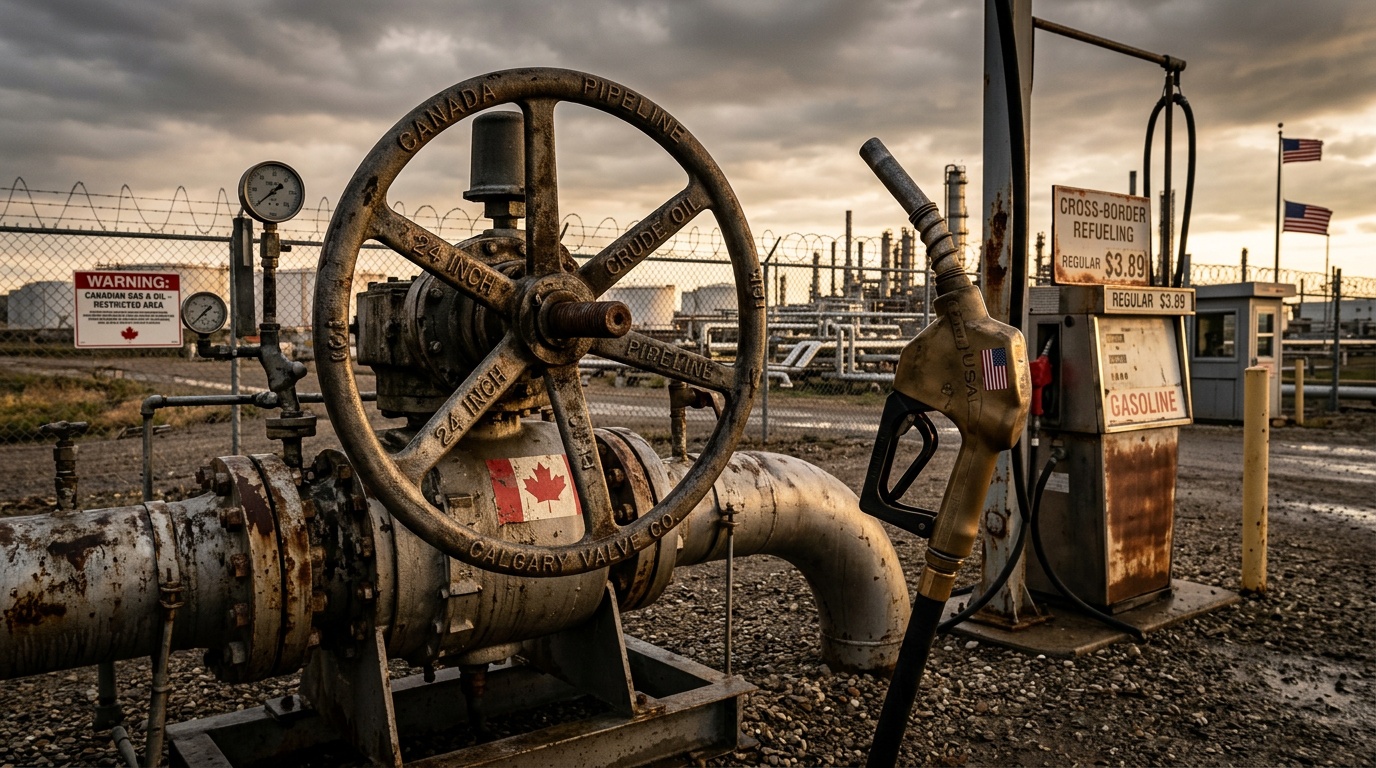
Six weeks ago, filling up a 15-gallon gas tank cost you about $44.70. Today, that same tank runs $62.10. That extra $17.40 might not sound like much on its own, but multiply it across 240 million American drivers refueling every week, and suddenly it's not just a nuisance at the pump—it's a full-blown macroeconomic event.
The national average for a gallon of regular gasoline reached $4.14 on Tuesday, according to AAA. Back on Feb. 26, the day before the war in Iran began, the baseline was $2.98. In the same period, the United States Gasoline Fund LP (UGA) has rallied by 50%. Wall Street is now pricing in the consequences, and they're looking pretty inflationary.
In a note published on Tuesday, Bank of America forecasted that the March Consumer Price Index (CPI) likely rose 1.0% month-over-month, driven almost entirely by a 10.6% monthly jump in energy prices. That would be the single largest monthly headline CPI print since June 2022.
Bank of America: Get Ready for a 1% Inflation Jump
Bank of America economists Stephen Juneau and Jeseo Park forecast that the March CPI report, due Thursday, April 10, will show a headline monthly increase of 1.0%—the largest since the post-COVID energy spikes of mid-2022. On a year-over-year basis, headline CPI is expected to jump from 2.4% in February to 3.5% in March.
"This month is likely too early to see significant signs of the Iran war in the core data. That said, we will be watching airfares and delivery services to see if there are any early signs of higher oil prices seeping through to the broader basket," Juneau wrote.
The energy sub-index alone is forecast to rise 10.6% month-over-month, accounting for virtually all the headline acceleration. The food index is expected to add a modest 0.2% monthly contribution. The bank's forecast for core CPI—which strips out food and energy—is a more modest 0.3% increase month-over-month, implying a 2.7% annualized rate, still above the Fed's 2% target.
The bigger analytical focus, according to Bank of America, is the read-through to core PCE—the Fed's preferred inflation gauge. After three consecutive months of hotter-than-expected PCE prints, the bank projects a cooler 0.2% monthly gain in March, which would push the year-over-year rate up to 3.1% on base effects alone. That's unlikely to provide much relief to the inflation hawks on the Federal Open Market Committee.
Prediction Markets: Betting on Higher Inflation
Prediction markets on Polymarket now price a 90% probability that U.S. inflation will exceed 3.5% in 2026—up 10 percentage points over the past week. The odds of CPI breaking above 4% stand at 67%, surging 33 points from last week. Even the tail-risk scenario of inflation above 5% commands a 36% probability, up 16 points—reflecting a market increasingly convinced that the Iran oil shock is not a temporary blip but a structural repricing.
The Fed's Impossible Equation
The Federal Reserve is watching the same numbers. An energy-driven inflation spike doesn't automatically trigger rate hikes—the Fed has historically looked through supply shocks that are expected to reverse. But three things make this cycle more complicated than 2022.
First, core PCE was already running above 3% year-over-year before the war started—the pass-through risk is hitting an economy that wasn't at the 2% baseline. Second, the labor market remains tight, removing the typical justification for easing due to a supply shock. Third, Bank of America forecasts show core CPI running at a 3.1% annualized rate in March—above the level consistent with a 2% PCE target even without the energy component.
So, what does all this mean? Basically, gas prices aren't just making your commute more expensive; they're reshaping the inflation landscape in a way that could keep the Fed on edge for months. Investors should buckle up—this ride might get bumpy.