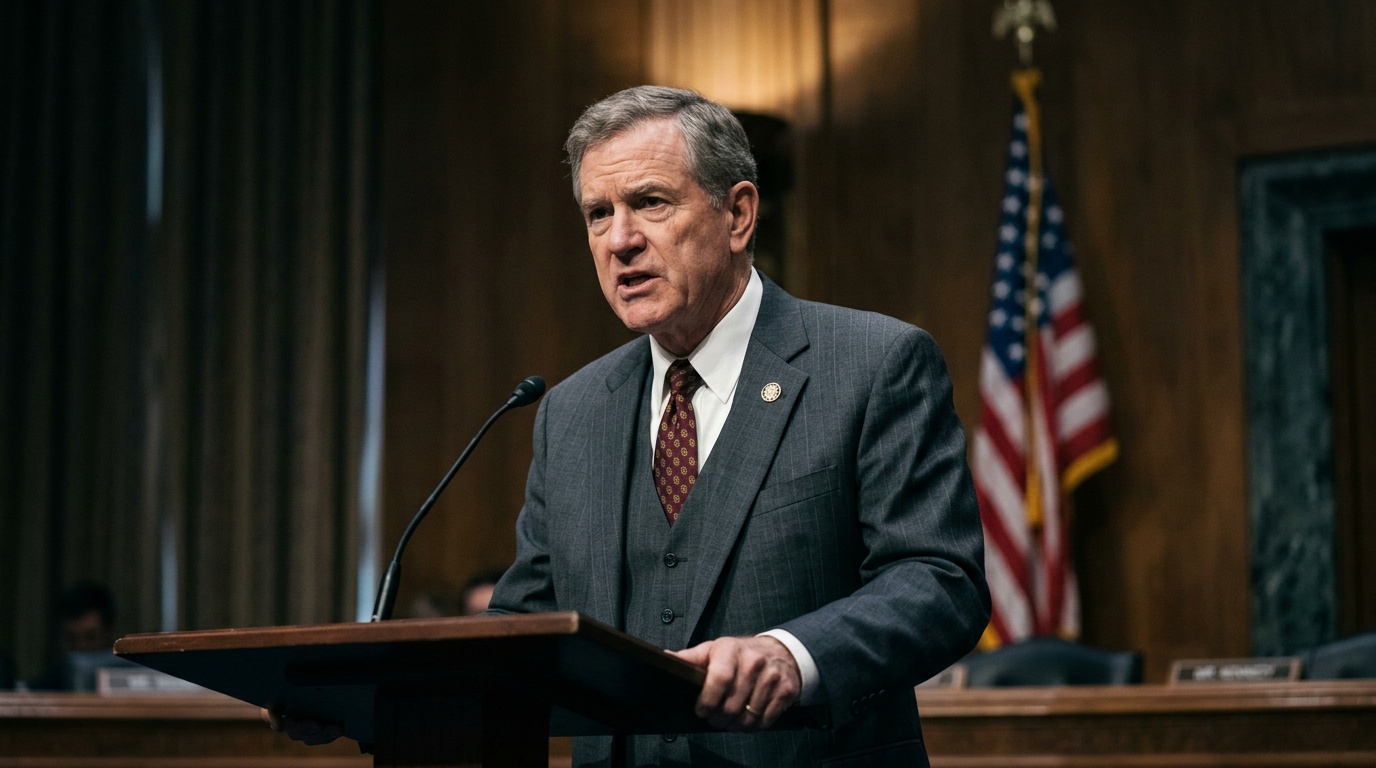
Here’s a novel take: a CEO actively cheering for regulators to come after his industry. That’s the position of Tarek Mansour, CEO of the prediction market platform Kalshi Inc. (KALSH). He thinks prediction markets could soon face serious federal scrutiny over fraud and insider trading risks. And he’s all for it.
Speaking on "The Axios Show," Mansour expressed concerns about bad actors in the fast-growing world of prediction markets. He gave a hypothetical that cut close to home: if someone placed a wager on Kalshi about the Commodity Futures Trading Commission (CFTC) bringing an insider trading case within a year, he’d bet on "yes." His point wasn't about tipping his hand on investigations, but about the inevitability and necessity of oversight.
"It's a good thing," Mansour said of a potential regulatory clampdown. He sees it as a natural, even healthy, progression for the industry. The core job of exchanges and regulators, he argued, is to find and punish the fraudulent players. "You punish them when you find someone who did something bad," he said. It’s a straightforward philosophy: for a market to be legitimate, it needs a credible cop on the beat.
Kalshi isn't just waiting for regulators to act. The platform has announced its own policies to prevent obvious conflicts, like blocking athletes from trading on their own games and political candidates from betting on their own campaigns.
Navigating a Legal Minefield
This talk of regulation comes as Kalshi and its peers are already deep in legal battles, mostly with states. The company just scored a major victory. On Monday, the Third Circuit Court of Appeals ruled that states cannot regulate prediction markets. The court found that Kalshi's contracts for sports events are federal derivatives governed by the CFTC, not simple state-regulated bets.
But it was a split decision. Kalshi won injunctions against enforcement in New Jersey and Tennessee, but lost similar fights in Maryland, Ohio, Nevada, and Massachusetts. Still, the Third Circuit's ruling now sets a binding precedent for lower courts in New Jersey, Pennsylvania, and Delaware, creating a clearer federal lane for the company in that region.
The legal whiplash is constant. In March, Kalshi, through an affiliate called Kinetic Markets LLC, obtained a futures commission merchant license, which lets institutional users trade with less capital. Almost immediately after, Washington State's Attorney General sued the platform, accusing it of violating state gambling and consumer protection laws by letting residents bet on everything from sports and elections to the war in Iran and measles case counts.
The Feds Draw Their Lines
While states are fighting, the main federal regulator is making its stance crystal clear. The CFTC is significantly increasing its oversight of prediction markets. Enforcement chief David Miller has warned that insider trading on platforms like Kalshi and rival Polymarket is flat-out illegal and will be a top enforcement priority. He emphasized that any claims suggesting insider trading is permitted in these markets are false.
At the same time, the feds are moving to block states from getting in the way. Federal lawsuits have been filed against Illinois, Arizona, and Connecticut to stop their state gambling regulators from interfering with CFTC-registered prediction markets. The argument is that event contracts on platforms like Kalshi, Polymarket, and those offered by Crypto.com (COIN) are federal derivatives, not sports bets. The suits claim that state bans prevent these exchanges from meeting the CFTC's requirement to provide impartial access to participants across the entire nation. The CFTC has stressed it will act to protect market participants from a patchwork of inconsistent state rules.
So, picture the landscape: a CEO is practically inviting federal watchdogs to his door, his company is winning some battles and losing others in a war with multiple states, and the primary federal regulator is simultaneously cracking down on misconduct while suing states to defend its turf. It's a messy, contentious, and incredibly active moment for prediction markets. Mansour's welcoming of federal scrutiny might seem counterintuitive, but in this chaotic environment, clear rules from a single powerful regulator might just look like the safest harbor.