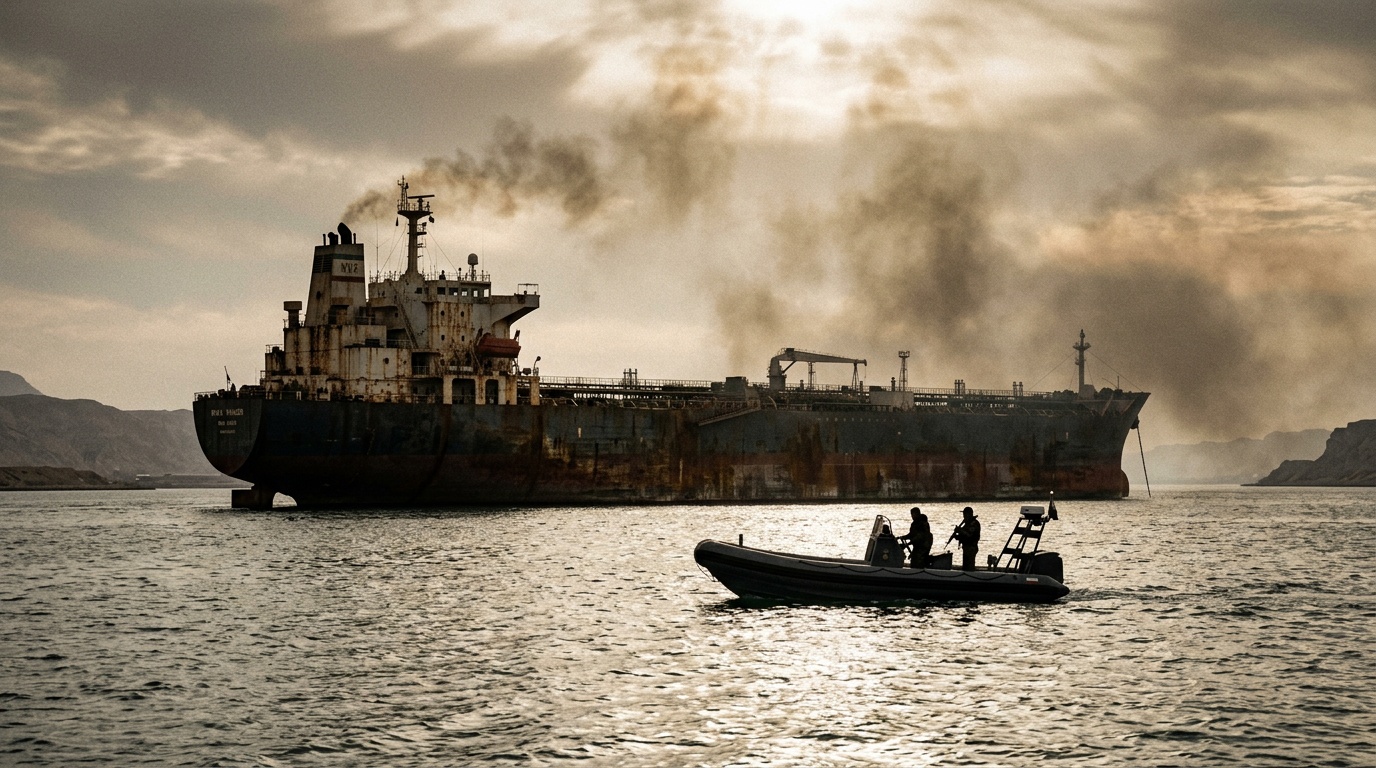
So here's what's happening: after five weeks of war in the Middle East, the world's economy is getting squeezed through a very narrow bottle. The Strait of Hormuz—that little waterway you probably learned about in geography class—has become what the United Nations now describes as being in a state of "virtual closure."
Think about it this way: normally, this is where about a third of the world's seaborne oil passes through. But according to UN Trade and Development, daily ship transits have dropped from 129 vessels in February to just six in March. That's a 95% collapse. And while everyone's talking about energy (which is fair—it's the obvious problem), the real economic shock might be the one that shows up months from now.
Brent Johnson, CEO of Santiago Capital, calls this the "Last Ships" phenomenon. "The last ships are going to start arriving… and there's just no ships or very few ships behind them," he explained in a recent outlook. It's like watching the final delivery trucks roll in before the warehouse goes empty.
Here's where it gets interesting: the pain isn't evenly distributed. About 76% of Hormuz oil flows go to Asia, so they're feeling it right now. Australia has a different problem—they're isolated with only about 28 days of net oil supply. But Europe and the United States? They're just now entering the critical window, because shipping takes 10 to 45 days. "Shortages are going to start to happen… this is kind of a given at this point," Johnson notes.
But wait, there's more. What started as an energy crisis is quickly turning into a food security threat. The Gulf region supplies roughly 15% of global fertilizer inputs—urea and ammonia that farmers need to grow crops. And here's the thing about farming: timing is everything. Miss a 2-to-4-week planting window, and you don't get a do-over. "You don't get to put Mother Nature on hold," Johnson points out.
The downstream effects could be brutal. UNCTAD data shows 3.4 billion people already live in countries spending more on debt servicing than on health or education. Now add food price spikes of 20% to 40% within six to nine months, driven by yield reductions averaging 20%. Johnson thinks this could be worse than 2010/11, when "rice prices spiked 180%, wheat prices went up 130%, a couple hundred million people were affected" with food riots and political instability. "Today's situation is just much worse than that was," he concluded.
Meanwhile, if you're looking for market signals, the VanEck Agribusiness ETF (MOO) is up 16.06% year-to-date. Sometimes the market tells you what's coming before the headlines do.