Here's a thought: when you want to know what's really happening somewhere, maybe you should just go there. While the world's top oil traders were squinting at satellite photos and parsing Pentagon briefings about the fate of the Strait of Hormuz, a small Manhattan research firm decided to do exactly that. They sent an analyst in by speedboat.
Citrini Research, the same boutique firm that made waves with a bearish AI call earlier this year, packed a Pelican case with $15,000 in cash, a high-zoom phone, some filming gear, and a roll of Zyn nicotine pouches, and dispatched an analyst to the most consequential chokepoint in global energy. The idea, apparently, was that "nobody — literally nobody, not the analysts, not the correspondents, not the retired generals doing hits on cable news" actually knew what was happening. Everyone was working from "the same stale satellite imagery and the same unnamed Pentagon sources." So Citrini went to look for itself.
Into The Strait
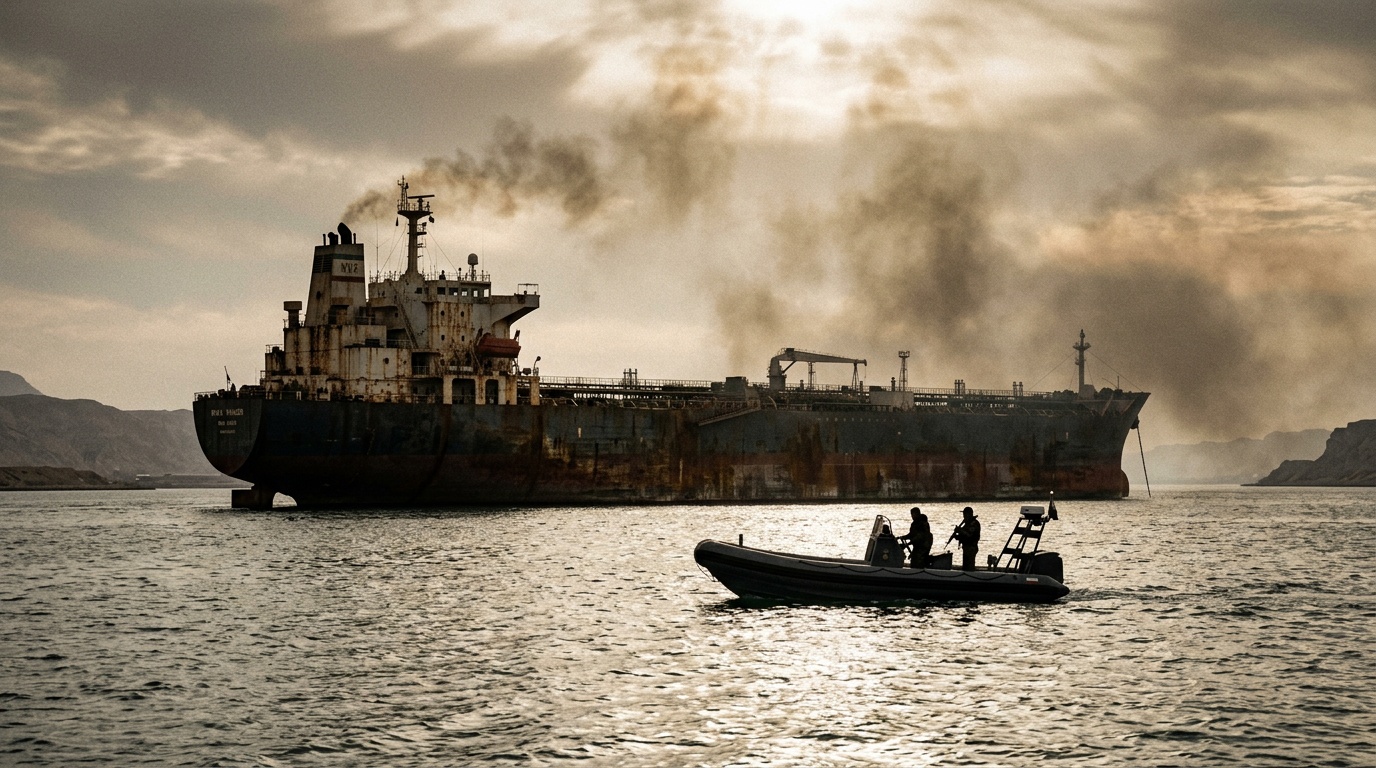
The analyst, referred to only as "Analyst #3" for anonymity, crossed into Oman's Musandam Peninsula. Then, against the advice of Omani border officials and two Coast Guard officers holding assault rifles, he hired a speedboat with no GPS from a captain he'd met three hours earlier by pulling out a wad of cash. They headed into open water, getting within eighteen miles of the Iranian coast while Shahed drones flew overhead and Revolutionary Guard patrol boats ran patterns in the distance.
The trip ended with the analyst being intercepted, detained, and having his phone confiscated by Coast Guard authorities before he made it back to New York for what the firm called an "eight-hour debrief." It sounds less like financial research and more like the plot of a spy thriller.
What The Data Is Missing
So what did he see? Something that challenges the narrative driving oil markets. Ships are still moving—roughly 15 vessels per day, with volume picking up recently, according to Citrini's report. But the firm argues the standard AIS ship-tracking system, which broadcasts a vessel's location and identity, is badly undercounting the actual traffic.
"Tankers passing through four or five a day, completely dark on AIS," the report said. "The volume, they said, is higher than what the data suggests, and it's been accelerating in the past couple days through the Qeshm channel." In other words, the public data everyone is trading on might be missing a big chunk of the real picture.
A Checkpoint, Not A Blockade
The report suggests Iran's Revolutionary Guard is selectively permitting vessels to transit after securing prior approval. Citrini describes this as "a functional checkpoint" at the world's most important oil artery, not a total shutdown.
"This should drive home that what we've described as our view of the conflict is nuanced," the firm wrote. "It doesn't fit neatly into 'strait open, crude down' or 'strait closed, crude parabolic.'" It's messier than that. The strait isn't wide open, but it's not completely sealed either. It's being managed, which creates a different kind of market disruption.
The Trade
Citrini's investment conclusion from all this is that the disruption is real but slow-burning—not a binary, explosive event. "We think the disruption is longer and the new normal involves a permanent risk premium," the firm wrote, adding that it expects traffic to recover to as much as 50% of pre-conflict levels within four to six weeks.
That view leads to a specific trade: a preference for longer-dated crude exposure. The firm favors December 2026 WTI contracts over front-month contracts. It's a bet that the damage from this managed disruption embeds itself into oil prices over time, rather than something that gets resolved quickly and sends prices crashing back down.
Of course, it's worth a huge caveat: these findings are based on a single, somewhat wild field trip and anecdotal accounts that are very difficult to verify independently. One guy on a speedboat with a confiscated phone is not exactly a statistically robust data set. But it's a fascinating, boots-on-the-ground (or rather, feet-in-the-boat) counterpoint to the remote analysis dominating the market conversation. Sometimes you have to go see for yourself, even if it means getting detained by the Coast Guard.