So here's the situation: President Donald Trump just turned up the heat on an already simmering geopolitical pot. His latest social media post threatened to rain "Hell" on Iran if it doesn't quickly reopen the Strait of Hormuz on U.S. terms. This isn't just another fiery statement; it's turned a dangerous standoff into a deadline-driven showdown for energy markets.
By explicitly linking further military action to Iran's willingness to restore tanker traffic, Trump has effectively weaponized the calendar for traders. They're now forced to price binary outcomes—ceasefire or major escalation—around his timetable. It's a classic high-stakes game of chicken, but with global oil flows hanging in the balance.
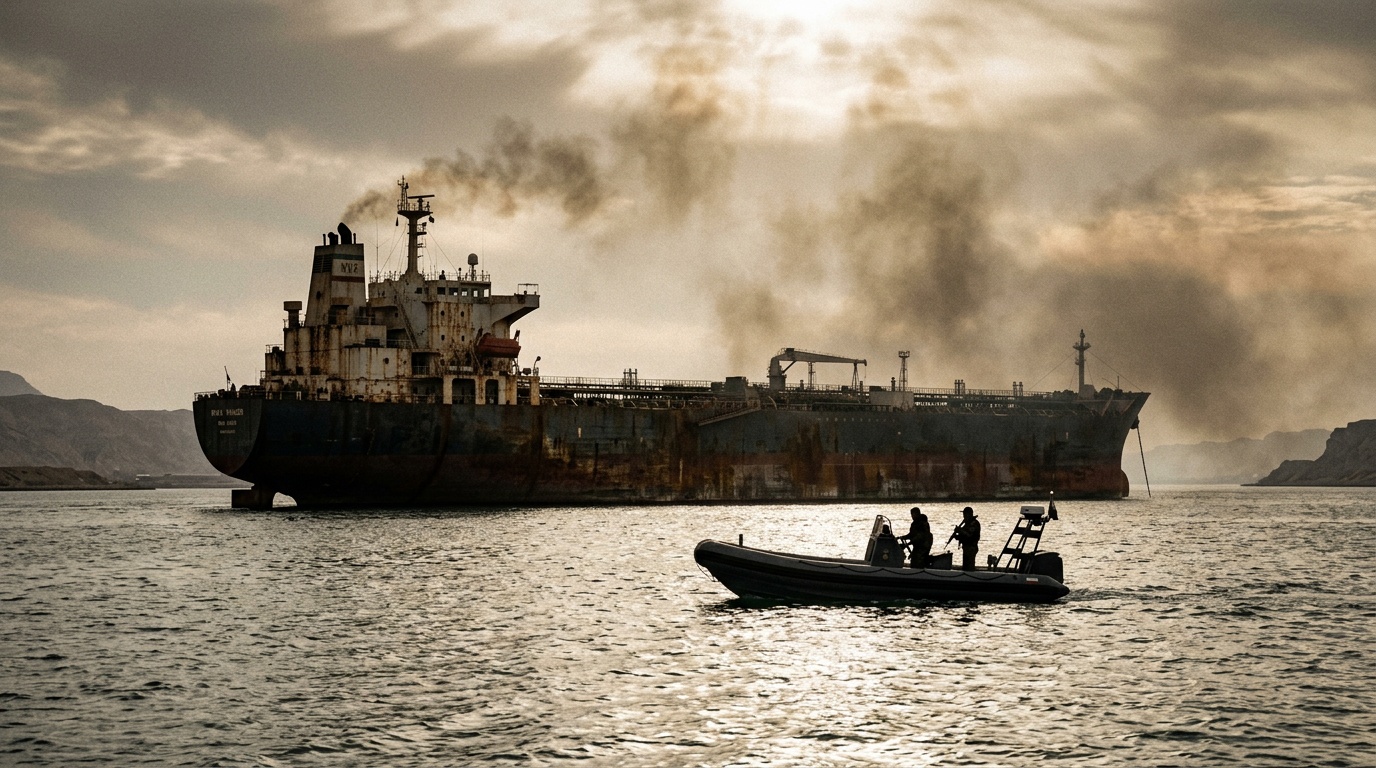
Iran's response was equally definitive. Tehran stated that "the Strait of Hormuz will never return to its previous/former state, especially for America and Israel," adding that its naval forces are preparing for a "new order in the Persian Gulf." The message is clear: Hormuz is now a permanent pressure point in Iran's strategic toolkit, not a temporary bargaining chip to be traded away for sanctions relief or a pause in strikes.
From Temporary Disruption to Permanent Risk
For oil markets, this changes the calculus entirely. What might have been viewed as a transitory supply interruption is now morphing into a structural risk premium. The strait handles roughly 20% of global crude and liquefied natural gas flows. Any credible suggestion that U.S. and Israeli-linked traffic will face chronic disruption or higher costs supports a higher floor for benchmark prices like Brent and WTI, even if physical volumes eventually resume.
Expect volatility to remain elevated. Every new post from Trump or statement from Iran's Revolutionary Guard Corps will reshuffle the probabilities investors assign to a major escalation—one that could damage oil fields, export terminals, or naval assets. It's a market moving to the rhythm of geopolitical rhetoric.
The Ripple Effects Across the Economy
The impacts stretch far beyond the trading pits. The International Monetary Fund has warned that the surge in energy and shipping costs driven by the Iran conflict acts like a "sudden tax" on global incomes. The logic is straightforward: higher fuel, fertilizer, and freight costs feed directly into headline inflation and business input expenses, with "all roads leading to higher prices and weaker growth."
Analysis from State Street suggests this conflict could ultimately prove more damaging to the global economy than the tariff shocks of recent years, precisely because both Washington and Tehran are now publicly locking in hard red lines with little apparent room for compromise.
Markets are already adjusting. They're pricing in fatter risk premiums not just for energy, but for shipping and insurance as well. Companies in energy-intensive sectors face persistent margin pressure from these higher input costs.
On the flip side, the conflict provides a sustained tailwind for certain segments of the market. Upstream producers who benefit from higher oil prices, like ExxonMobil Corp. (XOM), stand to gain. So do midstream infrastructure companies that transport and store hydrocarbons, such as Kinder Morgan (KMI). Even financial vehicles tied to oil prices, like the United States Brent Oil Fund (BNO) and the United States Oil Fund (USO), are positioned to move with the geopolitical winds.
In essence, a narrow waterway has become the focal point for a much broader market reassessment. Traders aren't just watching for tankers to sail; they're gauging whether a fundamental, lasting shift in global energy security is underway.