So you're worried the AI bubble might pop and tank the economy? According to one economist who's seen the inside of the White House situation room, you're probably looking in the wrong place.
Dr. Tyler Goodspeed, the chief economist at ExxonMobil (XOM) and former chair of the Council of Economic Advisers during the first Trump administration, has a different theory. In a recent interview, he provided a deep dive into what has actually killed economic expansions throughout history. His conclusion? The triggers are usually more mundane, and far more predictable, than a tech mania deflating.
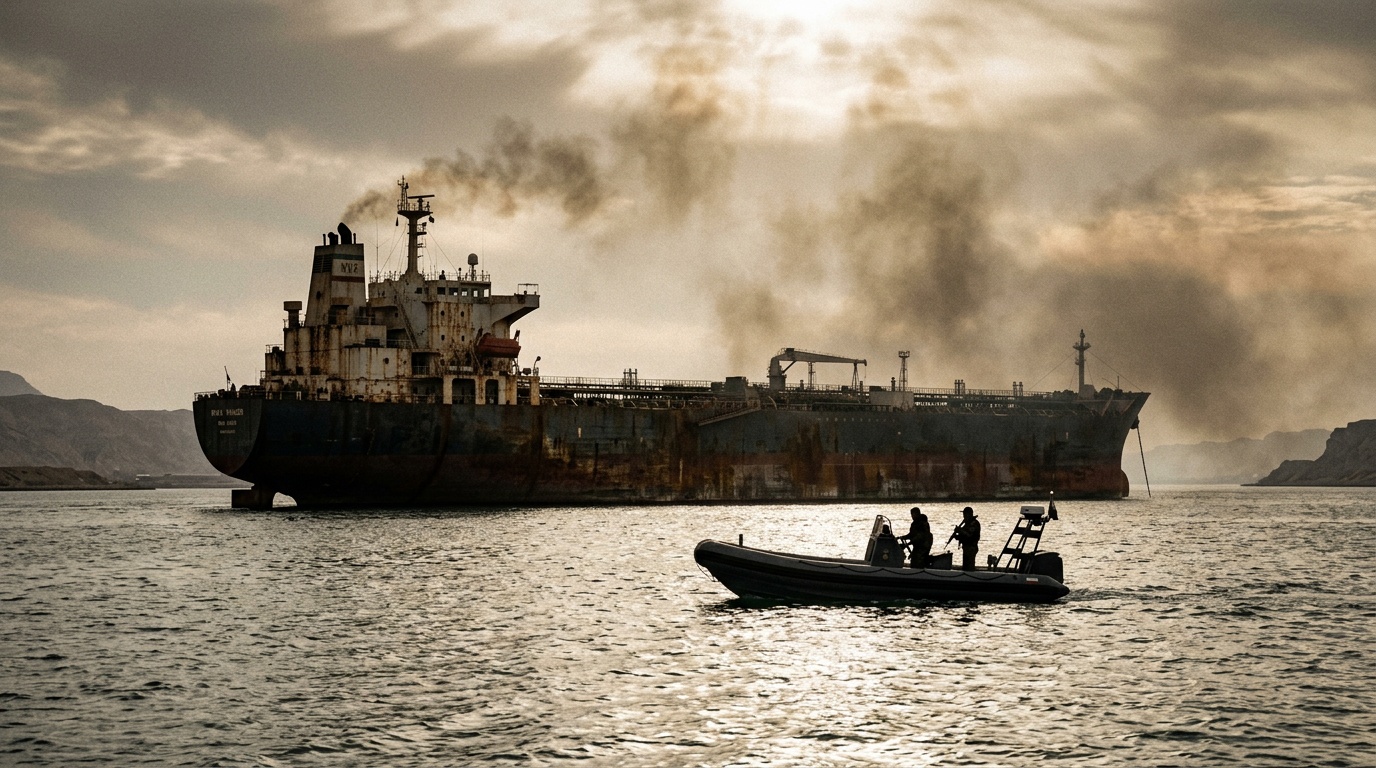
"One of the most prolific killers of economic expansions, not just over the past 80 years, but really over the past four centuries, are energy supply shocks," Goodspeed said. He underscored that these shocks have been a contributing factor in 10 out of 12 U.S. recessions since 1945. His warning is specific: a halt in traffic through the Strait of Hormuz—which accounts for 20% of the world's petroleum—for several weeks could be enough to trigger the next downturn.
But energy isn't the only old-school villain on his list. Goodspeed also pointed a finger at government intervention in credit markets. "...the imposition of credit controls was an accomplice to the murder of economic expansions in 1948, 1970 and 1980," he noted, citing a bill currently in Congress that could cap credit card interest rates at 10%.
Rounding out his trio of economic killers is war, which he identified as another "single most destructive" factor leading to some of the most severe and long-lasting recessions.
Oil Shock Fuels Recession Fears
Goodspeed's historical analysis isn't just academic; it's colliding with current events. The International Energy Agency (IEA) has recently warned of a severe energy crisis, the impact of which is only beginning to hit markets. A crisis triggered by conflict has disrupted the Strait of Hormuz, contributing to a surge in gasoline prices and a three-week losing streak for the S&P 500.
The numbers are getting attention. Fidelity Investments has suggested that oil prices breaking above $135 a barrel could lead to a full-blown recession, a view that aligns with Goodspeed's warning. At the time of the report, Brent crude oil was trading 0.82% lower at $108.14 per barrel. More telling is the trend: over the preceding month, the price had surged 24.01% amid escalating conflict.
Rate Cap May Reshape Card Rewards
Meanwhile, the other historical "accomplice"—credit controls—is also making headlines. The bill in Congress proposing a cap on credit card interest rates could have far-reaching implications. Earlier this year, former President Donald Trump threatened credit card companies with "severe" consequences if they failed to cap interest rates at 10%, warning that higher rates could be treated as illegal. He criticized lenders for charging 20–30% interest, framing the move as consumer protection.
The proposed cap is far below current average rates, which typically hover around 25%. Experts warn this could lead to a "K-shaped" outcome in consumer finance. If lenders can't price risk properly, the economics of credit cards change dramatically. Dave Grossman, founder of Your Best Credit Cards, explained that rewards programs could shift toward wealthy customers, with premium cardholders getting better benefits while others receive fewer perks. This could also have a knock-on effect, potentially hurting industries like airlines that rely heavily on credit card reward partnerships.
So, while the markets buzz about whether AI stocks are overvalued, Goodspeed's analysis serves as a reminder. The ghosts of recessions past—sudden shortages of energy, government caps on credit, and the devastation of war—are still very much present. The next economic downturn might not start in Silicon Valley. It might start, as it so often has, with a tanker stuck in a narrow strait or a piece of legislation landing on the president's desk.