So here's a thing about politics and markets: sometimes they're the same conversation. Anthony Scaramucci decided to have that conversation on Saturday, and it wasn't particularly polite. In a lengthy social media post, the former White House communications director unloaded on the Trump administration with accusations ranging from market manipulation to reckless foreign policy. His central argument? That gasoline prices climbing toward $8 a gallon are creating political fallout that's accelerating faster than anyone wants to admit.
Think of it this way: Scaramucci's broader framework casts politics and trading as two markets watching the same show—Donald Trump. He's previously described what he calls an "off-ramp" scenario where Trump could claim success, push de-escalation steps tied to oil shipping risks, and potentially steady prices. But Saturday's post suggested that off-ramp might be getting harder to find.
The $8 Red Line
Let's talk about what breaks through partisan loyalty. According to Scaramucci, it's not complicated policy debates or even foreign affairs—it's the cost of filling your tank. He wrote that the "red line" is $8 a gallon, particularly as the country approaches its 250th anniversary. This isn't abstract economics; it's about families facing $120 fill-ups while trying to do something as basic as grilling for a celebration.
Scaramucci claimed approval ratings are sliding fast as energy costs rise, and said Trump appears unmoved by the political damage. The indifference itself, he suggested, might be the most alarming part. This political pressure point intersects neatly with his market-focused thesis: energy is the main transmission channel from geopolitics into risk assets.
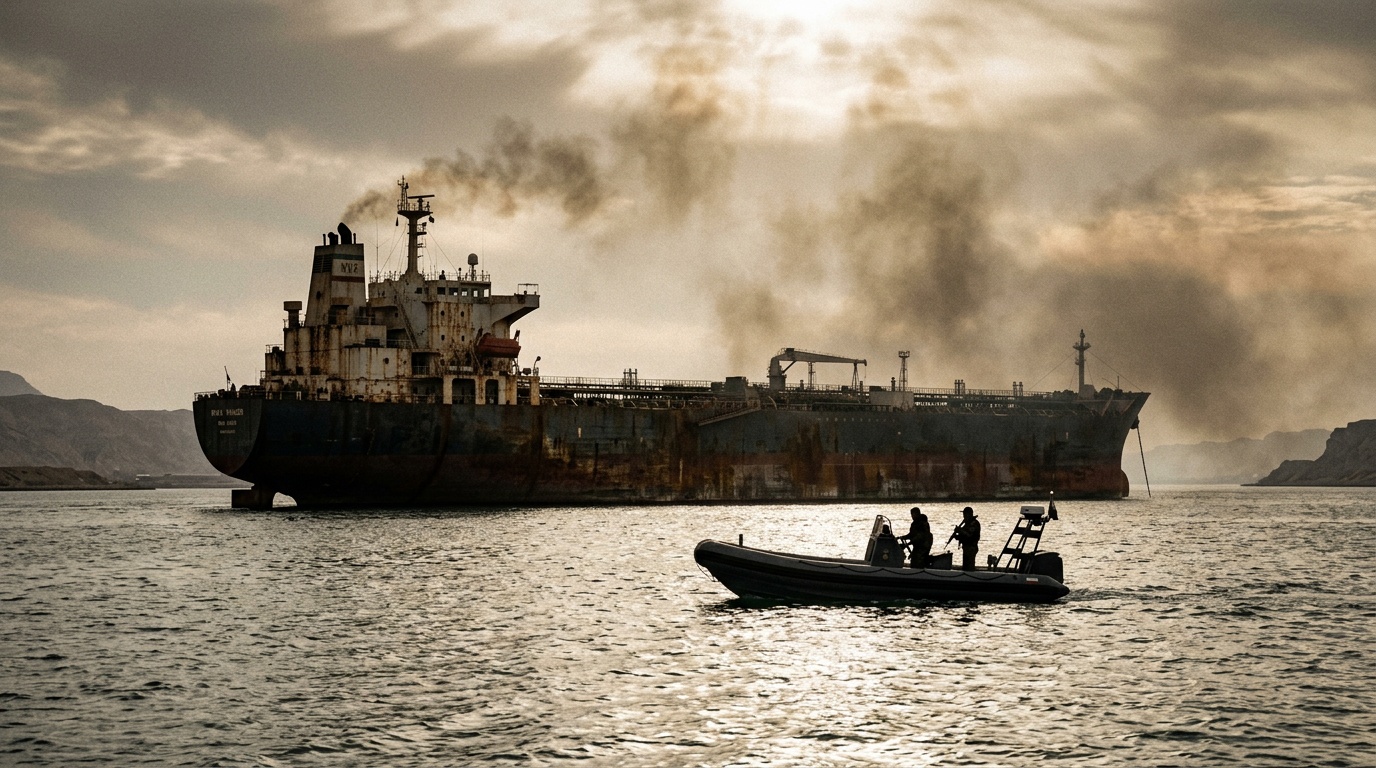
Earlier, in a separate discussion referenced in his market commentary, he described a sequence aimed at easing crude prices: reopening the Strait of Hormuz, deploying French and U.S. naval escorts, and creating an insurance backstop to reduce shipping risk premiums. The basic idea? Oil flows don't truly normalize until hostilities stop, making any "victory" narrative dependent on conditions on the ground and at sea. He also pointed to a timeline claim from Mike Novogratz, who apparently expects the conflict to be broadly finished within a week.
The Geopolitical Feedback Loop
Here's where it gets interesting from a market perspective. Scaramucci describes a feedback loop: traders react to political signals, and politicians then respond to market moves as if they're a scoreboard. In that framing, Trump could declare a manufactured win once the temperature drops, triggering a relief rally that Scaramucci said could look "like that was the plan all along."
The backdrop includes heightened sensitivity around the Strait of Hormuz, that key artery for global oil shipments where disruption fears can quickly lift crude and gasoline prices. Scaramucci's energy-market roadmap treats escorts and insurance as tools to compress risk premiums if fighting ends and shipping lanes feel safer.
But Saturday's post went beyond energy markets. Scaramucci broadened the indictment to include allegations of harsh domestic actions and civil-liberties violations, including attacks on First, Fourth, Fifth, and Fourteenth Amendment rights. He further alleged the administration built what he called "Alligator Alcatraz" in Florida, separated children from families without tracking destinations, and treated allies like Canada as adversaries while even threatening a NATO member.
On the economics front, Scaramucci blamed tariffs for across-the-board price increases and criticized the tax bill's distributional impact. He claimed it delivered a $7,000 benefit for those making $1 million or more while hitting those earning $50,000 or less with a $500 cost. All these policies, he argued, tie back to the gasoline spike as the catalyst that's finally shifting public opinion.
Three Ways to Fix It (Maybe)
So what's the solution? Scaramucci outlined three strategies to mitigate oil price risks. First: restore passage through the Strait of Hormuz, which he linked directly to lower crude prices by reducing disruption risk. Second: military protection for shipping, with escorts involving France and the U.S. meant to reduce the perceived danger to tankers. Third: an insurance backstop designed to bring down the cost of coverage and, by extension, the embedded risk premium in oil prices.
In earlier commentary, Scaramucci also warned that a U.S. strike on Iran could ricochet through energy markets and even spark pressure to loosen constraints on Russian oil—a chain reaction he argued could benefit Moscow and complicate U.S. operations.
He's paired this geopolitical view with a longer-running argument about how market turns can arrive before headlines feel better. Having lived through nine bear markets, he's described bottoms forming while pessimism is still loud because investors remain positioned too defensively. The implication? By the time everyone feels good about the situation, the market might have already moved.
Which brings us back to that $8 gasoline. Scaramucci's argument isn't just about energy markets or geopolitics—it's about what happens when economic reality collides with political loyalty. When filling your tank costs as much as a nice dinner out, partisan allegiances might start to feel less important. And if he's right about that feedback loop between markets and politics, we might be watching that collision play out in real time.