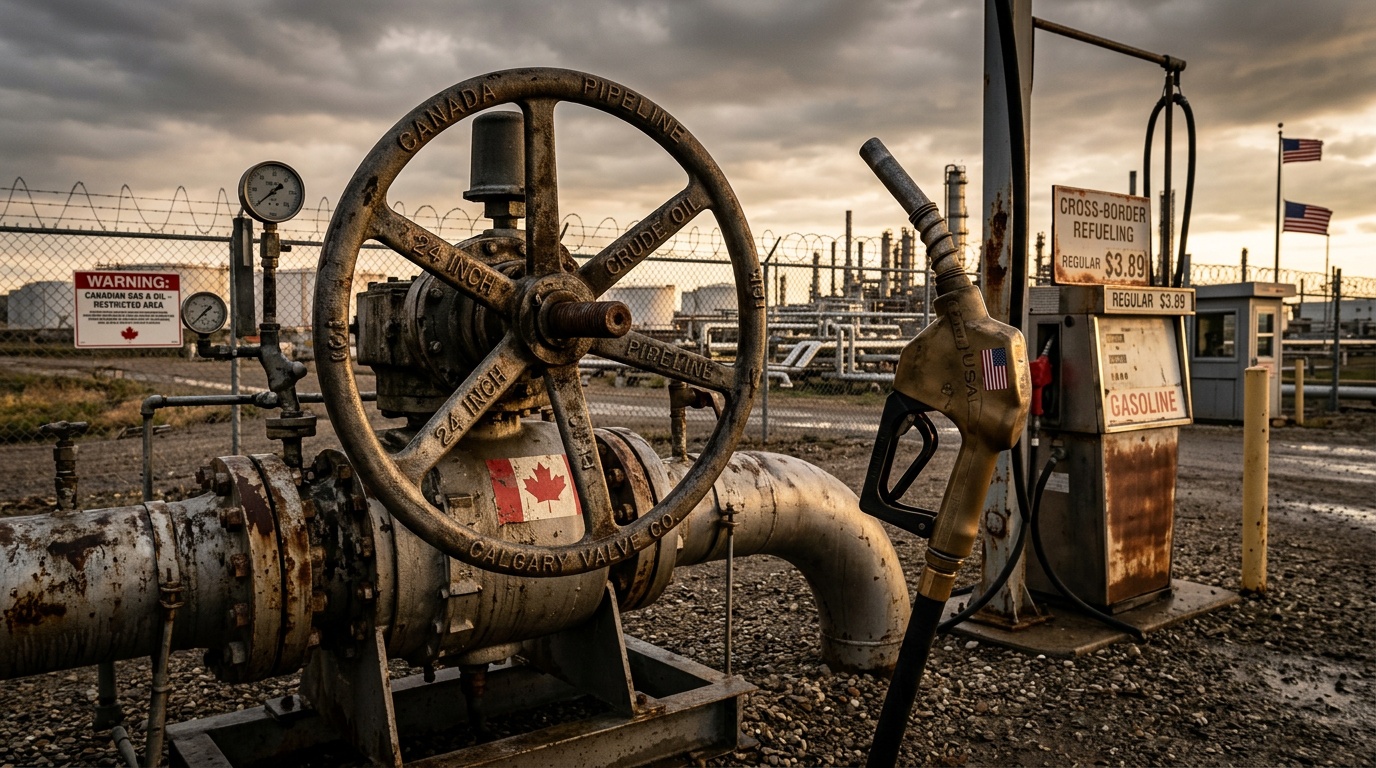
So here's a fun way to think about the Iran conflict: it's costing American drivers about $240 million every single day just to fill up their tanks. Since the war kicked off in late February, that daily toll has added up to a staggering $8.4 billion in extra fuel costs. That's not a typo. Billion, with a B. It's one of the most aggressive climbs in energy pricing in recent memory, and it's hitting household budgets like a freight train.
According to market analysis, this surge is essentially a "real-time tax" on consumers. Every dollar spent wrestling with the pump is a dollar not spent at a restaurant, on a new pair of shoes, or tucked into savings. It's pulling liquidity straight out of the broader economy as the cost of basic commuting—and everything that gets shipped on a truck—goes vertical.
Reading the Numbers at the Pump
The national average for a gallon of regular has now hit $4.10. That's the highest price we've seen since June 2022. To put the trajectory in perspective, since January, the cost of gas has risen by more than $1.30 per gallon. And the wild part? The vast majority of that painful climb happened in just the five weeks after the conflict began.
The fund that tracks gasoline prices, the United States Gasoline Fund LP (UGA), is up about 39.55% over the last month, mirroring the pain at the pump.
If you think that's bad, check the rearview mirror. The impact is even more pronounced for the trucks that move our economy. Diesel prices have soared to $5.58 per gallon. That's a direct threat to the cost of every consumer good you can think of, because when it costs more to ship a box of cereal or a flat-screen TV, you better believe those costs get passed right along.
What This Means for Your Wallet (and the Economy)
Economists are sounding the alarm. When energy costs shoot up this fast—going from relative stability in early 2025 to a vertical spike in March 2026—families have zero time to adjust. There's no gentle slope here; it's a cliff. The fear is a potential "cool down" in consumer spending everywhere else. If your gas budget doubles, something else in the monthly spreadsheet has to give.
And as long as the geopolitical situation in the Middle East stays volatile, experts anticipate that daily $240 million surcharge on the American public will continue its upward march. It's a bill that comes due every time you swipe your card.
The Crude Reality in the Markets
Unsurprisingly, energy markets have gone absolutely bananas in response to the prolonged military timeline. The crude oil benchmarks that dictate these prices are on a tear.
The United States Oil Fund (USO), which tracks West Texas Intermediate (WTI) crude futures, closed 11.15% higher at $137.92 on Thursday. For the year, it's up a mind-bending 97.76%.
Over in the Brent crude world, the United States Brent Oil Fund (BNO) leaped 7.53% to close at $54.12 on the same day, riding an 89.76% year-to-date gain.
So, the next time you're staring at the pump, watching the numbers fly by, remember: you're not just paying for gas. You're paying a geopolitical premium. And at $240 million a day and counting, it's one of the most expensive bills the American public has ever footed.