Here's a funny thing about the oil market right now: it seems to have two different opinions about the same crisis. On one hand, the price for a barrel of Brent crude that you can get your hands on right now has shot up. On the other, the price investors are paying for a contract to get that same barrel in late June is significantly lower. This gap tells you what the market is really thinking: traders are betting the disruption in the Strait of Hormuz will be a brief scare, not a long-term blockage, even as physical supplies tighten in the moment.
This disconnect is landing right in the middle of a heated policy debate. Analyst Robin Brooks has been making the case that cutting off Iran's oil exports entirely is the kind of pressure campaign needed to actually change state behavior. The market's current split personality, in his view, is a live test of assumptions about how long this crisis will last.
In a recent post, Brooks wrote that despite all the attention on the surging "spot" price, the number he treats as the key benchmark is the front-month Brent futures contract—which right now is the end-of-June contract, sitting around $112 a barrel. He describes the current setup as a scramble for barrels you can get today, while the futures curve reflects a calmer assumption that things will look better by summer.
Why the Futures Price Tells the Real Story
So why focus on the June contract instead of the headline-grabbing spot quote? Brooks lays it out simply: futures prices embed the market's expectations about when the conflict winds down and shipping gets back to normal. He also notes that Brent was around $72.50 before the war, so even the $112 futures level implies the market isn't projecting a full return to the old, peaceful status quo.
Here's a bit of market mechanics: when a futures contract gets close enough to its expiration date, it tends to get pulled toward the spot price because it effectively becomes a near-immediate delivery instrument. Brooks argues the same dynamic could reappear for the June contract if tanker flows are still constrained as the month approaches. In other words, if the Strait is still messed up in June, that futures price will have to race higher to meet reality.
This framework also helps explain a curious side note: why U.S. crude (WTI) hasn't matched Brent's dramatic jump. Brooks points to the cost of moving oil out of the U.S. as a limiting factor. If traders are betting on a short conflict, there's less reason to pay up to export American barrels halfway around the world.
And that "short war" expectation is central to Brooks' separate, bigger argument. He's been making a policy case for much tougher energy sanctions on Iran, tying government incentives directly to oil cashflow. His view is blunt: sanctions that stop short of choking off energy exports leave regimes with the revenue they need to keep operating as they please.
How the Market Is Pricing Iran Risk—And Why It Matters
Earlier in the week, Brooks contrasted the market's reaction to the Iran-linked risk with the first day of Russia's invasion of Ukraine. It turns out traders can reprice geopolitical danger really, really fast. He noted that Brent's move on Monday topped 7%, versus a roughly 2% change back on February 24, 2022.
He described Monday's trading tone as defensive, calling it a "risk-off" setup and writing that markets were "trading Iran like it's a big shock—not a little one." You could see it across assets: a flat session for the S&P 500 (SPY) alongside strength in gold and the U.S. dollar versus both G10 and emerging-market currencies.
By Tuesday, he flagged more confirmation in the commodities space, citing WTI nearing $81 a barrel and coal rising more than 8%. That kind of broad-based bid for commodities, in his telling, fits with a market that's paying up for protection against supply shocks rather than dismissing the whole move as temporary noise.
Brooks has also connected this embargo debate to lessons from Ukraine, arguing the West never fully shut down Russia's oil flows and that the decision helped keep Moscow funded. He rejects the idea that a gap between paper (futures) and physical oil markets means the system is broken. Instead, he says futures are doing exactly what they're designed to do: price in an expected end-date for the war.
The Geopolitical Heat Turning Up the Pressure
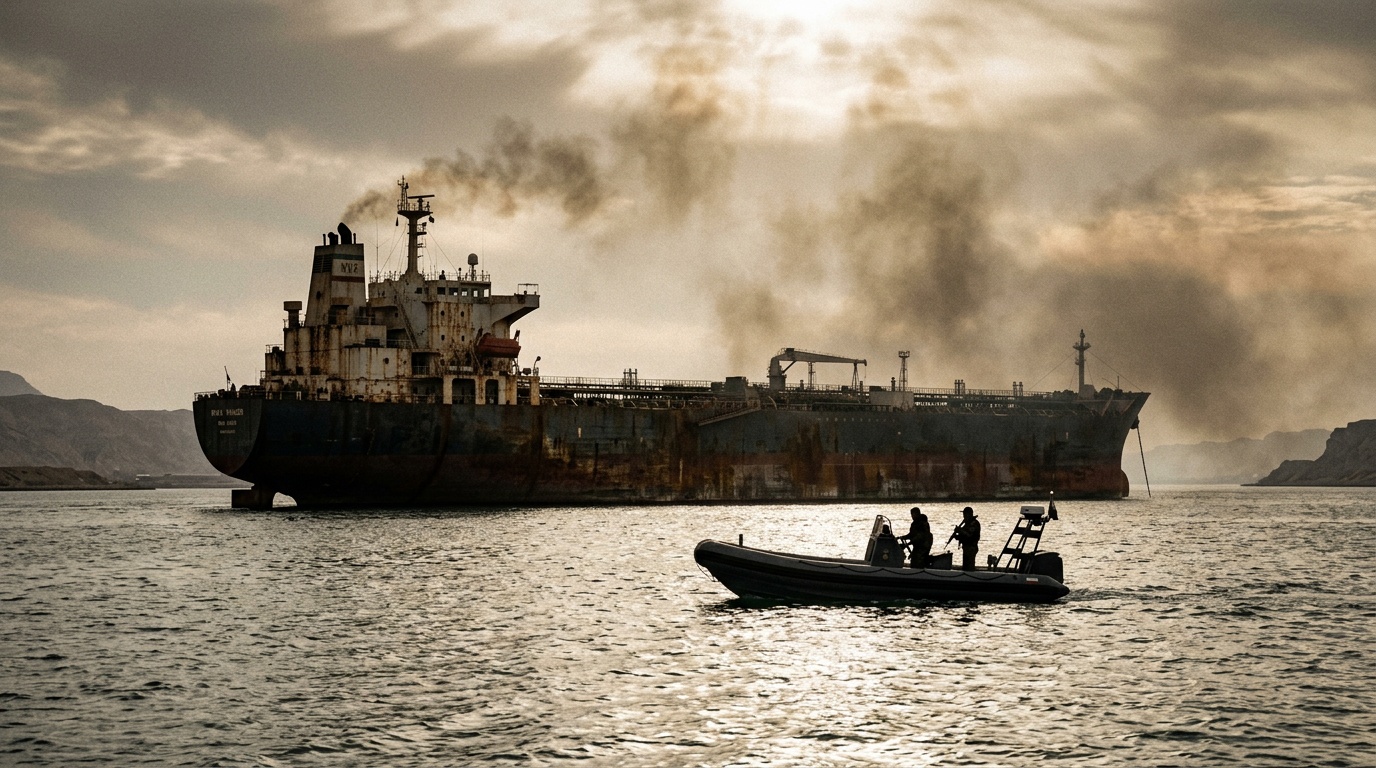
All of this unfolds against a backdrop of escalating rhetoric. Former President Donald Trump recently issued a 48-hour ultimatum to Iran regarding the Strait of Hormuz, threatening severe consequences if the route isn't opened. "Time is running out—48 hours before all Hell will reign down on them," he remarked, emphasizing the strategic importance of this chokepoint that handles about one-fifth of global oil and liquefied natural gas flows.
Trump's insistence on immediate, unimpeded transit contrasts sharply with Iran's reported approach, which involves a more conditional framework for vessels. This escalation in rhetoric—and the potential for military action—intensifies the market's focus on the fragile logistics of global energy, highlighting the broader implications for supply stability.
The Simple, Scary Math of Supply
Brooks' supply-side argument is built on some blunt arithmetic. Russia exports about 7 million barrels of oil per day. The Strait of Hormuz? Roughly 20 million barrels move through it daily. That chokepoint math is a big part of why he argues an Iran-centered disruption can hit harder than many investors might initially expect.
In his latest commentary, Brooks frames the current Brent spread as a live test of those assumptions. Spot prices reflect immediate scarcity. The June contract prices in hoped-for improvement. If the Strait remains impaired into June, he suggests the futures price could be forced to chase the spot price higher. A faster reopening would do the opposite, pulling the frantic spot quote back down toward the calmer futures level. For now, the market's split vote suggests it's betting on the latter.