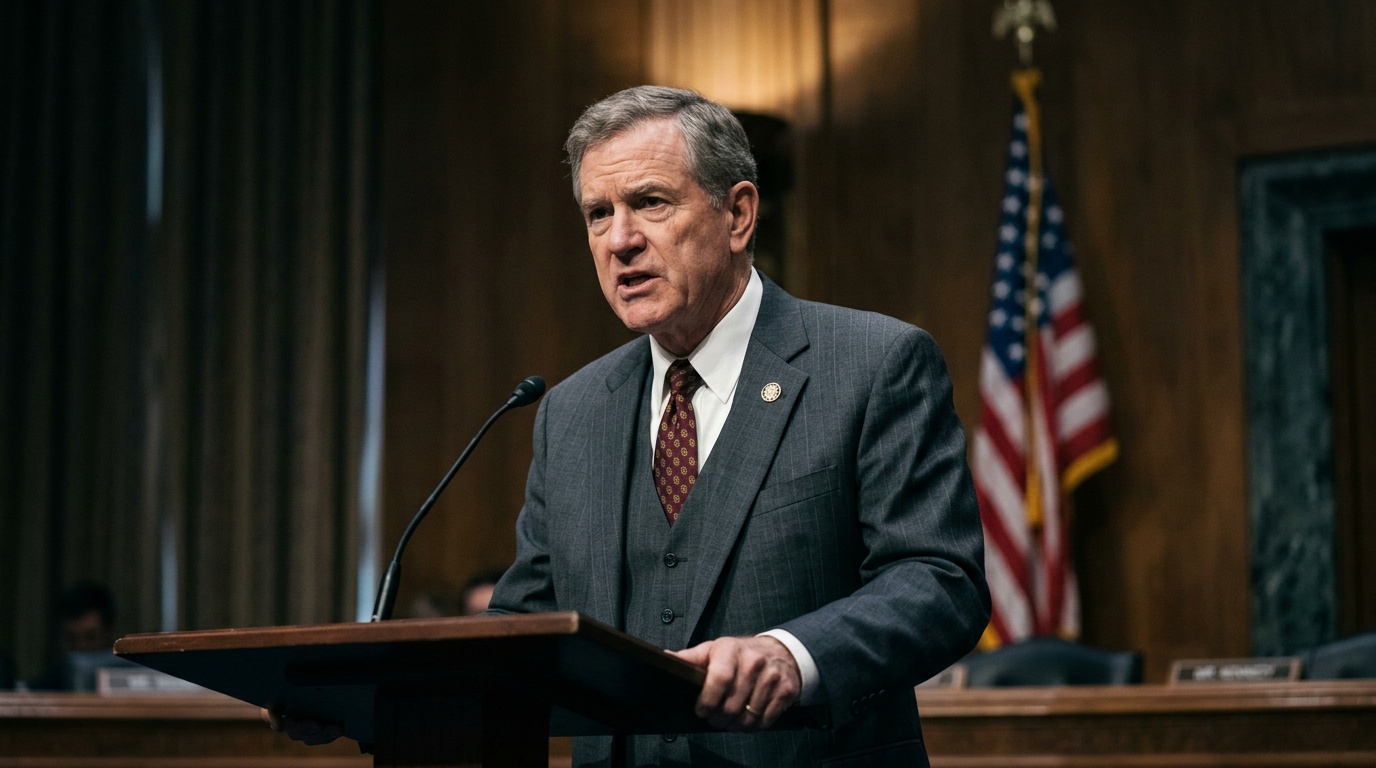
So, here's a thing. A member of Congress says he's seen classified information about UFOs that is so explosive, releasing it would have caused a national meltdown. That's not the plot of a summer blockbuster; it's what Rep. Tim Burchett (R-Tenn.) told Newsmax this week.
"It would have set the earth on fire, this country would have come unglued," Burchett said, adding, "We just need to disclose it all. I'm sick of it."
It's a pretty dramatic statement. Burchett, who sits on the House Oversight and Foreign Affairs Committees, isn't just talking about some vague rumors. He's pushing for complete government transparency on Unidentified Aerial Phenomena (UAPs), the modern, less sci-fi-sounding term for UFOs. And he's suggesting the secrecy goes all the way to the top.
The Layers of Secrecy
Burchett described what he sees as a pattern of bureaucratic suppression. He recounted a closed-door briefing where he was essentially told the president operates on a need-to-know basis regarding this topic. "I think that says everything. There's an arrogance," he said.
He also raised a more chilling point, mentioning individuals connected to sensitive programs who, he claims, have died or disappeared under unexplained circumstances. "The only thing that ties them together is outer space," Burchett said. It's the kind of detail that fuels conspiracy theories for decades.
How This Debate Got Reignited
This isn't happening in a vacuum. The pressure for disclosure has been building again in Washington. Back in February, former President Donald Trump promised that, if re-elected, he would direct agencies to release government files on extraterrestrials and UAPs, citing strong public interest.
Former President Barack Obama also briefly accelerated the chatter when he said "aliens are real" on a podcast, though he later clarified he saw no evidence of contact during his presidency. So, we have a former president saying aliens are real, and another former president promising to release the files. It's a political odd couple for the history books.
Meanwhile, the official government stance remains one of skepticism. The Pentagon has maintained that its All-domain Anomaly Resolution Office (AARO) has found no verifiable evidence of extraterrestrial activity. NASA has separately called for better data collection over louder speculation.
Adding a dash of modern intrigue, the domain aliens.gov was registered in March, though the site remains inactive. It's the kind of small, weird detail that makes everyone wonder if someone in a government office is having a laugh or preparing for something big.
Prediction market traders, who bet on the likelihood of future events, have taken note of all this political noise. But broadly, they remain skeptical that a formal government confirmation of extraterrestrial life is imminent. The smart money, it seems, is still on "probably not."
For Burchett, the calculus is simpler. "The public has a right to know," he said. Whether the public is ready for what that might be, if his assessment is correct, is another question entirely.