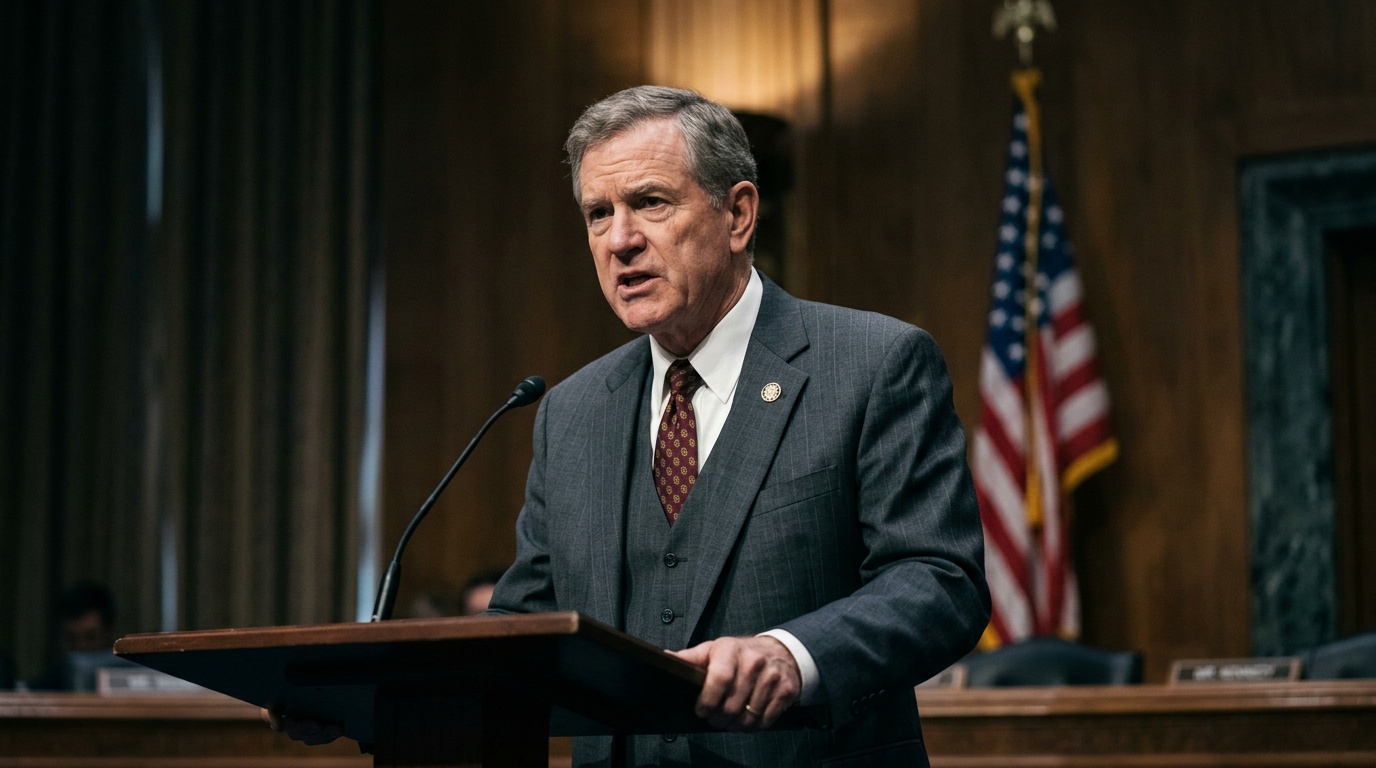
So here's the latest from the White House: President Donald Trump went on television Wednesday night to give everyone an update on the whole Iran situation. And by "update," I mean he spent about 20 minutes explaining why things are going great, why we're definitely not there for the oil, and also, by the way, we might blow up their power plants and oil fields soon.
It was that kind of speech.
Starting with a Moon Shot
Before getting to the war stuff, Trump kicked things off with some good news from space, congratulating NASA on the successful launch of Artemis II. "It will be traveling further than any manned rocket has ever flown," he said. It was a classic move—starting with a unifying, feel-good achievement before diving into the more contentious geopolitics. A little palette cleanser before the main course.
The One-Month Report Card
Trump then marked the one-month anniversary of "Operation Epic Fury" against Iran. His report card? Straight A's. He described "swift, decisive" victories, claiming Iran's naval forces are effectively destroyed, its air force is severely weakened, and much of its leadership has been eliminated. He added that command structures tied to the Islamic Revolutionary Guard Corps are being dismantled and Iran's ability to deploy missiles and drones has been "sharply reduced," with weapons facilities and launch sites "largely destroyed."
In short, according to the commander-in-chief, things are going according to plan. But not everyone was buying the victory lap. Even before the speech started, Senator Elizabeth Warren (D-Mass.) was on the attack, accusing Trump of abandoning his key campaign pledges. "The human cost of this war is unconscionable," she said.
The Oil Question (And the Non-Oil Answer)
Here's where it gets interesting. Trump made a point to say the U.S. military campaign against Iran is not driven by oil interests. "We don't 'need their oil,'" he said, adding that the country no longer depends on Middle Eastern energy and is instead acting to support its allies. He said the U.S. has no obligation to remain in the region but is choosing to do so for strategic reasons.
This is a notable claim because, well, the conflict has severely disrupted global energy markets. Iran has effectively shut down traffic through the Strait of Hormuz—a key route for roughly one-fifth of the world's oil supply. So while the president says it's not about oil, the market impact certainly is. During the speech, WTI crude futures were sitting at $100.28 per barrel.
Trump's advice to countries facing fuel shortages due to the disruption? Take matters into your own hands. He suggested they either purchase energy supplies from the U.S. or move to secure access themselves. It's a very free-market solution to a problem partly of his own making.
Justifying the War: The Ghost of Deals Past
To defend the current conflict, Trump reached back to the previous administration. He criticized the nuclear agreement negotiated under former President Barack Obama, calling it a mistake and saying he was proud to withdraw from it.
He then pointed to a military operation from June 2025, "Operation Midnight Hammer," which targeted Iran's nuclear program. He said those strikes "totally obliterated" key facilities. The argument, essentially, is that Iran tried to rebuild its nuclear efforts elsewhere despite earlier U.S. strikes, proving it never abandoned its ambitions and was "on the doorstep" of developing a nuclear weapon. Therefore, "Operation Epic Fury" was necessary.
The New Threat: Lights Out and Dry Wells
Now for the headline-grabber. On Tuesday, Trump had suggested the U.S. could wrap up its military campaign against Iran within two to three weeks, saying a withdrawal wouldn't hinge on any agreement from Tehran. But on Wednesday, he added a major condition—or rather, a threat.
He said that if no agreement is reached with Iran, the U.S. would launch strikes on the country's power infrastructure, targeting its electric generating plants. He added that Washington could follow through on this threat within two to three weeks if talks fail and noted that Iranian oil facilities could also be targeted.
"We have not hit their oil, even though that's the easiest target of all. Because it would not give them even a small chance of survival or rebuilding, but we could hit and it would be gone," he said.
It's a stark escalation in rhetoric, framing the destruction of Iran's energy backbone as a viable next step. Despite that, Trump said "discussions are ongoing," leaving the door open—if only slightly—for a diplomatic resolution.
The Democratic Rebuttal
The address did not play well with the president's political opponents. Former Vice President and 2024 Democratic presidential nominee Kamala Harris said she is "watching what [Trump] does instead of listening to what he says." She added that she wouldn't be watching the speech herself and criticized Trump for leading the country into a war the American people "do not want."
Senator Warren also took to social media, arguing that Trump's approach runs counter to his campaign pledge to steer clear of foreign wars. "His promises are now in tatters," Warren said, claiming the administration has drawn the U.S. into a prolonged and dangerous conflict. "The president should end this war today," she wrote.
So there you have it. A speech that was part victory declaration, part geopolitical justification, and part stark warning about turning off Iran's lights and shutting down its oil taps. The president says we're winning, we're not there for the oil, and we might just blow up the oil anyway if they don't play ball. Meanwhile, his opponents say he's broken his promises and escalated a conflict nobody asked for. Just another Wednesday in global affairs.