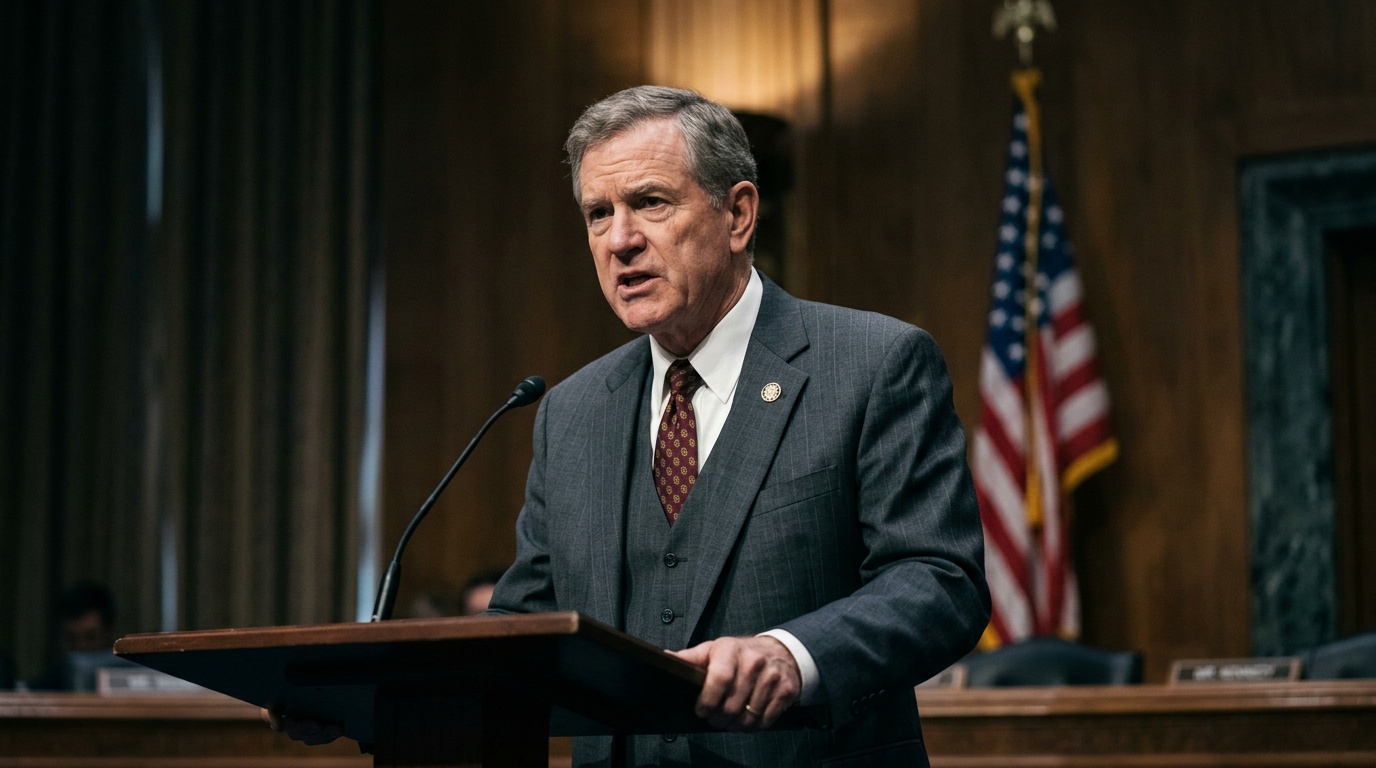
So here's the situation: President Donald Trump is giving a prime-time speech tonight at 9 PM ET about the war in Iran. It's his first since "Operation Epic Fury" kicked off. And while you and I might just listen to see what he says, a certain corner of the financial world is putting real money on the specific words that will come out of his mouth.
We're not talking pocket change. On the prediction market platform Kalshi, traders have already placed over $2 million in bets in less than 17 hours on a market that simply asks: which words will Trump say? It's a bizarre but incredibly telling financial instrument. As "Big Short" legend Steve Eisman noted last week, this is a "unipolar market" right now—the Iran war is the single variable driving everything. And tonight's speech is the next big data point.
Let's break down what the word market is telling us.
The Sure Things and the Signals
Some words are considered virtual locks. "Nuclear" is trading at a 97% probability. "Epic Fury"—the operation's name—is at 92%. "NATO" is at 88%, which makes sense after Trump's recent musings about leaving the alliance and telling European allies to "go to the Strait, and just TAKE IT."
Then you get into the words that carry more economic weight. "Oil" is at 82%. How much Trump leans on oil language could signal whether he's serious about ending the operation while the Strait of Hormuz is still closed—a scenario that would keep crude prices well above $100 a barrel. Speaking of Hormuz, that word is at 79%, though it's down 10 points after Defense Secretary Pete Hegseth confirmed that reopening the strait is not a core military objective. BlackRock Inc (BLK) CEO Larry Fink has already warned oil could spike to $150 if Iran remains a threat to the vital waterway after the war.
The Coin Flips That Move Markets
This is where it gets interesting for traders. "Midnight Hammer"—the codename for last year's strikes on Iran's nuclear sites—is at 64%. Whether Trump references it could show if the speech is a victory lap or a forward-looking update.
The most important contract on the board might be "Ceasefire." It's sitting right at 49%, a perfect coin flip. Trump said Iran asked for one; Iran denied it. If he uses the word tonight, risk assets like stocks could rally hard. If he avoids it, traders will likely conclude that his promise of "leaving in two to three weeks" means declaring victory, not actually stopping the fighting.
Another telling one: "Hegseth" at 48%, down a staggering 41 points. If the war is going as swimmingly as the White House claims, you'd expect Trump to credit his Defense Secretary by name. The collapse in this contract suggests traders think he might be starting to distance himself from Hegseth if the operation's narrative isn't landing with the public.
The Longshots and Their Implications
Further down the probability ladder, you see what the market thinks is unlikely but would be hugely consequential. "Ground" is at 39%, having dropped 51 points. The stock market seems to have nearly priced out a ground invasion, but prediction markets are less sure. If Trump mentions ground forces, oil could revert upwards, and defense names like Lockheed Martin Corp (LMT) and RTX Corp (RTX) could rip higher.
"Withdraw" is only at 36%. Even though Trump said "we'll be leaving very soon," traders give low odds he'll use explicit withdrawal language. The market expects a "mission accomplished" framing, not a pullback.
"Uranium" is at 33%. Iran reportedly still holds about 500 kg of enriched uranium. If Trump skips talking about it, it reinforces an exit narrative. If he brings it up, he may be laying groundwork for an extended operation to address the stockpile.
Perhaps the most optimistic longshot is "Peace in the Middle East" at 35%. Traders are skeptical Trump will pivot from war president to peacemaker tonight. If he says it, it would be the biggest rhetorical shift of the conflict and the clearest signal yet the administration wants an off-ramp.
What Comes Next?
CNBC's Jim Cramer called Tuesday's stock rally a "dry run" for what happens when the war actually ends, predicting rates will drop, oil will fall, and tech will rip. The speech tonight determines whether that trade activates or stalls.
All this underscores a new normal: traders making unusual bets tied directly to geopolitics. This movement is now under the microscope. Federal prosecutors in Manhattan have met with representatives from Polymarket to examine whether highly profitable bets on the prediction-market platform may have violated insider trading, anti-fraud, or other federal laws.
The U.S. Attorney for the Southern District, Jay Clayton, has warned that criminal cases linked to prediction market activity could be coming. The scrutiny intensified after well-timed wagers—on events like the potential arrest of Venezuelan leader Nicolás Maduro and the U.S.-Israeli war in Iran—generated huge profits. One new Polymarket account reportedly turned about $32,000 into over $400,000 in under 24 hours. Another trader netted nearly $1 million on Iran-related bets. These results have raised serious questions about whether traders profited from nonpublic information.
So tonight, while the political world listens for policy, the trading world will be counting words. And somewhere, a prosecutor might be listening too, wondering how someone knew a particular phrase was going to be said before the President even said it.