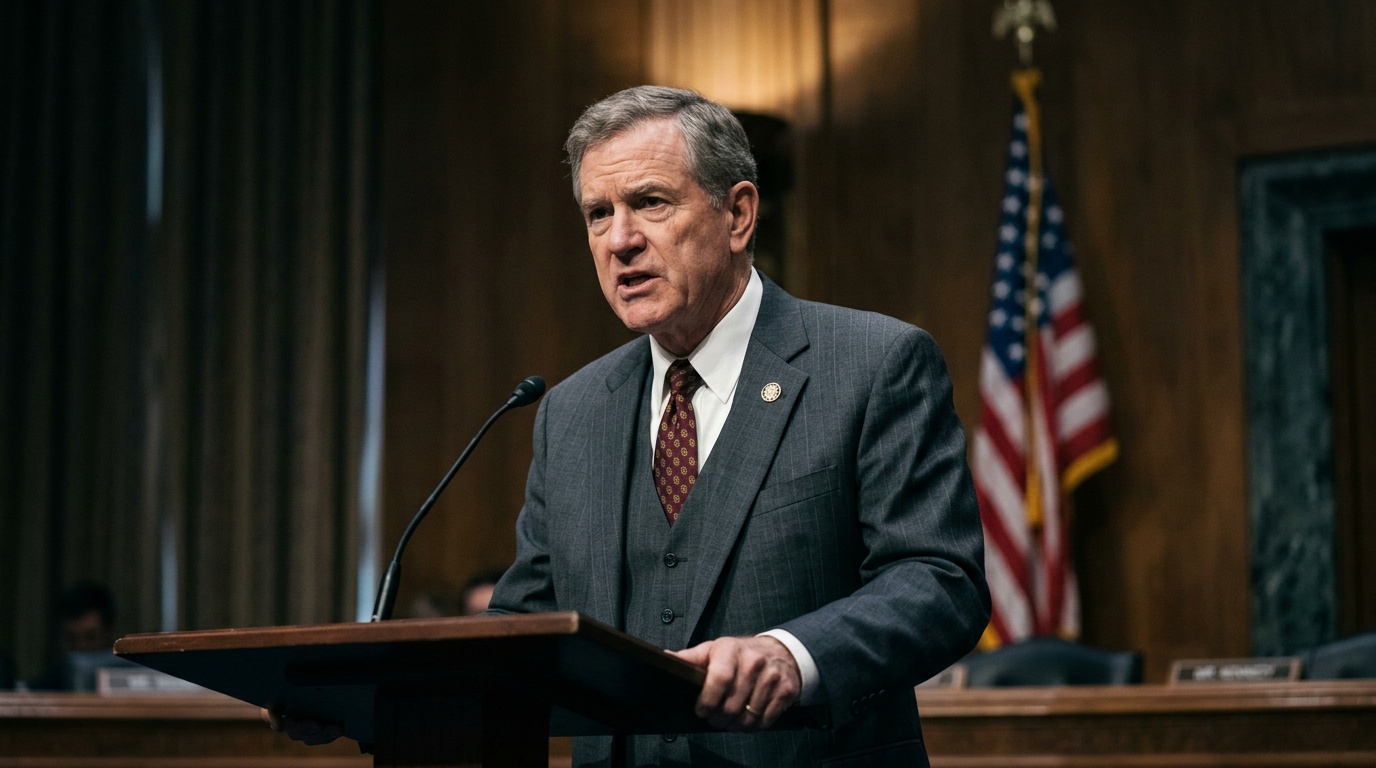
Here's a classic Washington vs. Wall Street showdown, served with a side of public math. On one side, you have JPMorgan Chase & Co. (JPM) CEO Jamie Dimon. On the other, Senator Bernie Sanders (I-Vt.). The topic? What, exactly, constitutes a billionaire's "fair share" of taxes, and whether taking more of it solves anything.
Dimon, appearing on a news program, pushed back hard on the popular political refrain. "I've listened to that my whole life and I don't know what he means," Dimon said, referring to Sanders's calls for the wealthy to pay more. His point wasn't just semantic; he argued that simply raising tax rates is a distraction from the real work of fixing broken policies and ensuring government spends money effectively. He suggested many Americans are skeptical that more tax revenue would just end up funding political projects or special interests.
Instead of focusing on tax hikes, Dimon pointed to what he sees as the actual levers for growth: regulatory reform, changes to immigration, and merit-based systems. He also proposed a different kind of government action: doubling income tax credits for low earners to boost their economic mobility and spending power in their communities.
Not one to let a challenge go unanswered, Sanders fired back on social media. "Ok, Jamie: Let me clear things up for you," he wrote. Sanders then did the math for him. Under his proposed annual 5% tax on billionaires, Sanders estimated Dimon would pay about $135 million more. "Oh, and you'd still be worth more than $2.5 billion. Seems pretty fair to me," Sanders concluded. He added that under his plan, households making $150,000 or less could get direct payments of around $12,000.
That proposal is the "Make Billionaires Pay Their Fair Share Act," legislation Sanders introduced earlier this year with Rep. Ro Khanna (D-Calif.). It's pretty straightforward: a 5% yearly tax on the net worth of individuals who have more than $1 billion. We're talking about a tiny group—fewer than 1,000 Americans.
The potential haul, however, is not tiny. Sanders estimates it could raise roughly $4.4 trillion over a decade. That money, in his vision, would fund those direct payments to working families, along with affordable housing projects and higher salaries for teachers. For context, though, even $4.4 trillion is just a slice of the federal government's financial pie. The total public debt outstanding was $39.02 trillion as of late March.
So, you have the fundamental debate in a nutshell. One side says: "Tax them more, it's only fair, and look at all the good we could do." The other side counters: "You're focused on the wrong thing; the system itself needs fixing, not just higher rates." It's a disagreement about both the means and the end goal of economic policy, played out in real time between a banking titan and a progressive icon.