






In what might be one of the more surreal moments in recent financial history, a senior Iranian official has decided to offer day-trading advice to Wall Street. As global conflicts escalate and markets reel, Iran's Parliament Speaker Mohammad Bagher Ghalibaf took to social media to mock Donald Trump's pre-market announcements, suggesting investors should simply do the opposite of whatever the former president posts.
Iran's Top Official Mocks Trump's Market Moves, Tells Traders to 'Do the Opposite'
MarketDash
As geopolitical tensions escalate and a popular trading strategy collapses, Iran's parliament speaker offers Wall Street some unconventional advice.
Get Market Alerts
Weekly insights + SMS alerts
The Ultimate Reverse Indicator
While markets are trying to price in a U.S.-Israeli war with Iran and looming tariff battles, Ghalibaf—a former commander in the Islamic Revolutionary Guard Corps—decided to cut through the noise with some very literal trading guidance aimed at countering Trump's online missives.
"Pre-market so-called 'news' or 'Truth' is often just a setup for profit-taking. Basically, it is a reverse indicator," Ghalibaf told his followers. "Do the opposite: If they pump it, short it. If they dump it, go long. See something tomorrow? You know the drill."
It's an interesting layer of psychological warfare to add to a conflict that has already seen significant escalation, including the death of Iran's supreme leader and the effective closure of the Strait of Hormuz. Now we have financial taunting from a former military commander.
R.I.P. to the TACO Trade
Ghalibaf's timing is notable because his comments arrive just as Wall Street's favorite dip-buying strategy has hit a wall. For much of last year, traders reliably bought market dips caused by Trump's rhetoric, expecting quick, face-saving reversals. They called it the "Trump Always Chickens Out" trade, or TACO for short.
That playbook failed spectacularly last week. When Trump extended his deadline to strike Iranian energy infrastructure to April 6, the anticipated relief rally never materialized. Investors are no longer treating these delays as a path to peace, but rather as tactical pauses before further military escalation.
With Brent crude soaring above $107 per barrel, the geopolitical premium in oil markets is no longer looking like a temporary spike. It's starting to feel like a structural feature of the market landscape.
The Bond Vigilantes Are Back
The strain isn't just showing up in oil prices. The U.S. bond market is fracturing under the combined pressures of trade and military conflicts. Johns Hopkins economist Steve Hanke recently noted that "the bond vigilantes have turned on Trump."
The numbers tell the story: the 30-Year Treasury yield recently brushed 4.98%, while the 10-year yield climbed to 4.46%. And Ghalibaf decided to pour gasoline on the fiscal fears by warning that financial institutions purchasing U.S. Treasury bonds are legitimate military targets. That's one way to make it clear this conflict won't be easily walked back.
Where the Markets Stand
So where does all this leave us? After Friday's market close, the damage was clear. The S&P 500 index has tumbled 7.14% year-to-date, while the Nasdaq Composite and Dow Jones have declined 9.84% and 6.65%, respectively.
On the flip side, the ETF tracking WTI Crude futures, the United States Oil Fund LP (USO), has risen 78.09% over the same period. That's quite the divergence.
Meanwhile, the SPDR S&P 500 ETF Trust (SPY) and Invesco QQQ Trust ETF (QQQ), which track the S&P 500 and Nasdaq 100 respectively, closed lower on Friday. The SPY was down 1.71% at $634.09, while the QQQ declined 1.95% to $562.58.
It's a strange moment when a foreign military official feels comfortable giving trading advice to American investors. But when popular strategies collapse and bond vigilantes return, maybe everyone's looking for a new edge—even if it comes from an unlikely source.
More News
Markets Rise as U.S. and Iran Hit Pause on Strikes; Big Tech Earnings and Fed Decision Loom

Trump Admin to Pump $1 Billion into this "Off-the-Radar" AI Stock
Oil Tumbles and Stocks Rise as Trump Gives Iran Diplomacy 'Some Space'
Iran Says It Won't Let the US Dictate the War's Pace, Strait of Hormuz Stays Closed
Trump’s Tariff Gambit Puts Canadian Oil in the Crosshairs—and U.S. Gas Prices on the Line

Your Download Link (Expiring)
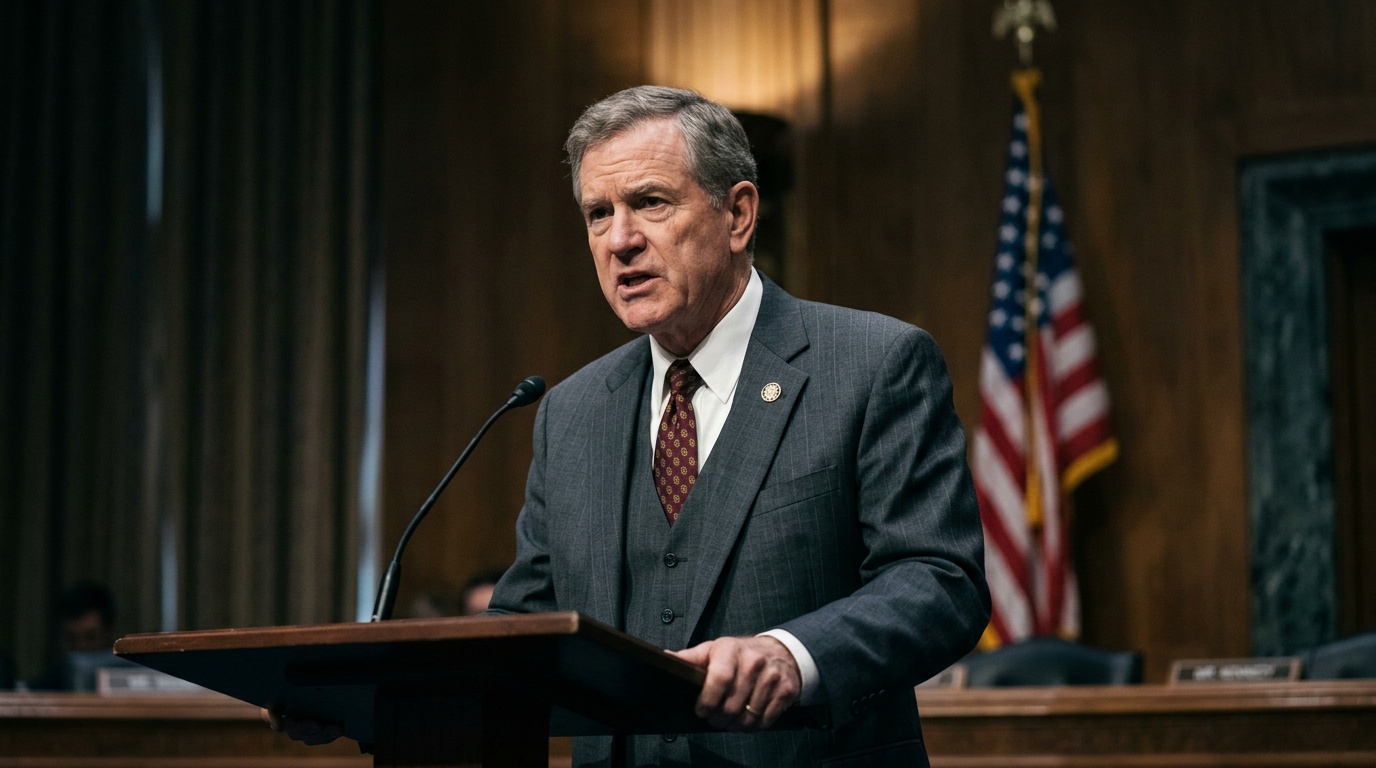
Sen. John Kennedy Warns Trump's Saudi Nuclear Deal Sends Wrong Signal Amid Iran Tensions: 'The World Is on a Hair Trigger'

Apple's AI Strategy Is a High-Stakes Bet—and One Analyst Thinks It's Wrong
Get Market News Alerts
Real-time alerts on price moves, news, and trading opportunities.
Join 20,000+ investors. No spam, ever.
Featured Articles
View all newsMarkets Rise as U.S. and Iran Hit Pause on Strikes; Big Tech Earnings and Fed Decision Loom
By MarketDash
July 27, 2026
Trump Admin to Pump $1 Billion into this "Off-the-Radar" AI Stock (Ad)
By Stansberry Research
Oil Tumbles and Stocks Rise as Trump Gives Iran Diplomacy 'Some Space'
By MarketDash
July 27, 2026
Iran Says It Won't Let the US Dictate the War's Pace, Strait of Hormuz Stays Closed
By MarketDash
July 27, 2026
Trump’s Tariff Gambit Puts Canadian Oil in the Crosshairs—and U.S. Gas Prices on the Line
By MarketDash
July 27, 2026
Have you tried Elon Musk’s 70X AI agent? (Ad)
By Brownstone Research
Sen. John Kennedy Warns Trump's Saudi Nuclear Deal Sends Wrong Signal Amid Iran Tensions: 'The World Is on a Hair Trigger'
By MarketDash
July 27, 2026
Apple's AI Strategy Is a High-Stakes Bet—and One Analyst Thinks It's Wrong
By MarketDash
July 27, 2026