So, the war in the Middle East just got a little bigger. Over the weekend, missiles launched from Yemen—fired by the Iran-aligned Houthi group—were headed toward Israel. Israeli officials pointed out this was a first since the shooting war with Iran began, which is a fancy way of saying the conflict is spilling into yet another arena. The good news, if you can call it that, is Israel reported no immediate deaths or damage. The bad news is everything else about this development.
Think of it like this: Gulf air defenses have basically been working overtime. Bahrain, for instance, says its systems have taken out 154 missiles and 362 drones since this all kicked off. That's not a sporadic threat; that's a constant barrage. Now add another launch vector from Yemen into the mix.
According to reports, U.S. Secretary of State Marco Rubio suggested Washington expects to wrap up its military campaign in weeks. The Houthis, meanwhile, signaled they'll keep going until hostilities stop across multiple fronts. So, we have a timing mismatch, which is rarely a recipe for de-escalation.
Escalating Tensions: A New Front Opens
This Houthi launch isn't happening in a vacuum. It's part of a widening set of flashpoints that now includes Iran, Israel, Lebanon, and the Gulf. And whenever there's trouble in this neighborhood, shipping routes get nervous.
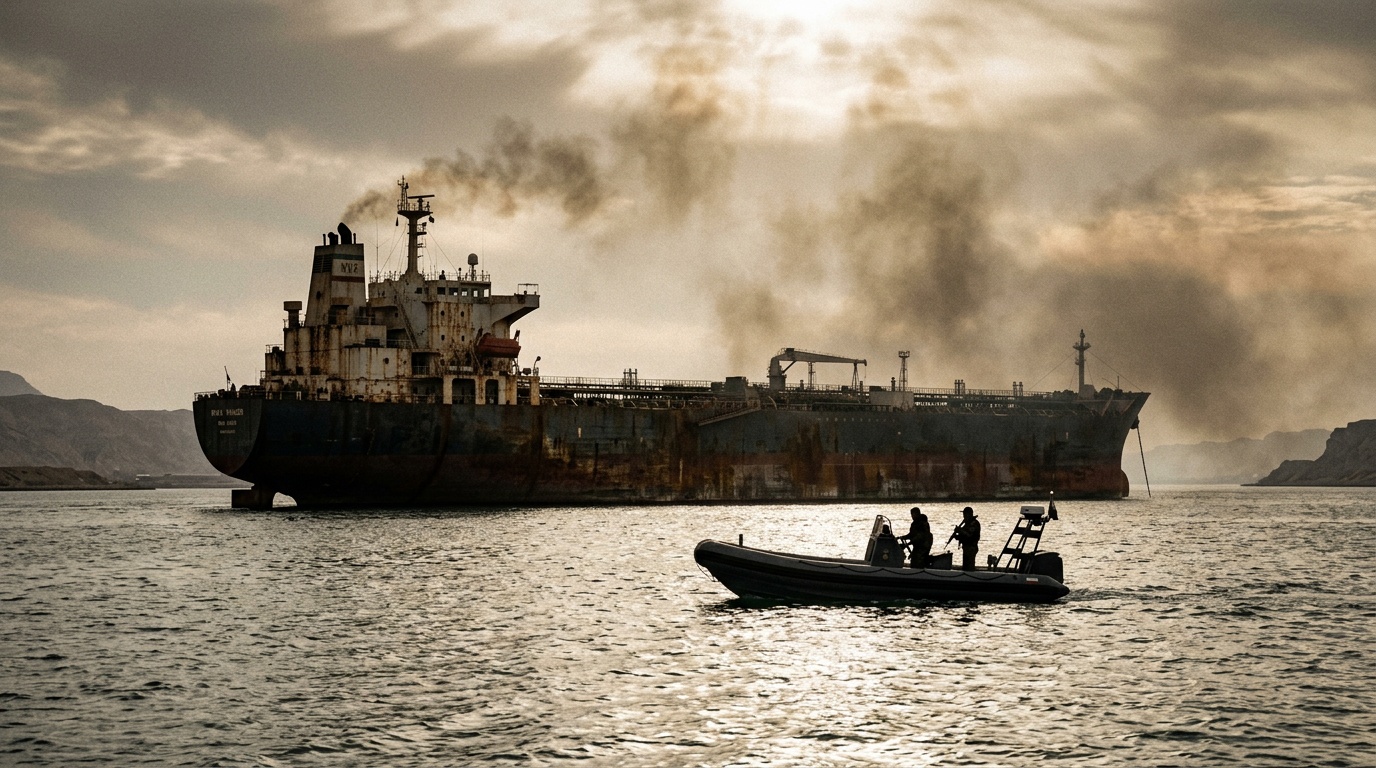
Everyone watches the Strait of Hormuz, the famous chokepoint for oil. It's been effectively shut, which is a massive deal. But analysts have long had another bottleneck on their worry list: the Bab al-Mandab strait, off the coast of Yemen. If the Houthis start seriously targeting shipping there, it creates a second major pressure point for global trade.
The sense that this conflict is spreading, not shrinking, got a boost from warnings in Europe. Poland's Prime Minister, Donald Tusk, told reporters he expects further deterioration, saying "stabilisation is unlikely in the coming days" and that "a new escalation may occur."
As if to prove the point, on the same day as the Yemen-to-Israel launch, Gulf states reported more incoming fire—this time from Iran. The United Arab Emirates said it intercepted six ballistic missiles and nine drones. It later put its war totals at a staggering 378 ballistic missiles and 1,835 drones downed, plus 15 cruise missiles. The theater of war is expanding in real-time.
How Missile Strikes Impact Regional Stability
This war began with U.S. and Israeli strikes on Iran back on February 28. It has since, in the understated language of conflict, "expanded." Thousands have been killed, and economic activity is being hammered by energy-supply shocks.
On Saturday, Israel said it carried out another round of strikes in Tehran, targeting what it called Iranian government infrastructure. The conflict has also spilled over into Lebanon, where Israel has resumed fighting Iran-backed Hezbollah. Local media reported casualties, including journalists and a Lebanese soldier. Lebanon's National News Agency also reported fatalities and injuries from Israeli strikes in the Sidon district and in Hawta al-Ghadir.
Iran hasn't been idle either. After striking a Saudi air base on Friday and wounding 12 U.S. military personnel (two seriously)—a move described as a major breach of U.S. air defenses—it continued attacks. In Israel, an Iranian missile hit Eshtaol near Jerusalem, sending seven people to the hospital.
Geopolitical Uncertainty Fuels Market Volatility
All this geopolitical noise is translating directly into market moves. U.S. stock futures declined amid rising oil prices. At one point Wednesday evening, Dow futures dropped 70 points, or 0.15%, while WTI crude futures jumped 1.26% to $91.46 per barrel.
The volatility comes as Iran's Foreign Minister, Abbas Araghchi, announced the country has ruled out direct negotiations over a U.S.-led ceasefire plan. Despite past assertions from U.S. leadership that Tehran is eager for a deal, Araghchi was blunt: "We do not intend to negotiate." That's not exactly a signal that a diplomatic off-ramp is around the corner. Israel remains deeply skeptical of Iran's intentions and has talked about keeping pre-emptive strike options on the table.
Geopolitical Tensions Drive Oil Market Volatility
Let's talk about the Strait of Hormuz, because it's central to the energy market equation. It's so central that its strategic importance even inspired a nickname from former U.S. President Donald Trump, who recently referred to it as the "Strait of Trump" during a public appearance.
The reality on the water is more serious than wordplay. The disruption there is severe. Average daily flows have plummeted to about 1.1 million barrels per day, down from roughly 20 million barrels before the conflict. Unsurprisingly, oil prices have climbed back above $100 per barrel. When a major artery for global energy gets squeezed, prices react.
Energy Prices Surge Amid Ongoing Conflict
That price reaction is dramatic. Reports indicate crude has surged to around $100 a barrel, with Brent crude up more than 50% since the war started. The American Automobile Association reported record average diesel prices in California. This isn't just a number on a screen; it has real-world consequences.
Rising fuel costs are hitting aviation hard. Vietnam Airlines is planning to suspend several domestic routes beginning April 1 and warned of more cuts if jet fuel prices stay high. Pacific Airlines and VietJet Air are also trimming capacity. When airlines start canceling routes because of fuel costs, you know the price spike is biting.
And then there's a risk that sits in a category of its own: nuclear safety. After strikes occurred near sensitive facilities, it's entered the market's risk calculus. International Atomic Energy Agency chief Rafael Grossi warned that activity close to Iran's Bushehr nuclear plant could trigger a "major radiological accident." Reports also indicated Russia's state nuclear company Rosatom evacuated staff from the site, citing threats to nuclear safety from the attacks. It's a stark reminder that in a modern conflict, the potential fallout can extend far beyond the immediate battlefield.
So, where does this leave us? A missile launch from Yemen to Israel might seem like a single event, but it's really a symptom. It's a sign of a conflict that is geographically expanding, with new fronts opening. It's tightening the vise on global shipping lanes. And it's translating directly into higher energy prices and market jitters, with even the specter of nuclear risk now part of the conversation. For markets and for stability, that's a lot of new problems from one weekend's launch.