So, President Donald Trump (DJT) decided to hit the pause button—again. On Thursday, he pushed back the deadline for potential U.S. strikes on Iranian energy facilities to April 6, noting that talks are "going very well." It's the kind of optimistic language you'd hope to hear from a negotiator.
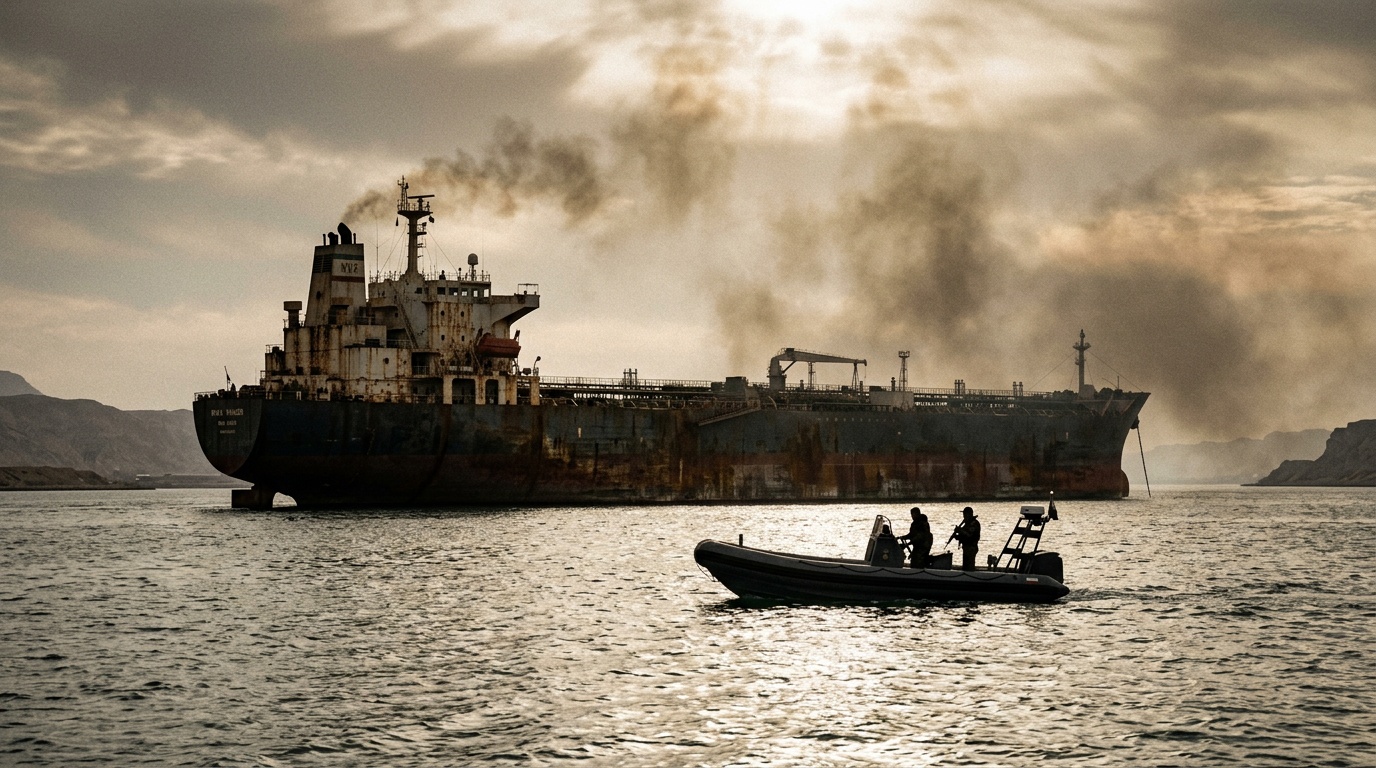
The oil market, however, responded like a skeptical audience member who just read the fine print. Brent crude, which you can track via the United States Brent Oil Fund (BNO), jumped to $110 a barrel on Friday. And a fresh analysis from Goldman Sachs delivered the punchline: the Strait of Hormuz, the world's most critical oil chokepoint, is still 94% shut. The words and the data are having two very different conversations.
The Optimism Gap
There's a gap here between Washington's diplomatic language and the physical reality of the oil market, and it's rarely been wider. In an interview, Johannes Rauball, Ph.D., a senior crude oil analyst at Kpler, offered a sobering explanation for why the cheerful talk hasn't translated into tanker traffic.
"Iran has put forward multiple proposals to allow vessels from friendly countries to bypass the Strait of Hormuz, but there has been no meaningful increase in transit activity so far," Rauball said.
He pointed out the obvious incentive: "It remains in Iran's interest to keep flows through the Strait constrained in order to support elevated crude prices, thereby increasing pressure on the U.S. administration to engage in negotiations." In other words, the disruption itself is a bargaining chip. Every day the Strait is mostly closed, high oil prices give Tehran both revenue (from whatever exports continue through special corridors) and leverage.
Rauball noted reports that Iran might be charging vessels for passage through a controlled corridor near Larak Island. But that workaround has its own limits—charging for transit through an international waterway is a great way to violate maritime law and annoy the regional partners Iran probably needs. The analyst's take reframes this not just as a diplomatic standoff, but a structural one: neither side's proposals are likely acceptable to the other right now.
The Numbers Don't Lie
Four weeks into this crisis, the Strait isn't just disrupted; it's under a near-total blockade. Goldman Sachs estimated on Friday that average daily flows are at just 1.1 million barrels per day on a four-day moving average. The normal flow? About 20 million barrels per day. That's not a hiccup; it's a stranglehold.
The market does have one structural buffer: pipelines. Saudi Arabia and the United Arab Emirates have ramped up flows through alternative ports like Yanbu on the Red Sea and Fujairah on the Gulf of Oman. They're moving about 8.3 mb/d that way now, which is 5.2 mb/d above their 2025 average. It's a significant reroute, but it's not enough.
According to Goldman Sachs analysts Yulia Zhestkova Grigsby and Daan Struyven, the net hit to global commercial oil stocks—before any other supply or demand response—is a staggering 13.1 mb/d. Since February 27, visible global oil inventories have fallen by 121 million barrels. That wipes out more than a quarter of the inventory builds accumulated throughout all of 2025. The math is brutally simple: the world is drawing down stocks fast.
The Stagflation Clock
What does Trump's 10-day pause actually mean? Veteran economist Ed Yardeni offered a cautious read on Friday. "That will prolong uncertainty and volatility in the financial markets," Yardeni wrote. "It also means oil prices will remain elevated for at least another 10 days, unless there is a deal, exacerbating stagflationary pressures worldwide."
It's a classic bind: high energy prices act as a tax on growth while pushing up inflation—the dreaded stagflation combo. The market's own prediction mechanism seems to be growing less optimistic too. On prediction markets, the probability that the U.S.-Iran conflict ends by April 30 has fallen to around 40%, down from about 55% earlier in the week.
So, the timeline has shifted, but the fundamental reality hasn't. The Strait is closed, the oil isn't flowing, and the world is burning through its stockpiles. The diplomatic talks might be "going very well" in some conference room, but out in the physical world, the tankers are still waiting.