Here's a fun thought experiment: what if the U.S. government had to choose between cutting retirement benefits for millions of Americans or borrowing so much money that our debt looked like Venezuela's? According to Senator Bill Cassidy, that's not a hypothetical—it's the actual menu of options if we don't fix Social Security's funding problem.
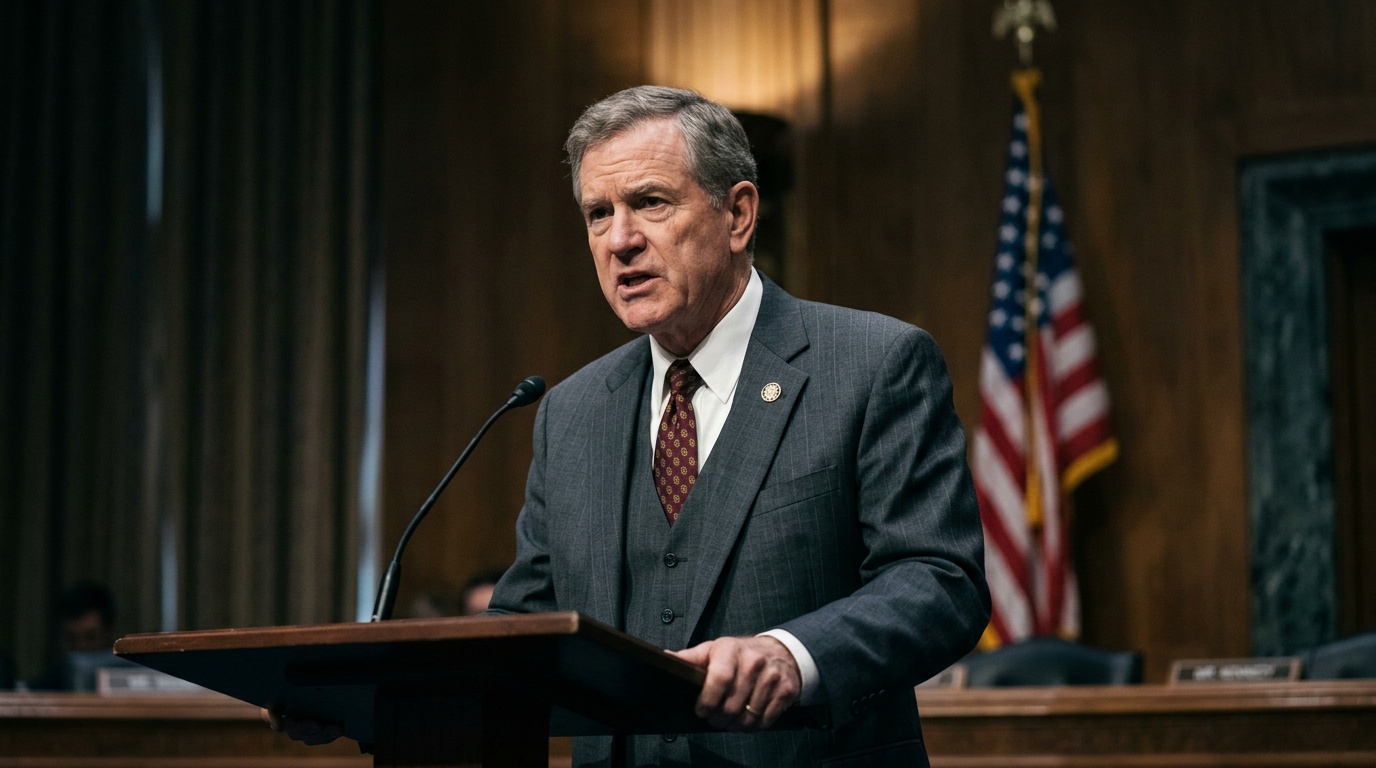
At a Senate Budget Committee hearing this week, Cassidy laid out the math with the cheerful urgency of someone pointing out your car is about to roll off a cliff. The Social Security trust fund, which pays benefits to over 70 million retirees, survivors, and disabled Americans, is projected to run dry around 2032–2033. After that, the program would have to rely solely on incoming payroll taxes, which would cover only about 75–80% of scheduled benefits.
"By law, there has to be a cut in benefits so that you balance income with the amount of payments being made," Cassidy said, citing projections of a 23–26% reduction. The Congressional Budget Office has estimated cuts could reach as high as 28%.
But here's the twist: the other option is arguably worse. "Doing nothing will result in a benefit cut of 25 percent or borrowing close to $700 trillion, which will put our debt-to-GDP ratio similar to that of Venezuela," Cassidy warned. So, pick your poison: grandma gets less money, or the U.S. Treasury starts looking like an emerging market basket case.
Cassidy, for his part, has a proposal. He wants to create a new $1.5 trillion investment account, funded from the Treasury and managed independently with annual audits. The idea is modeled on a 2001 Congressional fix for the federal railroad retirement system—basically, set aside a pile of money now, invest it over 75 years, and use the returns to help cover future shortfalls. It's the financial equivalent of planting a tree whose shade you won't sit under for decades.
Meanwhile, other groups are floating different ideas. The Committee for a Responsible Federal Budget has proposed a "Six-Figure Limit" that would cap benefits at $100,000 for couples. The plan could generate between $100 billion and $190 billion in savings over a decade while shifting more support toward lower-income retirees. Other discussions include merging retirement and disability trust funds and adjusting benefits for higher earners.
The common thread? Everyone agrees that waiting makes the problem worse. The funding gap keeps growing, and the longer policymakers delay, the harder—and more painful—the fix becomes. So the clock is ticking: either we figure out how to shore up Social Security, or we get to choose between benefit cuts and a debt spiral. Neither sounds particularly appealing.