Marketdash

Trump Tries to Pay TSA Agents Amid Airport Chaos, But the Shutdown Drags On

MarketDash
The President announced an executive order to pay TSA workers, blaming Democrats for airport delays, but the underlying funding fight remains deadlocked as airline stocks tick up.

Get American Airlines Group Alerts

Weekly insights + SMS alerts

Here's a scene: airports packed with spring break travelers, security lines stretching into eternity, and Transportation Security Administration agents who haven't been paid in weeks. That's the backdrop for President Donald Trump's latest move in a political funding fight that's starting to have very real, very messy consequences.

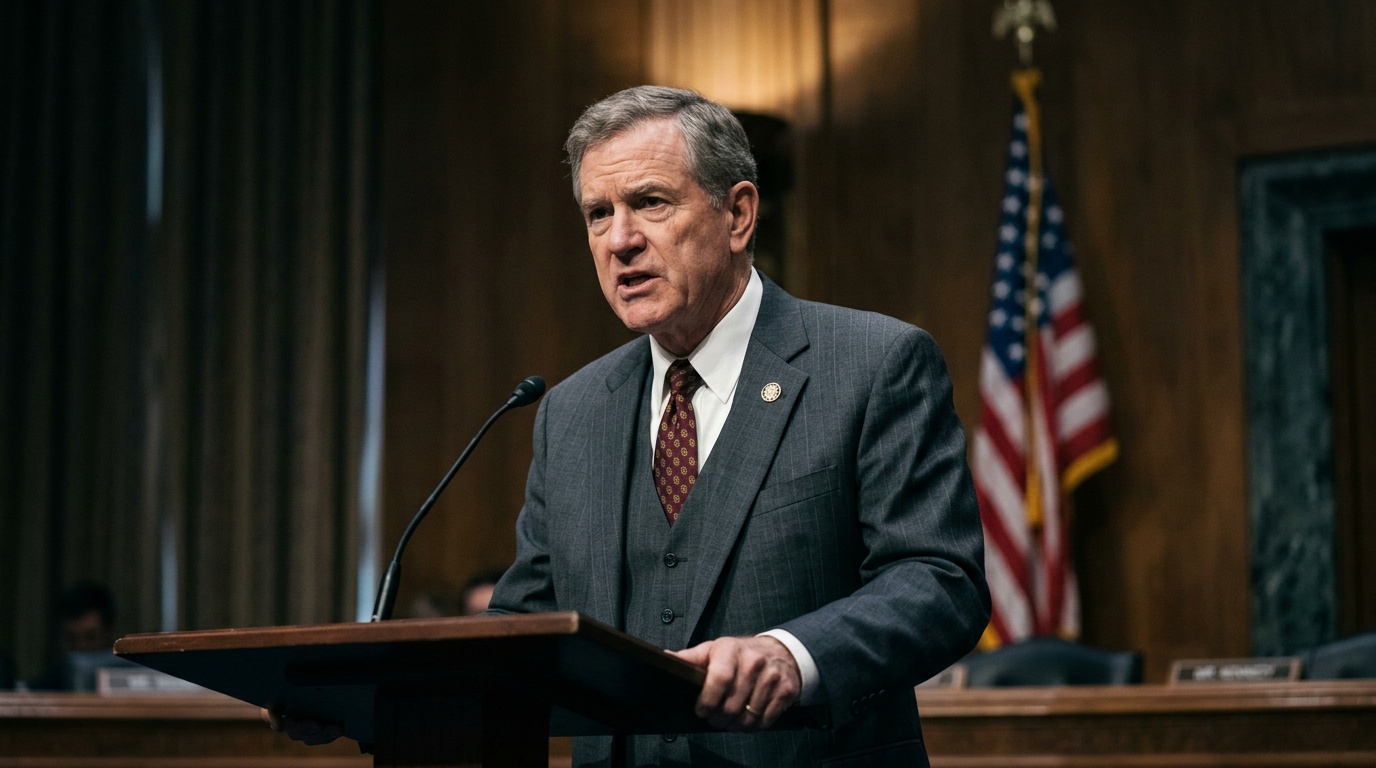
On Thursday, Trump said he would sign an order directing Homeland Security Secretary Markwayne Mullin to immediately pay TSA agents. The goal, according to the President, is to "address this Emergency Situation, and to quickly stop the Democrat Chaos at the Airports." He made the announcement in a Truth Social post, taking a shot at Senate Minority Leader Chuck Schumer (D-N.Y.) in the process, claiming Democrats have made it "very clear where they stand, and it was not on the side of the American people."

Think of it as the White House trying to put out a fire with a garden hose while the main water line is still shut off. The move follows a Washington Post report that the administration was considering unilateral action to pay TSA officers if Congress couldn't break its stalemate. The problem is, the underlying issue—funding for the entire Department of Homeland Security—remains completely unresolved after 41 days.

The Stalemate That Won't End

So why can't anyone agree on a deal? It's the classic Washington gridlock, but with airport security thrown into the mix. Democrats and Republicans have each shot down the other side's latest proposals. Democrats sent a proposal with what they called "common-sense guardrails" on federal immigration agents, a condition they've tied to any broader funding deal. Senate Majority Leader John Thune (R-S.D.) immediately called it unacceptable.

Republicans, led by Thune and backed by senators like John Kennedy (R-La.) and Ted Cruz (R-Texas), tried a different angle. They suggested funding TSA, the Coast Guard, and other DHS operations while excluding funding for ICE enforcement. But Trump rejected that approach too, insisting there would be "no deals with the Democrats" unless the funding aligned with his SAVE America Act. So, we're back at square one, with the President's new order acting as a temporary patch on a much larger problem.

When the People Who Keep You Safe Can't Pay Rent

While politicians argue, the situation at airports is getting genuinely dire. The acting head of TSA, Ha Nguyen McNeill, told a House committee that checkpoints are seeing "the highest wait times in history." Worker absences have climbed above 40% at some airports since the shutdown began.

The human cost is staggering. According to the Associated Press, nearly 500 TSA officers have quit, and more than 3,000 scheduled employees missed work on Wednesday alone. McNeill described agents sleeping in cars, selling plasma, and missing rent and child care payments—all while being expected to show up and keep airports secure. Earlier this week, Trump ordered ICE officers to major airports to help with crowd control, but that deployment has done little to ease the delays. It's a system under immense strain, held together by workers facing personal financial crises.

Get American Airlines Group Alerts

Weekly insights + SMS (optional)

A Flicker of Hope for Airline Investors

In the midst of this operational chaos, airline investors saw a glimmer of positive news. Shares of all major carriers moved higher in after-hours trading following the President's announcement. Delta Air Lines Inc. (DAL), United Airlines Holdings Inc. (UAL), and American Airlines Group Inc. (AAL) all gained ground. The U.S. Global Jets ETF (JETS), a popular basket of airline stocks, climbed 1.08% to $25.28.

The market's reaction is a straightforward bet: paying TSA agents could mean shorter lines, fewer canceled flights, and happier customers during a crucial travel period. It's a direct response to the operational risk that the shutdown has created for the industry. The table below shows the after-hours moves for several major carriers.

Company NameClosing Price (Thursday)After-Hours Change (%)
American Airlines Group Inc$10.71+0.38
Delta Air Lines Inc$66.86+0.70
United Airlines Holdings Inc$92.69+0.51
Alaska Air Group Inc$38.95+0.44
Southwest Airlines Co$39.53+0.43

So, where does this leave us? The President is trying to solve a symptom—unpaid TSA agents causing airport delays—with an executive order. But the disease, a complete breakdown in funding negotiations for Homeland Security, is still raging. For now, airline stocks are getting a small boost on the hope of smoother operations, while the workers on the front lines continue to pay the real price.


Trump Tries to Pay TSA Agents Amid Airport Chaos, But the Shutdown Drags On

MarketDash
The President announced an executive order to pay TSA workers, blaming Democrats for airport delays, but the underlying funding fight remains deadlocked as airline stocks tick up.

Get American Airlines Group Alerts

Weekly insights + SMS alerts

Here's a scene: airports packed with spring break travelers, security lines stretching into eternity, and Transportation Security Administration agents who haven't been paid in weeks. That's the backdrop for President Donald Trump's latest move in a political funding fight that's starting to have very real, very messy consequences.

On Thursday, Trump said he would sign an order directing Homeland Security Secretary Markwayne Mullin to immediately pay TSA agents. The goal, according to the President, is to "address this Emergency Situation, and to quickly stop the Democrat Chaos at the Airports." He made the announcement in a Truth Social post, taking a shot at Senate Minority Leader Chuck Schumer (D-N.Y.) in the process, claiming Democrats have made it "very clear where they stand, and it was not on the side of the American people."

Think of it as the White House trying to put out a fire with a garden hose while the main water line is still shut off. The move follows a Washington Post report that the administration was considering unilateral action to pay TSA officers if Congress couldn't break its stalemate. The problem is, the underlying issue—funding for the entire Department of Homeland Security—remains completely unresolved after 41 days.

The Stalemate That Won't End

So why can't anyone agree on a deal? It's the classic Washington gridlock, but with airport security thrown into the mix. Democrats and Republicans have each shot down the other side's latest proposals. Democrats sent a proposal with what they called "common-sense guardrails" on federal immigration agents, a condition they've tied to any broader funding deal. Senate Majority Leader John Thune (R-S.D.) immediately called it unacceptable.

Republicans, led by Thune and backed by senators like John Kennedy (R-La.) and Ted Cruz (R-Texas), tried a different angle. They suggested funding TSA, the Coast Guard, and other DHS operations while excluding funding for ICE enforcement. But Trump rejected that approach too, insisting there would be "no deals with the Democrats" unless the funding aligned with his SAVE America Act. So, we're back at square one, with the President's new order acting as a temporary patch on a much larger problem.

When the People Who Keep You Safe Can't Pay Rent

While politicians argue, the situation at airports is getting genuinely dire. The acting head of TSA, Ha Nguyen McNeill, told a House committee that checkpoints are seeing "the highest wait times in history." Worker absences have climbed above 40% at some airports since the shutdown began.

The human cost is staggering. According to the Associated Press, nearly 500 TSA officers have quit, and more than 3,000 scheduled employees missed work on Wednesday alone. McNeill described agents sleeping in cars, selling plasma, and missing rent and child care payments—all while being expected to show up and keep airports secure. Earlier this week, Trump ordered ICE officers to major airports to help with crowd control, but that deployment has done little to ease the delays. It's a system under immense strain, held together by workers facing personal financial crises.

Get American Airlines Group Alerts

Weekly insights + SMS (optional)

A Flicker of Hope for Airline Investors

In the midst of this operational chaos, airline investors saw a glimmer of positive news. Shares of all major carriers moved higher in after-hours trading following the President's announcement. Delta Air Lines Inc. (DAL), United Airlines Holdings Inc. (UAL), and American Airlines Group Inc. (AAL) all gained ground. The U.S. Global Jets ETF (JETS), a popular basket of airline stocks, climbed 1.08% to $25.28.

The market's reaction is a straightforward bet: paying TSA agents could mean shorter lines, fewer canceled flights, and happier customers during a crucial travel period. It's a direct response to the operational risk that the shutdown has created for the industry. The table below shows the after-hours moves for several major carriers.

Company NameClosing Price (Thursday)After-Hours Change (%)
American Airlines Group Inc$10.71+0.38
Delta Air Lines Inc$66.86+0.70
United Airlines Holdings Inc$92.69+0.51
Alaska Air Group Inc$38.95+0.44
Southwest Airlines Co$39.53+0.43

So, where does this leave us? The President is trying to solve a symptom—unpaid TSA agents causing airport delays—with an executive order. But the disease, a complete breakdown in funding negotiations for Homeland Security, is still raging. For now, airline stocks are getting a small boost on the hope of smoother operations, while the workers on the front lines continue to pay the real price.